Theopolis Logo

Writing

Explore our collection of theological essays, biblical studies, and reflections on faith and culture.

See all
screen-shot-2023-02-24-at-1-48-41-pm
Biblical Chronology

Chronologies and Kings: Part 3

The chronology of the Kings of Judah and Israel can be divided into three periods with clearly defined boundaries. The first period begins with the death of Solomon and the accessions of Rehoboam in the south (Judah) and Jeroboam in the north (Israel). It ends with the deaths of Ahaziah…

by James B. JordanSeptember 22, 1991

johann-walter-bantz-clv9dfjlwac-unsplash-1-5
Art

Arts & Play, Part 1

Most modern people regard the arts as essentially decorative. They are hardly very important, as compared to business, politics, or religion. Yet, from a Biblical point of view, the arts lie close to the heart of human life. The universe that God created is itself an artistic masterpiece by the…

by James B. JordanSeptember 22, 1991
6273e95e0f5ac766258d8cf3_joshuasconquestoftheland-2
Exodus

Chronologies and Kings, Part 2

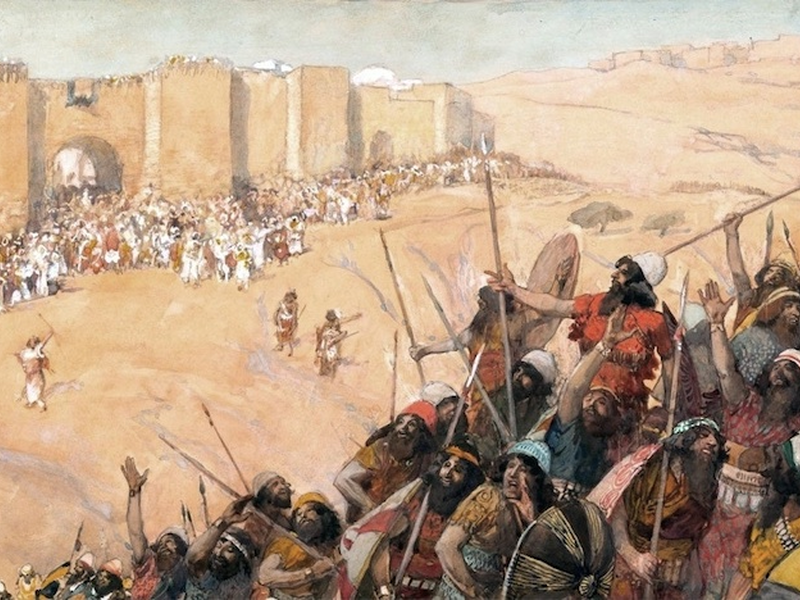
Before we move into a detailed survey of the history and chronology of the kings of Israel and Judah, let us review the chronological information that leads from creation to the kingdom. This will be helpful both to new readers of these essays, and a reminder for those who have…

by James B. JordanAugust 22, 1991
screen-shot-2023-02-24-at-1-48-41-pm
Biblical Chronology

Chronologies and Kings, Part 1

We have completed our overall survey of Biblical chronology, and now turn to a detailed examination of the Biblical information regarding the chronology of Israel’s kings. The first piece of chronological information we have regarding Israel’s kings is very cryptic, and it serves as an guide to the interpretation of…

by James B. JordanJuly 22, 1991
screenshot-2023-08-09-at-2-13-32-pm
Biblical Horizons

Book Review - To Take Place: Toward Theory in Ritual

Jonathan Z. Smith, To Take Place: Toward Theory in Ritual (Chicago: University of Chicago Press, 1987). Reviewed by Peter J. Leithart. The philosophes of the 18th century often attacked Christendom using the tools of anthropology and comparative religion. Rousseau contrasted the idyllic equality of primitive, natural peoples with the bondage…

by Peter LeithartJuly 6, 1991
screenshot-2023-08-09-at-1-47-41-pm
Biblical Horizons

Book Review: The Rise of Magic in Early Medieval Europe

Valerie I. J. Flint, The Rise of Magic in Early Medieval Europe (Princeton University Press, 1991). Reviewed by Peter J. Leithart. Valerie I. J. Flint, Professor of History at the University of Auckland, New Zealand, is refreshingly candid about her reasons for undertaking a study of The Rise of Magic…

by Peter LeithartJuly 6, 1991

Showing page 295 of 309

See all
See all

Baptism and personhood

In his recently re-released Bioethics: A Primer for Christians , Gilbert Meilaender discusses baptism to formulate a Christian understanding of the person. Baptism, he points out, is a communal act but also individualizing: “the first thing to note about baptism is that it is a deeply individualizing act. Our parents…

December 21, 2005
Art

Allegory with Venus and Cupid

In his book, Erotic Faith , Robert M. Polhemus offers an intriguing analysis of Bronzino’s Allegory with Venus and Cupid . The allegory suggests that “worship of Venus . . . blinds one to the menace of time and death.” Seeking sexual fulfillment means “betraying self, God, and humankind as…

December 21, 2005
Philosophy

Mirror and Lamp

In his classic study of romanticism and literary theory, The Mirror and the Lamp , MH Abrams points out the crucial change in images of the mind - from the mind as a “mirror” of outside reality to the mind as a “lamp” or a “fountain” that determines what it…

December 21, 2005
History

Consumption v. Culture

Hannah Arendt claimed that “An object is cultural depending on the duration of its permanence: its durable character is opposed to its functional aspect, that aspect which would make it disappear from the phenomenal world through use and wear and tear . . . . Culture finds itself under threat…

December 20, 2005
Literature

Shakespeare and the Law

At the climactic moment of reversal in the court scene in Merchant of Venice , Portia tells Shylock: “This bond doth give thee here no jot of blood.” “Jot” comes to English through the Greek iota , which is linked to the Hebrew YOD through Jesus’ usage in Matthew 5.…

December 20, 2005

Not quite haiku

spectral rime-frosted trees in early morning moonlight cast shadows on the pasture

December 18, 2005

Showing page 1910 of 2212

Browse by Category

In Medias Res

Your weekly digest for all things Theopolis.

Donate

Theopolis is nearly 100% donor-supported. Consider joining us on our mission.