Theopolis Logo

Writing

Explore our collection of theological essays, biblical studies, and reflections on faith and culture.

See all
shipwreck
Movies

Separation and the Sea: All Is Lost and Cast Away

“13th of July, 4:50 pm. I'm sorry. I know that means little at this point, but I am. I tried, I think you would all agree that I tried. To be true, to be strong, to be kind, to love, to be right. But I wasn't. And I know you…

by Remy WilkinsSeptember 22, 2016

priscilla
Ecclesiology

Priestesses?

CS Lewis's 1948 essay on “Priestesses in the Church” strikes a reader today as simultaneously quaintly naive and trenchantly prescient. The naive part comes near the beginning, where Lewis describes the decision to take “a revolutionary step.” It would “cut ourselves off from the Christian past and to widen the…

by Peter LeithartSeptember 20, 2016
st-george-dragon
Literature

Serpents First

Imagine a version of the Lord of the Rings beginning with Sauron riding into the Shire and lopping off heads in a mad search for the ring, driving Frodo to flight from the beginning, helter-skelter and harried. While, no doubt, some Hollywood exec is at this moment scrambling to reboot…

by Remy WilkinsSeptember 15, 2016
stalin-propaganda-poster
Communism

Socialism Without Society

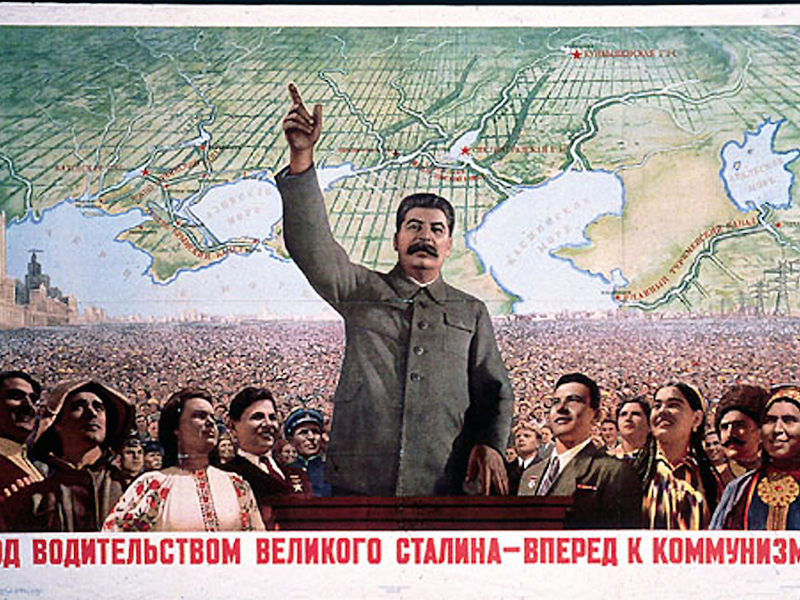
A Communist Confession of Faith states that the aim of the Communists is “to organize society in such a way that every member of it can develop and use all his capabilities and powers in complete freedom and without thereby infringing the basic conditions of this society.” This aim can…

by Bogumil JarmulakSeptember 13, 2016
ind54453
Biblical Theology

The Falls of Man

The story of the Fall enjoys a peculiar place in Christian thought. Together with the creation account in the two chapters that precede it, it is one of the few Old Testament narratives consistently to escape the relative neglect the Hebrew Scriptures often suffer. While the characters of Abraham, Moses,…

by Alastair RobertsSeptember 8, 2016
jesus-baptism
Baptism

Water, Spirit, and Fire, (Part 3)

In the previous essay, we saw that fire is a work of the Holy Spirit. The two are related so closely that they cannot be separated. Now we turn our attention to the Spirit's relationship to water. Many have understood Spirit baptism to be a dry baptism, one that is…

by Adam McIntoshSeptember 6, 2016

Showing page 125 of 309

See all
See all

Exhortation, First Advent

In this morning?s sermon, we will be looking at the role of the Spirit in the incarnation of Jesus, in the redemption achieved by Christ, and in the life of the Trinity. One way to summarize the point is that the Spirit is the divine bond, the ?glue?Eof the Trinity.…

November 28, 2004

Eucharistic Sacrifice

Vander Zee shows some chutzpah in addressing the question of Eucharistic sacrifice, and in suggesting that there are senses in which the Eucharist is properly said to be sacrificial. He offers a few quotations to show the Reformation pedigree of this perspective. The first from Calvin: “The Lord’s Supper cannot…

November 28, 2004

VanderZee on Sacraments

Leonard J. Vander Zee’s Christ, Baptism and the Lord’s Supper is the most satisfying introduction to sacramental theology that I’ve come across. VanderZee works out a Reformed understanding of sacraments in general (focusing on the fact that sacraments are God’s action - hardly a Reformed monopoly, of course), as well…

November 28, 2004

Bayer on Luther

Oswald Bayer says that for Luther faith is “divine work in us,” and that means for Luther that God “slays the old nature that belongs to the old world, the old Adam, and makes us new creatures, a new creation.” This is, in Bayers’ summary, the “decisive aspect of the…

November 27, 2004

White on NT

White in fact does not even cover all the passages concerning justification within the texts that teach the doctrine. Romans 6:7 is absent from his Scripture index, and he lists the “key Pauline passages” that deal with justification as Romans 3-5; 8:29-34; Gal 1-5 ( The God Who Justifies ,…

November 26, 2004

God the Judge

Near the heart of the Protestant doctrine of justification (as Barth saw) is the insistence that God, not man, is Judge. Efforts at self-justification are NOT merely moralistic efforts to recommend ourselves to God (though they are that). Efforts at self-justification are also (perhaps more fundamentally) assaults on God’s Lordship;…

November 26, 2004

Showing page 2034 of 2212

Browse by Category

In Medias Res

Your weekly digest for all things Theopolis.

Donate

Theopolis is nearly 100% donor-supported. Consider joining us on our mission.