Theopolis Logo

Writing

Explore our collection of theological essays, biblical studies, and reflections on faith and culture.

See all
cloister

Gatekeepers

1 Chronicles 9:1 seems to bring the genealogies of 1 Chronicles to an end. The Chronicler has recorded the genealogy of the human race from Adam, focusing on the descendants of Abraham through Jacob. Summing it all up, he says, “So all Israel was enrolled by genealogies; and behold, they…

by Peter LeithartJune 21, 2016
trinity-1-2
Trinity

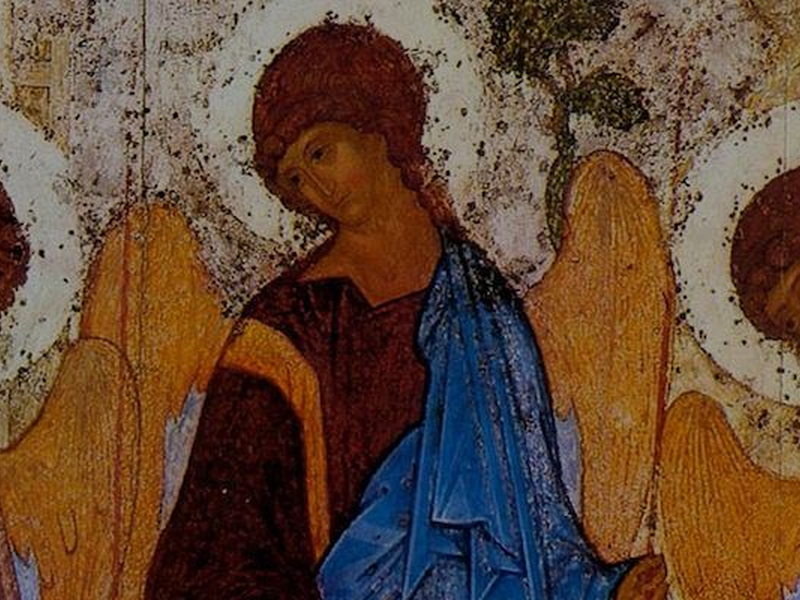
Are the Divine Persons Persons?

The “personalist” understanding of the Trinity, articulated most influentially in the work of John Zizioulas, has fallen on hard times. Recent scholars have attacked Zizioulas’s idea that Cappadocian Trinitarianism represented an ontological revolution, hammering on the distinction between divine and human personhood. Michel Barnes’s conclusion is the most drastic of…

by Peter LeithartJune 16, 2016
img_4660-2
Architecture

On Biblical Theology

Biblical Theology is often defined as the historical unfolding of God’s revelation, or of God’s revelation and of the history of his covenantal redemption and transformation of humanity and the world. In practice, Biblical Theology is usually broader than this, and also includes the study of literary structure and of…

by James B. JordanJune 14, 2016
laughing_statue_by_xxbobbiie-d5f0meh-2
Humor

Wise Laughter

We are made to be happy. Created to enter into the eternal joy of God, our whole being inclines to that end, but the fallen world has put forth barriers and by our own sin we bar ourselves from that endless delight, and death blinds us to that reality. Yet…

by Remy WilkinsJune 7, 2016
img_7664
Liturgy

Why Theopolis? Take Two

At the end of Revelation, John sees the heavenly city descending to earth. The city shines with the brilliance of God's glory, which lightens the nations, so that kings bring their glory to the city. This is not a vision of the final new heaven and new earth. It's a…

by Peter LeithartJune 2, 2016
trinity-1-2
Attributes of God

How Can We Talk About God?

“No one has ever seen God,” writes John (John 1:18). If this is the case, then how can we speak about God? Some people say we actually cannot. Or at least we cannot speak about God positively, i.e. who He is. We can only say who or what God is…

by Bogumil JarmulakMay 31, 2016

Showing page 130 of 309

See all
See all

Allotments

1 Chronicles 23–27 describes the distribution of responsibilities for the house of Yahweh (chs. 23–26) and the management of the king's palace and estates (ch. 27). Using lots, David and the priests create “divisions” of priests, Levites, singers, gatekeepers, treasurers, and others. “Division” translates the Hebrew machaloqet , derived from…

February 16, 2017

Descartes, Nihilist

I n her After Writing , Catherine Pickstock argues that the Cartesian Cogito is grounded in a Cartesian ontology, which is in turn related to a Cartesian politics. According to Descartes' Regulae , she says, “being is defined as that which is clear and distinct, available to absolute and certain…

February 16, 2017

Art, Divine and Human

A ccording to Jean-Louis Chretien ( Hand to Hand ), the notion of God as divine artist and of the world as art comes into its own in Augustine’s Trinitarian notion of ars divina , developed in medieval theology and Baroque art theory. This tradition was not free of ambiguities.…

February 15, 2017

Time Out of Joint

E veryone who's read Genesis 1 knows that Hebrews reckoned time from night till day. “Evening and morning, one day” is a refrain of the creation week (Genesis 1:5, 8, 13, 19, 23, 31). Lamps in the tabernacle burned continually ( tamid ), that is, from evening till morning (Leviticus…

February 14, 2017

Christian Unity

D espite its orientation to Catholics, Thomas Ryan's Christian Unity is full of practical suggestions for pastors, lay people, and theologians of all Christian traditions. A few more or less random gleanings. Ryan quotes Cardinal Kurt Koch's warning that we must not be satisfied with mutual recognition in a situation…

February 14, 2017

Science of Division

P lato said that purification is a science of division. So is creation. In Genesis, God forms the formless by separating. He divides ( badal ) light from darkness to form a temporal structure of evenings and mornings (Genesis 1:4) and waters from water to create a vertical spatiality (Genesis…

February 13, 2017

Showing page 206 of 2212

Browse by Category

In Medias Res

Your weekly digest for all things Theopolis.

Donate

Theopolis is nearly 100% donor-supported. Consider joining us on our mission.