Theopolis Logo

Writing

Explore our collection of theological essays, biblical studies, and reflections on faith and culture.

See all
last-supper
Luke

Table Talk

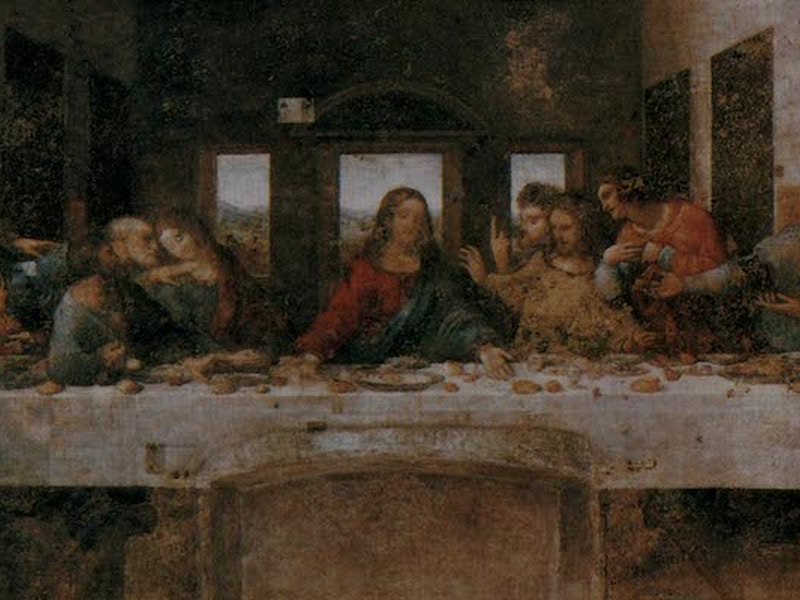
Along His journey to Jerusalem, Jesus stops frequently to have meals, three times with Pharisees (7:37-50; 11:37-54; 14:1-35). Meals were central to Jesus’ ministry. He comes “eating and drinking” (Luke 7:34). While His meals are not just for refreshment, they are opportunities for teaching the protocols of the kingdom. Meals…

by Peter LeithartApril 19, 2016
music-violin
Biblical Theology

A Musical Case for Typological Realism, (Part 4)

Time as a realm of participation can be difficult for us imaginatively to grasp. While music is a profoundly temporal art, exploring the medium of time like no other, most of our temporal experience seems decidedly unmusical in character, disjointed and unorchestrated. The form in which we naturally discover time…

by Alastair RobertsApril 14, 2016
John

Jesus' Burial Clothes

John devotes much attention to Jesus’ burial clothes. He tells us that Nicodemus brought about a hundred pounds of myrrh and aloes to spice Jesus body, and that He was bound in linen wrappings. We find out that His body and His head were wrapped separately. (John 19:39-40; 20:6-7). When…

by James B. JordanApril 12, 2016
clock
Biblical Theology

A Musical Case for Typological Realism, (Part 3)

Thinking about time in terms of music also helps us to appreciate its unity and inner relations. Henri Bergson observes our cultural habit of dividing time into discrete moments, and conceiving of these as if akin to objects in a spatial succession. [1] Against such a notion, Bergson argues for…

by Alastair RobertsApril 7, 2016
screen-shot-2016-03-31-at-9-32-11-am
Biblical Theology

A Musical Case for Typological Realism, (Part 2)

As we attend to these and other aspects of music’s temporality, Begbie suggests, we will find means by which to resist some of our habitual modern ways of conceptualizing time, most especially our tendency to conceive of time as if it were a homogeneous set of technologically quantifiable units laid…

by Alastair RobertsMarch 31, 2016
biblioteca-vasconcelos-crop
Biblical Theology

Systematic Typology (Part Three)

The Hidden Dimension In many fields of scientific study, the apparent complications and contradictions are dispelled once the internal logic is perceived. Biblical hermeneutics is no different, since the author of Creation is the Author of the Word. The Bible’s literary labyrinth radiates organically from an algorithm so simple it…

by Mike BullMarch 29, 2016

Showing page 133 of 309

See all
See all

Near Miss at Marburg

I n a brief 1949 article in the Lutheran Quarterly , Roland Bainton observes that, far from being stubborn and intransigent at the 1529 Colloquy at Marburg, Luther and the Lutherans “took the initiative in proposing a formula of concord. They confessed that the discussion had opened their eyes and…

February 10, 2017

When Science Went Modern

W riting in the Hedgehog Review (Fall 2016), Lorraine Daston identifies 1890-1914 as the “moment when science went modern” (20). Going modern here involves an acceleration in the pace of discovery and invention: For the scientists, the realization that progress might have its dark side had been germinating since the…

February 10, 2017

McLaboratory

M cDonald's looks like a fast food restaurant, but it's a site of “embedded science,” writes Steven Shapin : “[McDonald's] sucks in huge amounts of scientific and technological expertise. Science is omnipresent in the corporation that owns or franchises this particular restaurant. Science is outsourced when McDonald’s draws on the…

February 10, 2017
Sexuality

A Great Mystery

I t is a great mystery. Adam is created from the ground, as are the animals. Unlike the animals, Adam becomes a living soul only when the Lord breathes into his nostrils. Adam is a product of ground and divine breath; he is a child of earth and heaven. Adam's…

February 9, 2017

God as Artist, Artist as God

I n Hand to Hand , a meditation on “listening to the work of art,” Jean-Louis Chretien traces the origins of the notion of God as artist and the artist as created. “How did the creative act, which for biblical Revelation properly belongs only to God, come to be thought…

February 9, 2017

Divine Double-Talk

D ay 3 of the creation week was unique, and a turning point in the creation week. When God first made the “earth” and heaven, the earth was tohu-v-bohu , formless and empty, and also dark. Over the course of the creation week, God corrected these imperfections of the original…

February 8, 2017

Showing page 208 of 2212

Browse by Category

In Medias Res

Your weekly digest for all things Theopolis.

Donate

Theopolis is nearly 100% donor-supported. Consider joining us on our mission.