Theopolis Logo

Writing

Explore our collection of theological essays, biblical studies, and reflections on faith and culture.

See all
johann-siemens-epy0gbjzzzu-unsplash
Apologetics

A Sabbath Conversation: How Old is the Earth?

As Adam and Eve walked to the center of the Garden of Eden to meet with the LORD on their first Sabbath they conversed about the origin and age of the earth. Adam: You know, honey, we spent a lot of time yesterday making preparations for our house, and we…

by Jeff MeyersOctober 3, 1997
img_1043
Biblical Horizons

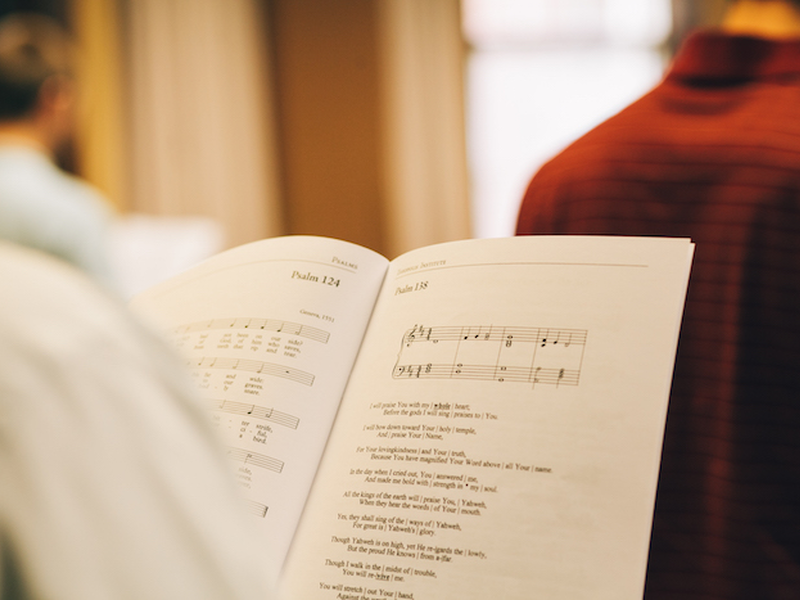
Psalms for Exile: The Narrative Progression in the Fifth Book of the Psalter

Some of our forefathers believed in reading/singing the psalms in order. Today, when the psalms are even used at all, they tend to be used randomly, though sometimes tied to a church calendar or to the pastor’s sermon. The Bible does not bind us to any particular practice, but there…

by James B. JordanSeptember 4, 1997
jordan-wozniak-xp_agmeea6s-unsplash-2
Biblical Chronology

The Anthropomorphic Days of C. John Collins, Part 2

Dr. Collins begins his essay with a brief statement of the Day Age view and then a brief statement of the Six Day view, focussing on the challenge to that view posed by modern "science." He ends this discussion by writing: "Two crucial points are at stake here: first, the…

by James B. JordanSeptember 4, 1997
john-salzarulo-wtjrpjzabcq-unsplash
Biblical Horizons

Paperweights and the Puzzles of Secularism

In his The Construction of Social Reality , Berkeley philosopher John Searle puzzles over the ontology of the products of human construction. Certain things – granite, platypi, weeping willows – occur naturally; while other realities – stone walls, zoos and parks, Chase Manhattan Bank – exist only as products of…

by Peter LeithartAugust 27, 1997
ales-krivec-4mibe6zg5r0-unsplash
Biblical Chronology

The Anthropomorphic Days of C. John Collins, Part 1

In the journal Presbyterion 20 (1994):109-130, published by Covenant Theological Seminary, Dr. C. John Collins sets forth a revision of the Day Age approach in his essay, "How Old Is the Earth? Anthropomorphic Days in Genesis 1:1–2:3." Dr. Collins’s essay has been widely accepted in evangelical Presbyterian circles as an…

by James B. JordanAugust 4, 1997
screenshot-2023-09-04-at-10-37-01-am
Biblical Horizons

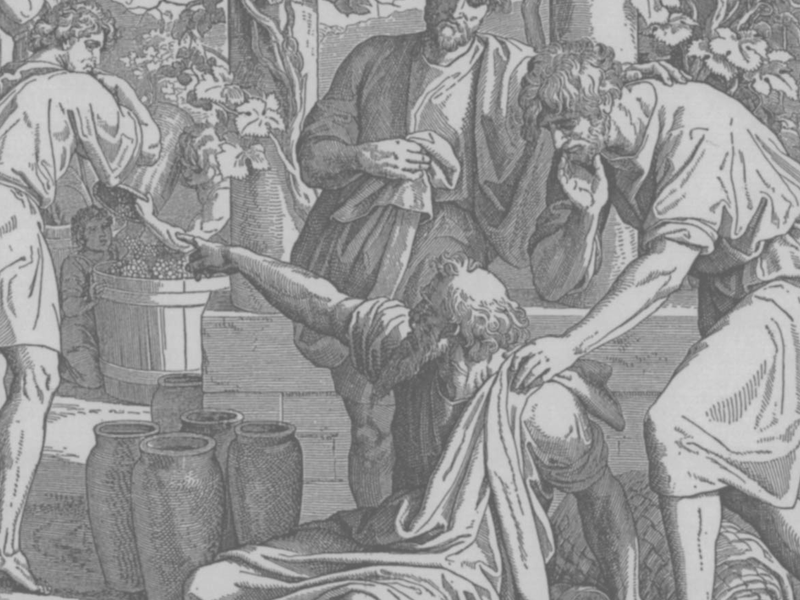
The Sin of Ham and the Curse of Canaan, Part 3 (An Exposition of Genesis 9:20-27)

The Righteousness of Shem and Japheth As noted above, the action of Shem and Japheth was purely symbolic. They did not need to cover Noah with a garment, for he was already covered by the tent. Their action was a symbolic affirmation of Noah’s authority, a symbolic rejection of Ham’s…

by James B. JordanAugust 4, 1997

Showing page 254 of 309

See all
See all
Literature

Sigurd’s New Order

Perhaps Sigurd, like Orestes, marks the beginning of a new order. Before Sigurd, the only absolute loyalties in the world of the Volsungs were family loyalties, loyalties of blood. Signy has no loyalty to her husband and encourages Sigmund to kill her sons. But Sigurd seems as loyal to his…

October 31, 2003

Religion in Europe

In Italy, there is a raging debate over a judge’s ruling that crucifixes need to be removed from schools. Seems that Europe, where religion (or religions) is still often a part of government education and where state churches still exist, is beginning to play catch up with American secularism.

October 31, 2003
Literature

Sigurd and the Dragon

In the introduction to his translation of the Volsung Saga, Jesse Byock points out that the scene of Sigurd slaying the dragon was employed on numerous churches throughout Scandinavian countries. The Christological dimensions of a dragon-slayer are obvious, but there is even more going on with Sigurd: He not only…

October 31, 2003

Differance

In an essay on “The Hermeneutics of Difference” in a volume edited by Merold Westphal, Garrett Green offers this helpful summary of Derrida’s conception of supplement: “The fundamental hermeneutical situation in which we all find ourselves as users of signs, which Derrida indicates by the word DIFFERANCE, means that no…

October 31, 2003

Oats

From Dr. Johnson’s dictionary, a definition of “Oats”: “A grain, which in England is generally given to horses, but in Scotland supports the people.”

October 31, 2003

Nothing Outside the Text

In his book “Is There A Meaning in This Text?” Kevin Vanhoozer explains Derrida’s dictum that “there is nothing outside the text” by saying that everything is part of a signifying system or classification system that is constituted by differences. He offers this illuminating illustration: “a Ford has its particular…

October 31, 2003

Showing page 2174 of 2212

Browse by Category

In Medias Res

Your weekly digest for all things Theopolis.

Donate

Theopolis is nearly 100% donor-supported. Consider joining us on our mission.