Theopolis Logo

Writing

Explore our collection of theological essays, biblical studies, and reflections on faith and culture.

See all
max-kukurudziak-qbc3zmxw0g8-unsplash
History

Report from Ukraine

We lost Crimea. That is very clear. Putin proved he was not lying when he said he would place women and children ahead of his soldiers to storm Ukrainian military bases. Russian soldiers did exactly that with women (some who volunteered and some who were forced). Russia now occupies all…

by San SanychMarch 28, 2014

screenshot-2023-09-21-at-3-59-23-pm
Church Calendar

God Gone Silent

Sound is an indicator of life and energy. “Sound signals the present use of power, since sound must be in active production to exist at all.” Things don’t have to be alive to make themselves visible, and “a primitive hunter can see, feel, smell, and taste an elephant when the…

by Peter LeithartMarch 26, 2014
web-lead-image_final_dostoevsky
Books

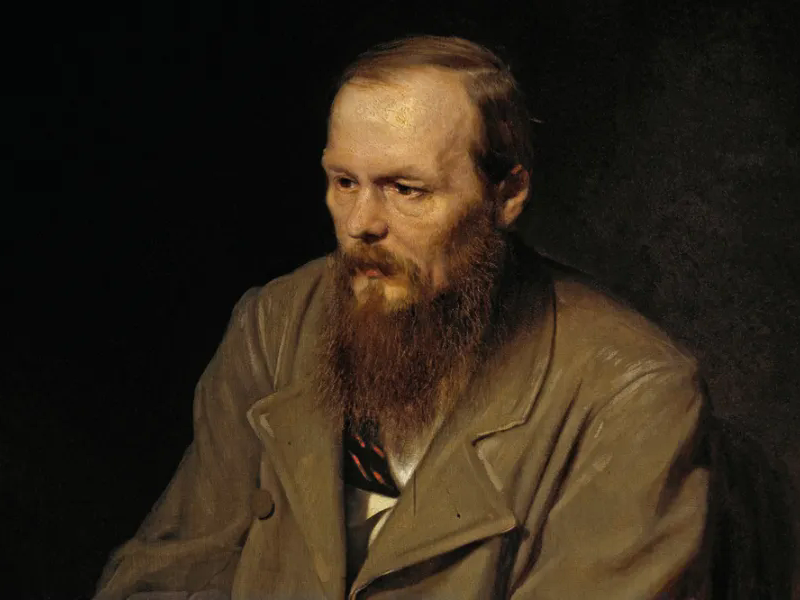
Dostoevsky the Liberal

In the most famous section of his best-known novel, Dostoevsky’s Ivan Karamazov brings forward his case against God. He opens with a horrific litany of outrages against children. Turkish soldiers make a baby laugh and then shoot a pistol into his face. A little girl is beaten, thrashed, kicked by…

by Peter LeithartMarch 24, 2014
kelly-sikkema-ggs0_g6wi-i-unsplash
Epistemology

Subsidiary-Focal Integration and Liturgy

​At the heart of Esther Lightcap Meek's splendid ​Little Manual for Knowing is a concept she picked up from Michael Polanyi, "subsidiary-focal integration." The concept begins from the insight that all our knowing, all our experience, is double. We focus on something, but we are capable of "indwelling" that focal…

by Peter LeithartMarch 19, 2014
engin-akyurt-uz9qpvbol0e-unsplash
Revelation

White Stone

Jesus promises the overcomers of Pergamum "hidden manna" and a "white stone." The hidden manna is often linked with the manna stashed away in the ark of the covenant. The white stone has proved more elusive. Exodus tells us that manna was white (Exodus 16:31) and like bdellium (Numbers 11:7),…

by Peter LeithartMarch 17, 2014
226961fgsdl
Leviticus

A Theology of Festivity

Leviticus 23 begins with a reference to “Yahweh’s appointed times” ( mo’ade-YHWH ). Mo’ed is the common term for the feasts of Israel. A few dimensions to this term. First, it means “appointed time” or “designated time.” It is a time set by Yahweh. Yahweh has claimed certain times as…

by Peter LeithartMarch 12, 2014

Showing page 177 of 309

See all
See all
Modernity

Multiple Modernities

“Classic theories of modernization, from the 1950s,” write the editors of Reflections on Multiple Modernities , “identified the core of modernity, of modern social structure, as the decomposition of older ‘closed' formations and . . . of the growing potential for social mobilization, and the concomitant development of new structural,…

May 3, 2016

Signs of the Times

In a 2009 University of Michigan dissertation, Richard Persky explores the cultural meaning of time in ancient Greece, focusing on the concept of kairos . According to Persky, “a kairos is a moment of opportunity, the right time to do some particular thing. The allegorical sculpture made by Lysippos and…

May 2, 2016

Jerusalem's Jasper Walls

Jerusalem descends from heaven a jeweled bride, with the luminosity of a precious stone, a “crystal-clear jasper” (v. 11; hos litho iaspidi krustallizonti ). She is also surrounded by a jasper wall (v. 18). How might the city be related to the wall? The structure of 21:18-22 gives us a…

May 2, 2016

Shakespeare and Chivalry

In the Weekly Standard , Paul Cantor explains that both Shakespeare and Cervantes aimed their writing at a common target: Chivalry. He describes chivalry as “a noble ideal and at its best it did much to refine an otherwise coarse and brutal world, but it rested on shaky foundations and…

May 2, 2016

Liturgy and Charity

Susan Holman ( The Hungry Are Dying ) draws on recent scholarship to argue that “food doles, communal religious feasts, public works, or subsidized public entertainment prior to the Christianization of Graeco-Roman culture did not function out of any concern to alleviate poverty per se.” These “public works” or leitourgia…

April 29, 2016

Bring Us To God

Peter tells us that Jesus was the “just” man who suffered for the sins of the “unjust,” and that the purpose of this suffering was to “bring us to God.” William Dalton ( Christ's Proclamation to the Spirits ) points out that the verb prosago has technical legal meaning in…

April 29, 2016

Showing page 294 of 2212

Browse by Category

In Medias Res

Your weekly digest for all things Theopolis.

Donate

Theopolis is nearly 100% donor-supported. Consider joining us on our mission.