Theopolis Logo

Writing

Explore our collection of theological essays, biblical studies, and reflections on faith and culture.

See all
giammarco-zeh-ljawhtg-unsplash
Biblical Horizons

OPEN BOOK: Views and Reviews

Isaac E. Mozeson, The Word: The Dictionary that Reveals the Hebrew Sources of English (Northvale, NJ: Jacob Aaronson Inc., 1995), 310 pp. Reviewed by James B. Jordan. Once there was only one language in the world, the language God spoke to Adam. At the Tower of Babel, there came to…

by James B. JordanJune 28, 1996
tim-wildsmith-j6jv-mkdzqs-unsplash
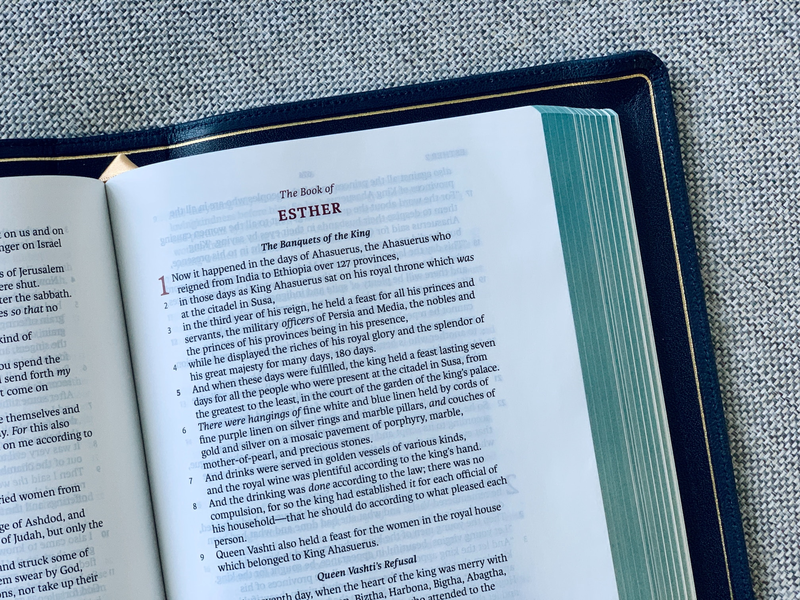
Esther

Esther: Historical & Chronological Comments (IV)

2. The Setting of the Book of Esther A. Xerxes (continued from previous issue) Ezra 6:14 says that the Jews finished building "according to the command of the God of Israel and the decree of Cyrus and Darius and Artaxerxes king of Persia." The problem with this verse is that…

by James B. JordanJune 28, 1996

ales-krivec-4mibe6zg5r0-unsplash
Acts

Jesus and Amalek

This essay goes with our previous study of the Amalek pattern back in Biblical Horizons No. 2. Since many do not have this essay, entitled "The Battle of Gog and Magog," let me cite the relevant paragraphs: Note in Genesis 12-15 that Abram moves into the land after escaping Pharaoh…

by James B. JordanJune 28, 1996

aaron-burden-1ebsmyrau-s-unsplash
Proverbs

The Strange Woman

Proverbs 7:6-23 is one of several passages early in the Proverbs in which Solomon warns his son about the wiles and dangers of the "strange woman." It is certainly quite proper to take these as straightforward warnings against sexual sins, and these are certainly warnings that need to be impressed…

by Peter LeithartJune 27, 1996
jan-kahanek-g3o5ztrk2e4-unsplash
Biblical Studies

Some Observations

1. In Luke 4:20 we read that after Jesus finished reading from Isaiah, "the eyes of all in the synagogue were fixed upon Him." This is usually taken in a psychological sense: They were amazed at Jesus somehow. I suggest that, as always, a merely psychological reading is a modern…

by James B. JordanMay 28, 1996
tim-wildsmith-j6jv-mkdzqs-unsplash
Esther

Esther: Historical & Chronological Comments (III)

2. The Setting of the Book of Esther Up to now we have assumed what we must prove, that the king in Esther is Darius the Great. While Biblical chronologists have usually taken this position, commentators on the book of Esther have often taken others as the king. One view,…

by James B. JordanMay 28, 1996

Showing page 265 of 309

See all
See all
Trinity

Contracting the Trinity

Trinitarian theology blossomed in English theology in the post-Reformation period, evidenced by the creative development of the vestigia trinitatis . During the seventeenth century, though, Trinitarian theology began to contract and wither. According to Philip Dixon ( Nice and Hot Disputes ), there were two dynamics at work. First, Trinitarian…

February 25, 2016

Structure in 1 Chronicles

1 Chronicles begins with a list of 13 names, from Adam to Japheth. From Genesis 10, we know that the list is broken into two lists, 10 + 3. The first ten names mark generations from Adam to Noah; the list of three names are all from the same generation,…

February 25, 2016

Economy of Force

Patricia Owens summarizes her recent Economy of Force in a symposium at The Disorder of Things . Her book is a history of modern counterinsurgency, but that history has much broader implications for the history of political thought and scholarship on international relations. As Owens puts it, “The book is…

February 24, 2016

Liturgical Orientalism

Robert Taft ( “Eastern Presuppositions” and Western Liturgical Reform ) credits the Melkite patriarch and bishops with exercising a disproportionate influence on the direction of reform at Vatican II, due to their “remarkable imaginative and universal vision.” They were the first to state that the council should avoid definitions and…

February 24, 2016

Separability and Situatedness

Marcia Pally's Commonwealth and Covenant is a study of the “economics, politics, and theologies of relationality.” She works through these topics using the categories of “separability” and “situatedness.” Separability is “the ability to leave one's place and develop oneself differently from past and neighbors” (3). She thinks that the contemporary…

February 24, 2016

Debtor Nation

“In 2010, Americans had total debt outstanding of $52.4 trillion, more than three-and-a-half times the country's gross domestic product,” writes Rowena Olegario in The Engine of Enterprise (1). Over $13 trillion is household debt, $24.5 is business debt, and 24% or $12.4 trillion is government debt, mostly federal debt. Each…

February 23, 2016

Showing page 317 of 2212

Browse by Category

In Medias Res

Your weekly digest for all things Theopolis.

Donate

Theopolis is nearly 100% donor-supported. Consider joining us on our mission.