Theopolis Logo

Writing

Explore our collection of theological essays, biblical studies, and reflections on faith and culture.

See all
screenshot-2024-06-06-at-8-49-49-am
Biblical Theology

Incarnation, Church, & the New Heart

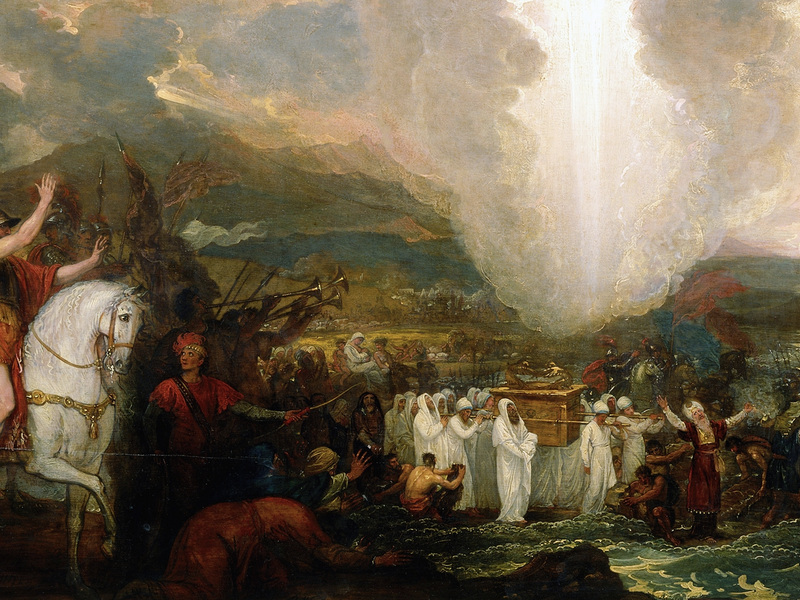
“And it shall be in those days when you are multiplied and increased in the land,” declares the Lord, “they shall say no more, ‘The Ark of the Covenant of the Lord.’ And it shall not come to mind, nor shall they remember it, nor shall they miss it, nor…

by Mark HorneJune 6, 2004
e99a4713
Grace

Grace & Justice in Unexpected Places

Elsewhere, I have argued that there is grace in the so-called covenant of works (see, e.g., my colloquium essay, “A Response to ‘The Biblical Plan of Salvation,’” in The Auburn Avenue Theology: Pros and Cons , edited by Calvin Beisner (pages 118-148). It may be equally surprising to find justice…

by Rich LuskJune 6, 2004
amjd-rdwan-erymmvvsy1y-unsplash-1
Theologia

Trust & Obey

Years ago, as a layman, I had the privilege of attending a Bible study led by a gifted teacher. His story was interesting: back when he was a student he had been severely sanctioned for affirming that one must repent in order to be saved, that one must trust Jesus…

by Mark HorneJune 5, 2004
daniel-born-yw_qx-i8ln4-unsplash
Theologia

The World is Built on Faith

Believing that God really exists Defining “faith” is sometimes made too complicated. The theologian, Louis Berkhof, for example, distinguishes “faith in general” from “faith in the religious sense and particularly saving faith.” Berkhof’s core definition of saving faith is not so bad. He says that it is “a certain conviction,…

by Mark HorneJune 5, 2004
ben-white-qdy9ahp0mto-unsplash
Apostasy

The Children of Christians Are Christians

It is generally acknowledged that when Paul wrote letters to churches, he expected his letters to be read in the worship service to the congregation. It is interesting, then, that when Paul wrote letters to a congregation he could feel free to address children and tell them to obey their…

by Mark HorneJune 5, 2004
24542-cropped-john-calvin
Ecclesiology

Calvin on the Pastor and Community

Book 4 of Calvin’s Institutes of the Christian Religion is a classic work of ecclesiology. This book is the longest section of the Institutes , showing Calvin’s deep interest in and love for the church. Among its many salutary features is a full scale exposition of those ecclesiastical leaders Calvin…

by Rich LuskJune 5, 2004

Showing page 224 of 309

See all
See all

Persons, Property, Words

Samson Raphael Hirsch’s Horeb is worth reading on any topic – stimulating, eccentric, illuminating, infuriating. His treatment of the eighth commandment brings out several key themes. First, he defines property as “an artificial extension of the body” (227), and since the body is a “tool” for the spirit, so property…

November 20, 2018

Old-New Atheism

John Gray ( Seven Types of Atheism ) says that “Contemporary atheism is a flight from a godless world. Life without any power that can secure order or some kind of ultimate justice is a frightening and for many an intolerable prospect. In the absence of such a power, human…

November 19, 2018

Suffering and Death in Hebrews

Bryan Dyer deploys some sophisticated critical tools to establish the "context of situation" for the book of Hebrews in his Suffering in the Face of Death . He uses the "semantic domain theory" reflected in the Louw-Nida Lexicon to identify the variety of language the writer uses to describe suffering…

November 15, 2018

Liberal Theology, Liberal Politics

In her book on Benjamin Constant, Liberal Values , Helena Rosenblatt examines the intertwining of religious and political concerns in the work of Constant and his lover/collaborator, Madame de Stael. Through his early study of liberal Protestant theologians in Germany, Constant "hit upon what would be a central principle of…

November 14, 2018

Kantian v. Kantian

Gillian Rose ( Hegel Contra Sociology , 21-24) examines how sociology attempts to overcome Kantian problematics, but remains within them all the same. Neo-Kantianism, she argues, "founded two kinds of 'sociology,' two logics of the social: a logic of constitutive principles for the sociology based on the priority of validity,…

November 13, 2018

Male and Female

Barth is no feminist. In his discussion of man and woman (CD 3.4), he insists on the created differences between male and female. Men and women must resist the temptation "to exchange their special vocations, what is required of the one or the other as such" (154). Instead, "each man…

November 13, 2018

Showing page 53 of 2212

Browse by Category

In Medias Res

Your weekly digest for all things Theopolis.

Donate

Theopolis is nearly 100% donor-supported. Consider joining us on our mission.