Theopolis Logo

Writing

Explore our collection of theological essays, biblical studies, and reflections on faith and culture.

See all
little-girl
Children

Honor God With Your Body

I am making a new rule in our house! We are actually kind of skimpy on the house rules. I try very hard to keep things simple: love God, love others, be joyful. It’s not complicated to avoid discipline here. But I have found myself repeating this new rule over…

by Lindsey TollefsonApril 9, 2015

giotto-noli-me-3
John

The Gardener and the Beloved, (Part 3)

Click HERE for Part 2 The voice of Jesus transforms and changes Mary when she hears him speak her name. This is her last “turning.” So also the woman in the Song of Songs longs to hear the voice of her beloved. Let me see your face, let me hear…

by Jeff MeyersApril 6, 2015
giotto-noli-me-2
John

The Gardener and the Beloved, (Part 2)

Click HERE for Part 1. The details of this story call the attentive reader back to the drama of Solomon’s Song of Songs. And the Song of Song’s alludes to, ties us into the story of Adam and Eve in the Garden and the promise of a coming Messiah that…

by Jeff MeyersApril 4, 2015
easter-term-2015-2
Theopolis News

Easter Term, 2015

“The course was a paradigm shift for me,” said Jonathan Sedlak, a Milwaukee electrical contractor who attended Theopolis’s course on Revelation. “I am left with a book that is far more practical than it has ever seemed before.” Jonathan Anderson of Louisville, Kentucky found the course “refreshing.” “I finished with…

by TheopolisApril 2, 2015
psalm-singing
Genesis

Worship as Response: Liturgical Logic, (Part 1)

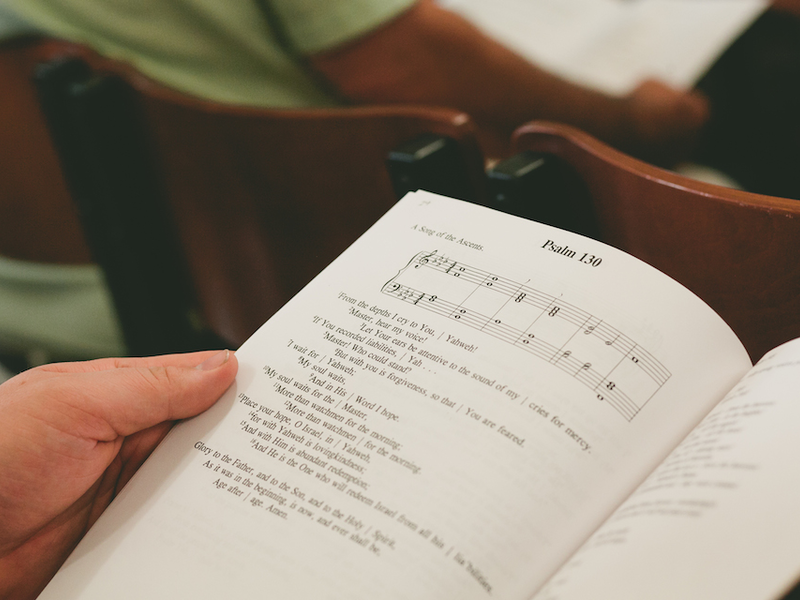
“It is only by participation in a rational, practice-based community that one becomes rational.” – Alasdair MacIntyre It may be perfectly clear to a chef why adding unsifted powdered sugar to a hot frosting is a bad idea. But for an amateur cook, this may be the kind of rule…

by Jonathan BarlowApril 2, 2015
giotto-noli-me
John

The Gardener and the Beloved, (Part 1)

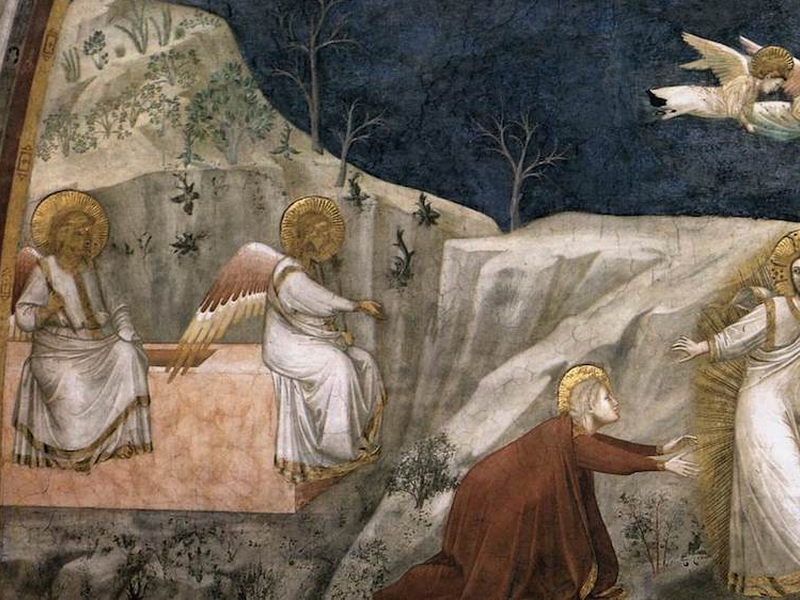
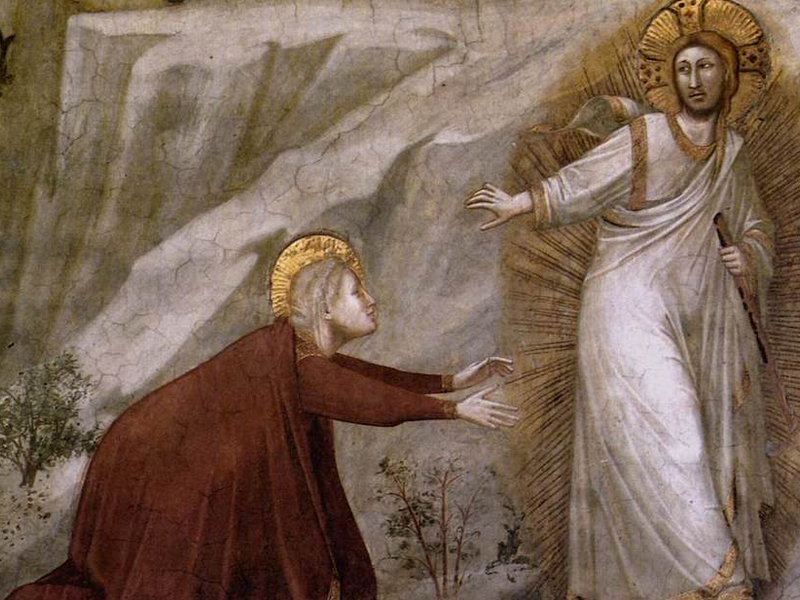
On a fresco in a chapel in Padua, Italy, there is a famous painting depicting the dramatic post-resurrection scene in John 20 with Mary and Jesus outside of the garden tomb. Giotto di Bondone painted it in the early 14th century. Jesus is striding from the tomb with a victor’s…

by Jeff MeyersApril 1, 2015

Showing page 156 of 309

See all
See all
Uncategorized

Practical Texts?

Are the ritual texts of Leviticus “practical” texts designed to guide priests and people in sacrificial and other rituals? If so, argues Leigh Trevaskis in Holiness, Ethics, and Ritual in Leviticus , they don’t do a very good job of it. Too much is left out, and things that are…

April 1, 2014
Uncategorized

Adam Israel

In a few places, Leviticus uses the Hebrew word adam to refer to “any person.” Why adam ? Most commentators suggest that it’s to emphasize sexual inclusiveness. Trevaskis ( Holiness, Ethics, and Ritual in Leviticus ) thinks there’s more. He points out that the tabernacle is an architectural garden of…

April 1, 2014

Presiding at Death

In his masterful study of ancient Greek Miasma , Robert Parker notes death was intensely defiling: “Extramural burial was the norm in almost all classical Greek cities. It would be shocking to mingle the dwellings of the dead with those of the living, still more with those of the gods”…

April 1, 2014

Disturbance

A.A. van Ruler argues that “Israel is the great disturbing factor in the paganism of the world’s nations,” and the church follows Israel’s path ( Calvinist Trinitarianism and Theocentric Politics , 152-3). This is partly because Christianity “is wholly and completely oriented to concrete, visible reality,” since it “thinks and…

April 1, 2014

Sympathy for the Devil

Brian Mattson of the Center for Cultural Leadership offers a lively, compelling analysis of Darren Aronofsky’s Noah . He shows that the film is consistent and sticks close to its sources. The only problem is that Aronofsky’s sources are Kabbalic and Gnostic. Mattson writes, “The world of Aronofsky’s Noah is…

April 1, 2014

Polyphonic Hedgehog

I state a thesis: Dostoevsky is a polyphonic hedgehog. The subthesis is that Tolstoy is a monologic fox. The second part of that comparison comes from Isaiah Berlin’s The Hedgehog and the Fox . Berlin cites the Greek poet Archilochus’s dictum, “A fox knows many things; a hedgehog knows one…

March 31, 2014

Showing page 646 of 2212

Browse by Category

In Medias Res

Your weekly digest for all things Theopolis.

Donate

Theopolis is nearly 100% donor-supported. Consider joining us on our mission.