Theopolis Logo

Writing

Explore our collection of theological essays, biblical studies, and reflections on faith and culture.

See all
tanner-mardis-xuxghzhibn4-unsplash-1-2
Biblical Studies

Tweets-turned-Notes on the Bible’s Chronology

Summary In what follows, I will consider the “year-stamps” employed in Scripture, i.e., statements of the form, “Such-and-such an event took place in the Xth year of Y.” In the process, I will suggest some ways in which the Biblical narrative might relate to events in the extra-Biblical world, though…

by James BejonJuly 16, 2019
durer-prodigal-son-2
Luke

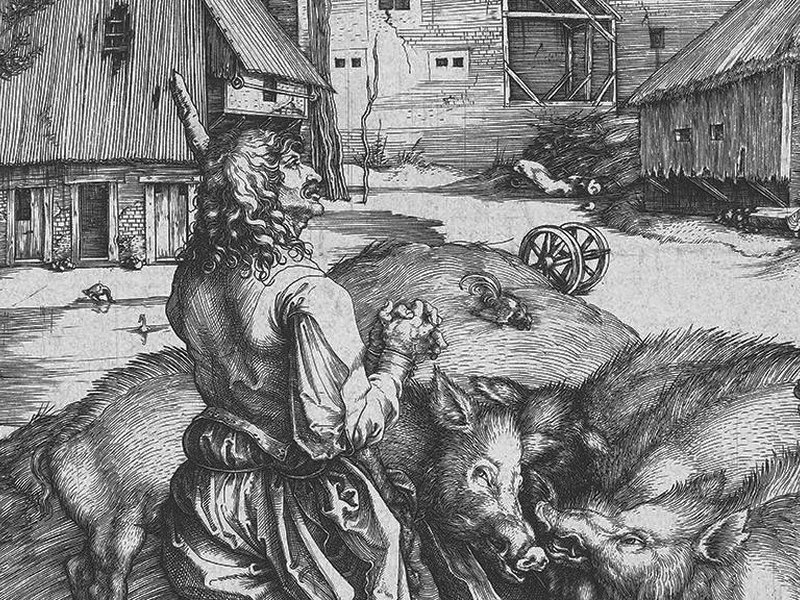
Perspectives on the Prodigal, (Part 2)

In the first essay on the parable of the Prodigal Son, I suggested that the problems commentators and others encounter in interpreting Jesus three-part parable are not accidental. These are not just problems in our ignorance of cultural background. They are intentional features of the stories —stories designed to poke…

by Ralph Allan SmithJuly 11, 2019
durer-prodigal-son-2
Luke

Perspectives on the Prodigal, (Part 1)

The story of the Prodigal Son is perhaps the most well-known story in the Bible. As others have observed, it may also be one of the most misunderstood. In two short essays, I will point out features of this story that are commonly neglected, aspects of Jesus’ parable that might…

by Ralph Allan SmithJuly 9, 2019
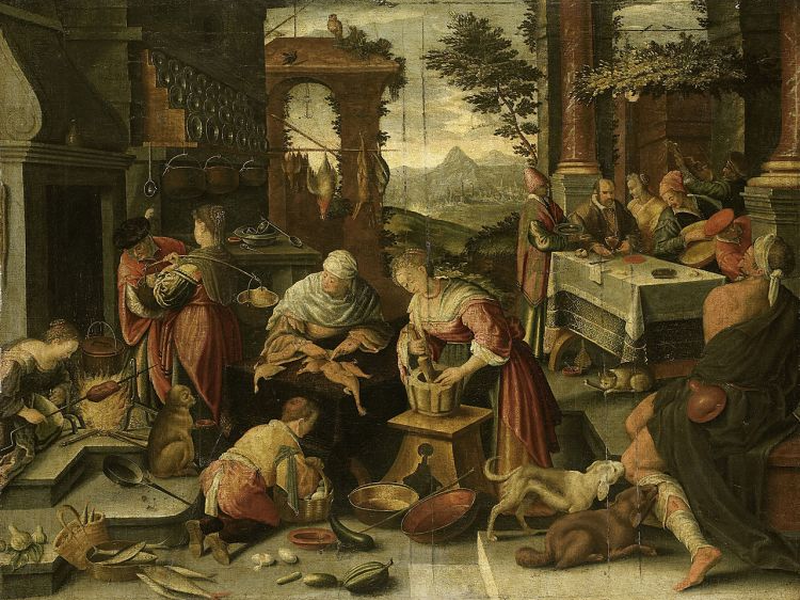
de-rijke-man-en-de-arme-lazarus-by-jacopo-da-ponte-16th-century
Luke

Lazarus and the Rich Man

The parable of Lazarus and the nameless rich man is not an independent story. It is part of a long context that begins in Luke 15:1, where Jesus is eating with tax collectors and sinners and the scribes and Pharisees grumble. In response to their hardheartedness, Jesus tells a three-part…

by Ralph Allan SmithJuly 4, 2019
aaron-burden-uynrnfdkjwg-unsplash
Luke

Everybody has Dropsy - Luke 14:1-24

The Bible is written so that even when a reader cannot pick up on what might be deeper or more detailed aspects of a text, there is virtually always a message to be heard. In the ancient world, where the “reader” of Scripture would likely be a church official facing…

by Ralph Allan SmithJuly 2, 2019
communion
Biblical Theology

Fruit Trees and Grain Plants

The distinction between garden (or vineyard) and field begins in Genesis 2. This relates to the ordering of the formless world. Plants of the field are contrasted with the garden planted by God in Genesis 2:5&8. Later on, under the Old Covenant the Israelites will be required to keep their…

by James B. JordanJune 27, 2019

Showing page 77 of 309

See all
See all

From Freedom to Fascism

Robert Kuttner's NYRB review of Gareth Dale's Karl Polanyi: A Life on the Left highlights Polanyi's relevance to contemporary global politics and economics. Kuttner observes that the "period between the two world wars, free-market liberals governing Britain, France, and the US tried to restore the pre–World War I laissez-faire system.…

January 5, 2018

Scattering and Gathering

The Chronicler gathers all Israel - indeed, a cross section of ancient humanity - on the opening pages of his chronicle. The genealogy is a great, inter-generational qahal (assembly), and the Chronicler is the Qoheleth, the Gatherer. As soon as his story starts, though, Israel is being dispersed. Israel flees…

January 4, 2018

Left Behind

In his forthcoming The Left Behind , Princeton sociologist Robert Wuthnow tries to penetrate past the headlines and stereotypes to discover the truth about, his subtitle has it, decline and rage in rural America. Wuthnow didn't drop into flyover country for a long weekend of hanging with local pundits at…

January 4, 2018

Conservatives on Globalization

James R. Rogers offers a useful taxonomy of contemporary conservative critiques of globalization. He defines globalization as "decreasing costs to capital and labor mobility. Mobility across, but also within, national borders." Alternatively, it could be defined as "the process of incorporating new regions of the world into a unified market…

January 3, 2018

Free Theocracy

In his Religious Philosophy of Vladimir Solovyov , Jonathan Sutton lays out Solovyov's (Solovyev; Soloviev) conception of "free theocracy." For Solovyov, "the realization of the Kingdom of God on earth is presented as an ordering of all aspects of life (individual and communal life) according to Christian principles. Furthermore, this…

January 2, 2018

Gentiles in Chronicles

In a contribution to The Chronicler as Author , Ehud Ben Zvi reviews five statements about Israel from foreigners in the book of Chronicles. The foreigners are Huram of Tyre, the Queen of Sheba, Sennacherib, Neco king of Egypt, and Cyrus the Persian. The first and last two are positive…

January 2, 2018

Showing page 109 of 2212

Browse by Category

In Medias Res

Your weekly digest for all things Theopolis.

Donate

Theopolis is nearly 100% donor-supported. Consider joining us on our mission.