Theopolis News
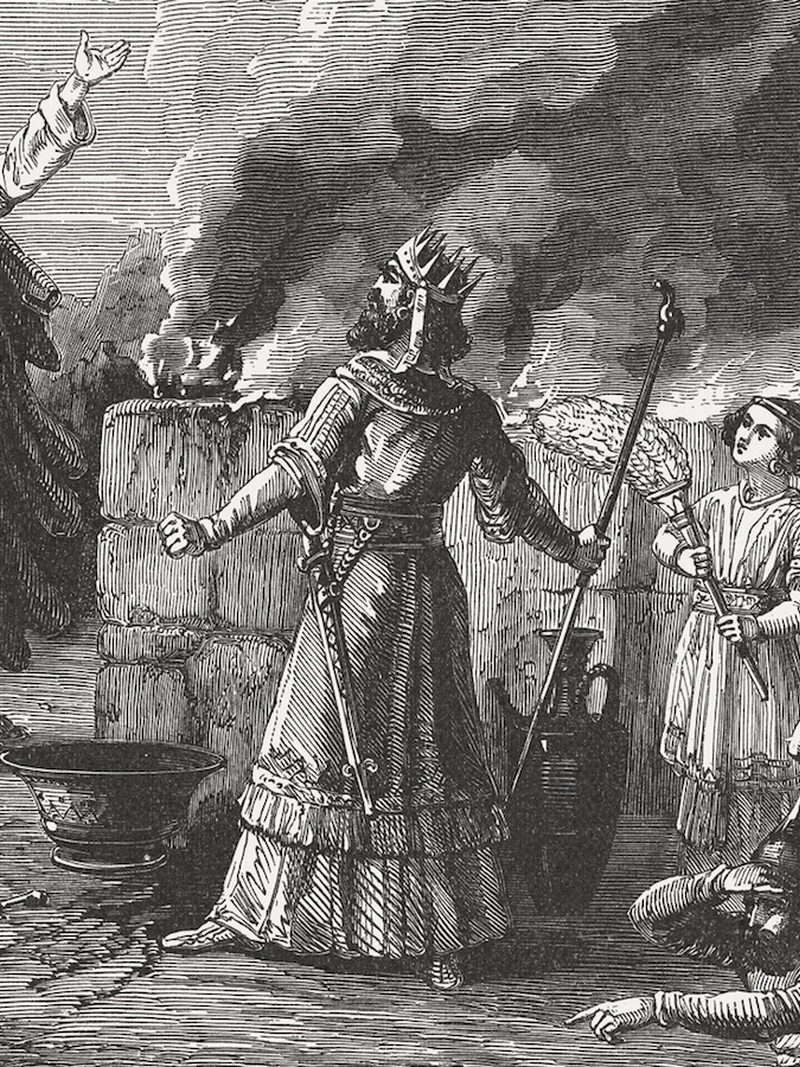
Constantine the Pious
Trinity House President Peter Leithart will deliver a lecture on "Constantine the Pious" at Oregon State University, Wednesday, October 30, at 7:00 PM.
by Peter LeithartOctober 29, 2013
Explore our collection of theological essays, biblical studies, and reflections on faith and culture.
Trinity House President Peter Leithart will deliver a lecture on "Constantine the Pious" at Oregon State University, Wednesday, October 30, at 7:00 PM.

In his rich study, We Have Never Been Modern (Harvard 1993), Bruno Latour describes modernity in terms of a dual process of “purification” and “hybridization.” Purification involves the clean construction of a nature (and science) separated off from society and the self, while hybridization involves mixtures of nature and culture.…

In James K.A. Smith’s excellent book, Introducing Radical Orthodoxy: Mapping a Post-secular Theology , he explains recent developments in theology and philosophy among mostly post-liberal (some Catholic) theologians. As with everything Dr. Smith writes, his prose is accessible, and written with clarity and precision as he describes the contribution made…

This is the last of a three-part series. 1:14-19 – The Lights in the Firmament The fourth day is the first day where God sets out His mediators and rulers. In the celestial bodies, God sets out His mediators and rulers in the same single class of created beings. We…
Trinity House President Peter Leithart will be in Chicago this weekend lecturing on Revelation. Sign up here .
Only two more weeks to register for the Trinity House Advent class on the book of Genesis. Register before the late fees kick in!
Showing page 185 of 309
Showing page 40 of 43
Julian Young offers a neat summary of the Arthur Schopenhauer (the "first European Buddhist") at the TLS . Schopenhauer's philosophy can be pinpointed by contrast with two better-known thinkers. Against Hegel's fantastic " Bildungsroman , a story of the ever-increasing realization of 'reason' in human affairs," Schopenhauer offered a thoroughgoing,…
"How is it possible," asks Terry Teachout , "that a man who made his conducting debut when Grover Cleveland was president should still be sufficiently well known and revered that most of his recordings remain in print to this day?" Teachout thinks that Harvey Sachs's Toscanini: Musician of Conscience comes…
The first published book of Jorge Luis Borges, the great Argentinian poet and short-story writer, was Fervor de Buenos Aires . Borges later wrote, “ Fervor de Buenos Aires foreshadows everything I would do afterward.” It was a slapdash production, Borges claimed in his autobiography: “The book was actually printed…
John Colmer observes in his study of E.M. Forster that Forster's novels transpose Christian terms into a secular key: "a whole set of religious terms - salvation, grace, conversion, transfiguration - become assimilated into an essentially secular vision. . . . Men now seek their happiness on this earth not…
Richard Florida's 2002 Rise of the Creative Class was a manifesto for urban hipness. As Joseph Bottum sums up the book , Florida argued that "cities thrive when these creative types are allowed to build the creative economy. Their tolerance for alternative lifestyles and their acceptance of unconventional housing broke…
"Medieval tolerance" sounds like an oxymoron. Everyone knows the medievals were in tolerant. Everyone knows that tolerance was invented in the modern world. Everyone who knows such things is wrong. Istvan Bejczy demonstrates in a 1997 essay that medieval thinkers had a well-developed concept of tolerance. He goes further than…
Showing page 144 of 2212
Your weekly digest for all things Theopolis.