Theopolis Logo

Writing

Explore our collection of theological essays, biblical studies, and reflections on faith and culture.

See all
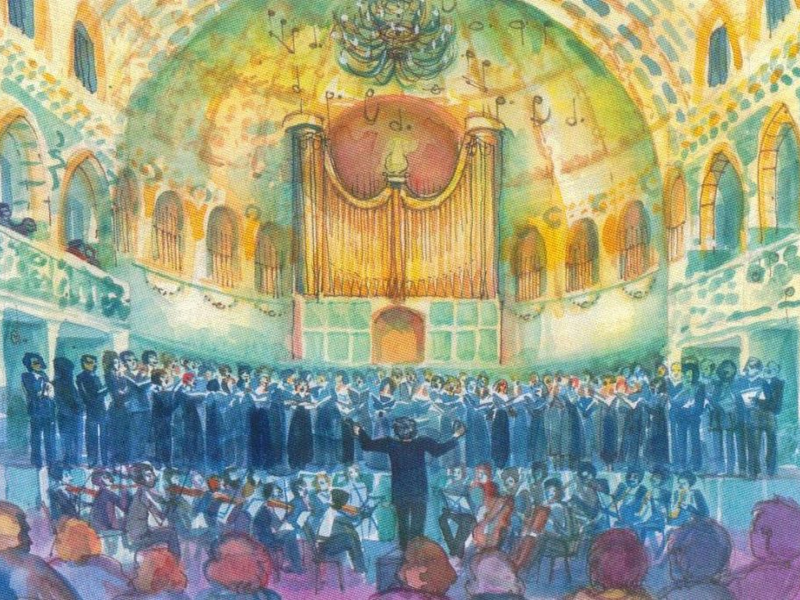
ohs-painting-concert-in-oxford-town-hall
Ephesians

Music and Drunkenness, Part 2

For Part 1, click HERE . How did Paul’s earliest commentators view his juxtaposition of music and drunkenness, and did they connect it to the ancient Greek ideas of musical ethos described in Part I? Origen, one of the earliest commentators on Paul, writes about Ephesians 5:18-19: One, however, who…

by John AhernMay 17, 2018
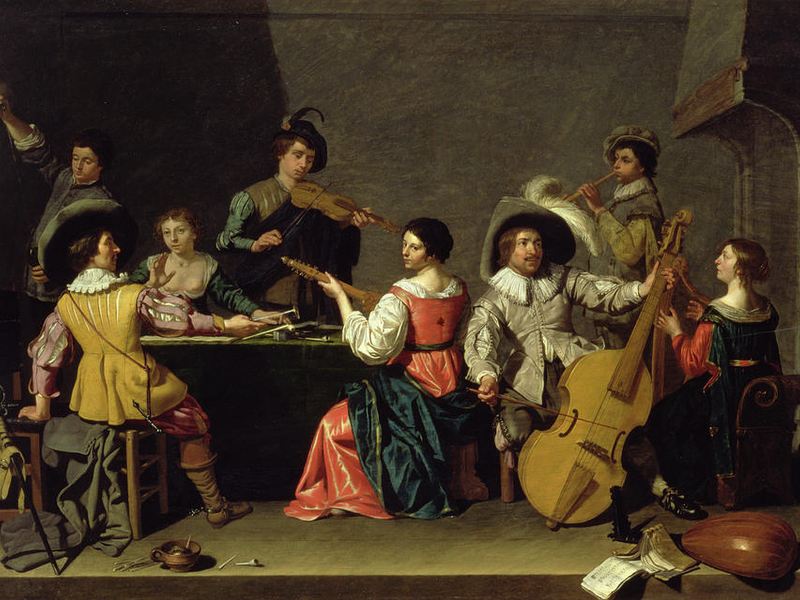
group-of-musicians-jan-van-bijlert-or-bylert
Ephesians

Music and Drunkenness, Part 1

Perhaps it is because I am a musician that I have always found Ephesians 5:18-19 so arbitrary. But isn’t it a little odd to contrast music and drunkenness? Perhaps it is not obvious that that is what Paul is doing; I know, for myself, that it is remarkably easy to…

by John AhernMay 15, 2018
infant-baptism
Baptism

Unequal Holiness

In 1 Corinthians 7:12-16 Paul deals with how the Corinthian Christians are supposed to be relating to unbelieving spouses. He essentially tells them, “Look, if your unbelieving spouse is willing to stay with you as a faithful Christian, don’t initiate a divorce. If he/she wants to leave you, let him/her…

by Bill SmithMay 10, 2018
starwarspt2
Violence

The Sword of Adam: Preterism vs. Pacifism, (Part 2)

For Part 1, click HERE . Those who focus on the supposed “pacifism” of Jesus and condemn the violence of God’s judgments throughout the Old Testament overlook the ministry of sacrificial bloodshed as an alternative to human bloodshed. The sword bearing of the sacrificial system was introduced to avoid the…

by Mike BullMay 8, 2018
obi-wan-death-edit
Violence

The Sword of Adam: Preterism vs. Pacifism, Part 1

How should a Christian respond to the objection that the Bible, like the Koran, is a book of violence and bloodshed? Numerous answers have been offered by well-meaning exegetes, but none of them gets to the heart of the matter: God desires to place a sword in the hands of…

by Mike BullMay 3, 2018
screen-shot-2018-05-02-at-12-55-14-pm
Theopolis News

Alastair Roberts Appointed As Adjunct Senior Fellow

Beginning this summer, Dr. Alastair Roberts will join the Theopolis Institute as an adjunct Senior Fellow, the Institute has announced. Dr. Roberts will be a regular on the Theopolis podcast, teach intensive courses and in the Fellows Program, and help develop new programs and outlets. Roberts earned his PhD from…

by TheopolisMay 2, 2018

Showing page 94 of 309

See all
See all
Philosophy

Mead again

Mead says clock time and calendar time is time only “in a manner of speaking.” He also argues that clock and calendar time is not “absolute” but relative to one’s frame of reference. True that, as my kids say: “Monday” spells gloom within the framework of a certain organization of…

June 19, 2008
Philosophy

Abstract time?

George Herbert Mead focused his thought on temporality (especially in Philosophy of the Present ), and particularly on “time in” events and roles rather than time as a background of events. Time in the strictest sense is the moment of present emergence that reflects into the past and changes its…

June 19, 2008
Science

Scientific laws

Nobel chemist Ilya Prigogine’s work on dissipative structures, complex systems, and irreversibility, Barbara Adam argues, not only challenged particular scientific laws but the classical notion of a scientific law. In classical physics, to arrive at a law was to arrive at a timeless substructure of natural reality. Adam summarizes the…

June 19, 2008
Philosophy

Clock time

Barbara Adam says that the time of clocks is “an idea in practice,” and elaborates: “as a material expression of a particular understanding of the natural world, in which time is conceptualised through motion without change, as a spatial quantity which is infinitely divisible into units, which can be numerically…

June 19, 2008
History

Monastic time

Since Lewis Mumford and Max Weber, historians and sociologists have recognized the importance of the Benedictine monastery in the development of time-keeping, scheduling, and Western notions of time in general. Zerubavel notes that in developing their regulated common life, the Benedictines deliberately broke with the natural and temporal rhythms of…

June 18, 2008
History

Private and public time

We’re used to thinking of privacy in terms of protected spaces, and often hear comments about how isolated individuals and families are in modern society. A guy opens his garage door remotely so his Lexus can slip into the garage, and the door is closed before he’s out of the…

June 18, 2008

Showing page 1503 of 2212

Browse by Category

In Medias Res

Your weekly digest for all things Theopolis.

Donate

Theopolis is nearly 100% donor-supported. Consider joining us on our mission.