Theopolis Logo

Writing

Explore our collection of theological essays, biblical studies, and reflections on faith and culture.

See all
img_7543
Nevin Lectures

Fourth Annual Nevin Lectures: Robert Kolb

Why Do Siblings Feud? Presuppositions, Principles, and Practice in Reformed-Lutheran Relationships Robert Kolb, International Research Emeritus Professor for Institute for Mission Studies, Concordia Seminary, St Louis, Missouri. Lecture Topics 1) Law and Gospel: Answering the Question Posed 2) The Lord's Supper: Christ's Presence and Promise 3) Worship and Created Things:…

by Brian MoatsDecember 30, 2016

e99a2994
Advent

Exodus to Eden

From Genesis 3, West-to-East movement is always movement away from God’s presence and His house (cf. Genesis 3:24). Adam and Eve were cast out of the Garden to the east, and when Cain was later cast out he was sent to the land east of Eden. The men of Babel,…

by Peter LeithartDecember 30, 2016
holy-family
Advent

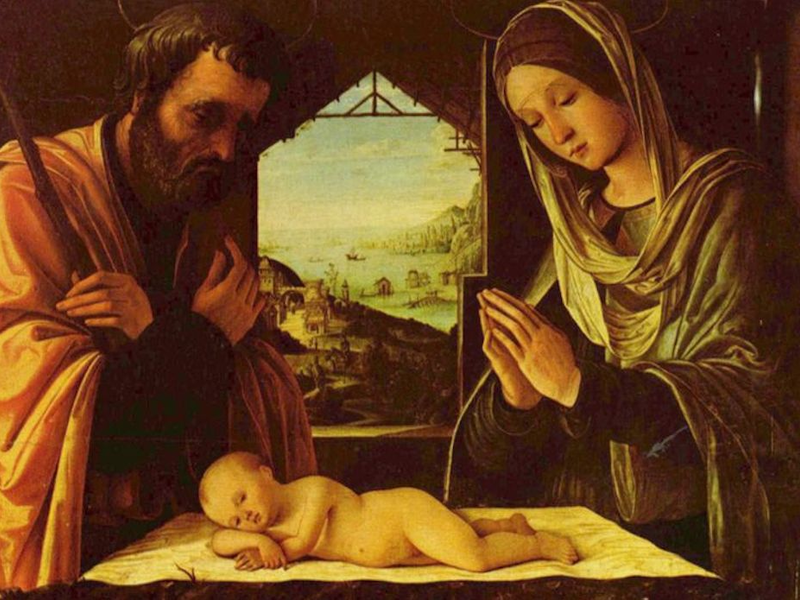
Immanuel's Table

In his account of Jesus' birth, Matthew cites a prophecy assuring Judah of her victory over Israel and Aram. Immanuel is also a sign of the Lord’s judgment. When God comes near, He comes to bless and to curse, to save and to condemn, for deliverance and for judgment. The…

by Peter LeithartDecember 29, 2016
massacre2
Abortion

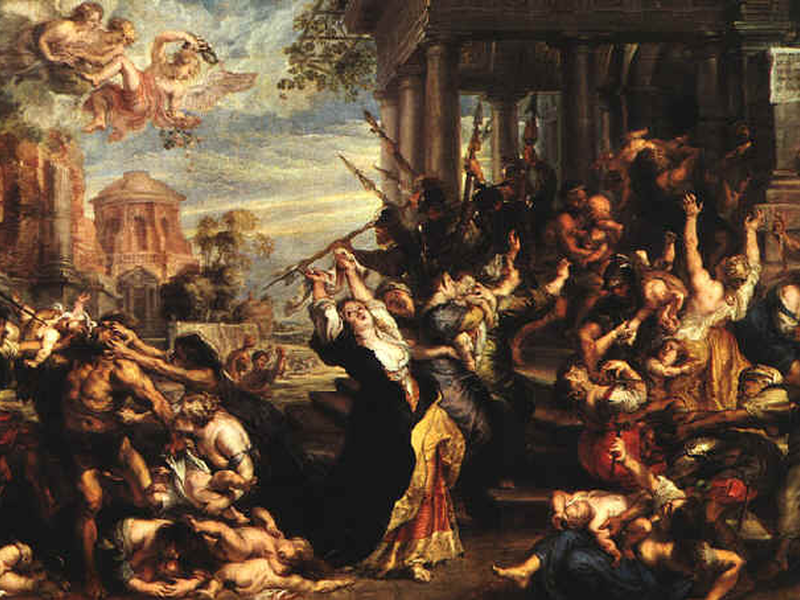
Holy Innocents

For many in the modern era, Christianity has been seen as an apolitical religion. Christianity is a private, spiritual religion. It's a convenient myth for modern people. After the Reformation, Europe entered a period of protracted and often vicious conflict that left large portions of Western Europe devastated. Many concluded…

by Peter LeithartDecember 28, 2016
sixteen-miles-out-d40gdcd_-he-unsplash
Advent

Christmas Light, Christmas Love

The Christmas gospel announces the coming of day. Those in darkness see a great light, as the Sun rises with healing in His wings. The light has come into the world that lightens every man, to give light to those who sit in darkness and in the shadow of death.…

by Peter LeithartDecember 27, 2016
screen-shot-2022-05-12-at-12-07-23-pm
Advent

Word Made Food

How do we know God loved the world? John tells us that He demonstrates His love in sending His Son. To paraphrase Paul, God has demonstrated His love for us in that while we were still sinners Christ was born for us. He sent His Son to take on human…

by Peter LeithartDecember 26, 2016

Showing page 119 of 309

See all
See all
Philosophy

Heidegger in his woods

Latour is tired of being accused of having forgotten Being, and offers this clever brush-off of Heidegger: “If, scorning empiricism, you opt out of the exact sciences, then the human sciences,, then traditional philosophy, then the sciences of language, and you hunker down in your forest - then you will…

November 15, 2006
History

Semi-modernism

Postmoderns, Latour suggests, think they are still modern, but in fact they have greatly oversimplified the modern Constitution. Postmoderns might emphasize the separation of subject and world, and stretch that opposition to a breaking point (Latour vividly describes them as doing the splits to keep subject and world apart); but…

November 15, 2006
History

Modern temporality

In his very good section on modern temporality, Latour argues that modernity assumes that everything in the present, modern moment, is purely modern, novel. Anything that appears that is not up-to-date is a “archaism,” and moderns worry constantly that this or that event or trend might “turn back the clock.”…

November 15, 2006
History

Representation

One of the key moves made since the 17th century, Latour argues, is a distinction between modes of “representation.” In the laboratory Boyle is representing things before selected witnesses through scientific experiments, giving mute nature a voice through the scientist, while in politics Hobbes suggests that the Sovereign speaks for…

November 15, 2006
History

We Have Never Been Modern

Bruno Latour’s We Have Never Been Modern (Harvard 1993) is a rich study. He describes modernity in terms of a dual process of “purification” and “hybridization.” Purification involves the clean construction of a nature (and science) separated off from society and the self, while hybridization involves mixtures of nature and…

November 15, 2006

Tears of things

And/Or: Virgil is aware that the furor of civil war can be curbed only by an opposing, and more intense, furor. That, as Milbank says, is the way of paganism - peace established only by superior violence against violence. But in those tears Virgil expresses the the painful recognition -…

November 13, 2006

Showing page 1763 of 2212

Browse by Category

In Medias Res

Your weekly digest for all things Theopolis.

Donate

Theopolis is nearly 100% donor-supported. Consider joining us on our mission.