Theopolis Logo

Writing

Explore our collection of theological essays, biblical studies, and reflections on faith and culture.

See all
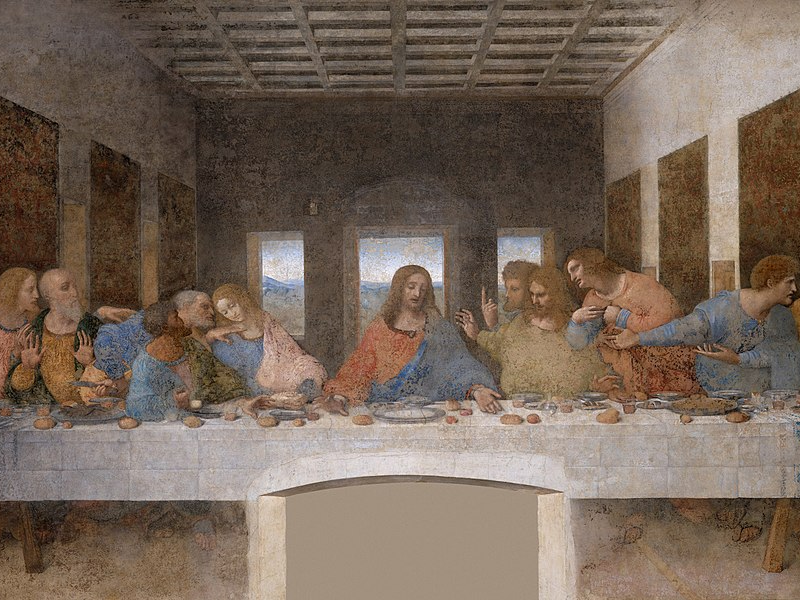
the_last_supper_-_leonardo_da_vinci_-_high_resolution_32x16-2
Biblical Horizons

Was the Last Supper a Passover?

Some readers of my essay, “ Strange and Glorious New Rites ,” have written to object that I have strained a gnat and swallowed a camel. I have strained out the gnat of a possible link to the memorial bread of the minchah (Lev. 2), while overlooking the camel that…

by James B. JordanMarch 22, 2011

screenshot-2023-09-19-at-10-48-12-am
Biblical Horizons

Planetary Judgments

In his lectures on Comparative Religion, Eugen Rosenstock-Huessy points to five fundamental gods that were over ancient man and still can dominate us today, and which must be respected. When we sin, we respect these gods more than we respect the Creator, disobeying the First Word: “You will have no…

by James B. JordanMarch 22, 2011
timothy-eberly-djj49s6ud2o-unsplash
Biblical Studies

Notes on the Book of Judges

A. Israel’s failure to hold land against the Canaanites. Progressive compromise, leading to judgment. 1:1–2:5. B. Israel’s idolatry, the cycle of judges, and war as God’s chastisement. 2:6–3:6. C. Northern Gentiles (Mesopotamia), and Othniel. 3:7-11. D. Lot: Moab, and Ehud. 3:12-13. E. Minor judge: Shamgar. 3:31. F. Canaanites opposed. Women…

by James B. JordanMarch 21, 2011
briana-tozour-mrfapsuyy8a-unsplash
Biblical Horizons

Principalities and Powers, (Part 2)

The great question for the emerging East, for Asia and other awakening third world areas, for an emerging nation like China is, “what fate awaits them?” They are now emerging from an analogous paganism that the West emerged from centuries ago. Here an amazing quotation from David Aikman, the Time…

by Richard BledsoeMarch 15, 2011
sinitta-leunen-dvibhmzsy8e-unsplash
Colossians

The Principalities and Powers, Part I

Paul contends that with the death of Christ on the Cross, there was an overcoming of the Principalities and the Powers (Col. 2:15). A great deal has been written on this subject over the last 60 years. What was for a long time either ignored, or regarded by liberal scholars…

by Richard BledsoeMarch 10, 2011
jimpreaching
Biblical Horizons

Eating and Drinking Together

One of the odd customs that has arisen in the 20th century is that many evangelical churches warp the rites of the Lord’s Supper by insisting that everyone wait so that they eat and drink together. Supposedly this is to emphasize the unity of the Church. This practice has no…

by James B. JordanMarch 3, 2011

Showing page 205 of 309

See all
See all
Literature

The Politics of Playing

Plays might be promoted as a kind of opiate of the masses: Mass entertainment that keeps them from more violent entertainments like rioting and pillaging. This could be problematic, if the entertainments were too heady for most people to follow. Thomas Heywood (1612) suggested that playwrights should “ayme . .…

September 28, 2006
Literature

Shakespeare regulated

How regulated was Shakespeare’s own theater? And for what reasons? Patterson highlights various reasons for closing or permitting theaters: audience composition, including the fear that a large collection of workers might be distruptive; public health; economic concerns; religious and moral concerns, especially Sabbatarian; and “a shifting and elusive imperative to…

September 28, 2006
Literature

American Shakespeare

Shakespeare’s fortunes in the US were, understandably, different from in England. Initially, Shakespeare was America’s most popular playwright, appealing to a wide sector of the American populace. Patterson notes that “by the end of the nineteenth century ‘Shakespeare’ had become a cultural icon, the property only of the ‘legitimate theater,’…

September 28, 2006
Literature

Popular Shakespeare

Annabel Patterson notes ( Shakespeare and the Popular Voice ) that contemporary critics, whatever their own political outlook, assume that Shakespeare was an advocate of Elizabethan hierarchy. This view, however, is a product of the 19th century. Dryden, Johnson, and others criticize Shakespeare for violating the conventions of his genre,…

September 28, 2006
Literature

Courtly Shakespeare, IV

By the 18th century, acting styles also invested Shakespeare with “courtly” virtues of control, dignity, stateliness. Dobson writes, “Shakespearian acting . . . in the decades following Betterton’s death in 1710, seems to have settled into a grandiloquent vein of static declamation, best exemplified by the stout James Quin (1693-1766)…

September 28, 2006
Literature

Courtly Shakespeare, III

Dobson again: “after Charles II’s death in 1685 England would never again have another monarch with such an informed interest in the drama (or, mercifully, such a lascivious one), and deprived of royal patronage and protection the playhouses came under renewed attack from the moralists (led by the redoubtable clergyman…

September 28, 2006

Showing page 1785 of 2212

Browse by Category

In Medias Res

Your weekly digest for all things Theopolis.

Donate

Theopolis is nearly 100% donor-supported. Consider joining us on our mission.