Theopolis Logo

Writing

Explore our collection of theological essays, biblical studies, and reflections on faith and culture.

See all
screen-shot-2022-05-12-at-12-07-23-pm
Baptism

Do I Believe in Baptismal Regeneration?

I appreciate Andy Webb’s recent entry into the current discussion over baptismal efficacy. 1 This is an issue which has consumed a great deal of time and energy in the Reformed world in recent years. It is not likely to subside soon. As a contributing party to the discussion, I…

by Rich LuskMay 30, 2007

michal-parzuchowski-w9uljjwg2fa-unsplash
Children

How to Encourage our Children to Believe the Gospel

The Covenant Vision of the Heidelberg & Westminster Catechisms Regarding Children and Baptism 7 POINTS ABOUT THE TEACHING OF THE REFORMED CHURCHES Question 1. What is thy only comfort in life and death? Answer: That I with body and soul, both in life and death, am not my own, but…

by Mark HorneMay 22, 2007
arthur-chauvineau-enjfallamyo-unsplash
Christmas

Celebrating a Calvinist Christmas with a Clear Conscience

Is the Holiday Unpresbyterian? ‘Tis the season to be informed–sometimes in gentleness, often with vigor–by a variety of Christians (and others 1 ) claiming that it is wrong to celebrate Christmas. I have no desire to force anyone to celebrate Christmas against their will. Indeed, it would be insulting to…

by Mark HorneMay 20, 2007
aaron-burden-qjdzyt_k8xg-unsplash
Biblical Horizons

How To Do Reformed Theology Nowadays

This month we begin by considering Alan D. Strange’s article, “Understanding the ‘Federal Vision'” published in the February 2007 issue of New Horizons, the official denominational magazine of the Orthodox Presbyterian Church. Mr. Strange is an OPC minister, a teacher at Mid-America Reformed Seminary, and was a member of the…

by James B. JordanMay 5, 2007
aaron-burden-qjdzyt_k8xg-unsplash
Luke

Why Side with the Sadducees? | A Question for “Full” or “Consistent” Preterists

There is no reason to believe that Matthew 24, Mark 13, or Luke 21 records Jesus prophesying about what is now known in Christian theology as “the Second Coming.” In my opinion, the fact that most modern conservative Christian scholars and pastors are not yet willing to acknowledge that the…

by Mark HorneJune 7, 2006
quien-fue-francis-turretin-1024x576
Baptism

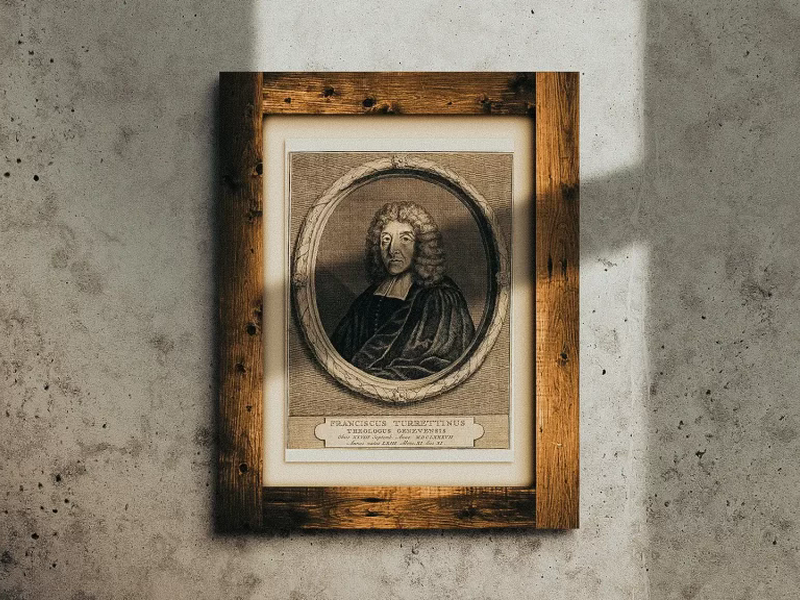
Francis Turretin & Benedict Pictet on Christian Infants

Francis Turretin, the Reformed theologian of the seventeenth century, carefully distinguishes the Reformed view of infant faith from Lutheran and Anabaptist claims. Anabaptists denied any faith to infants so that they could justify their refusal to baptize them. Lutherans affirmed (rightly) that covenant infants were believers, but made no distinction…

by Mark HorneJune 5, 2006

Showing page 220 of 309

See all
See all
Philosophy

Continental v. analytic

Continuing through Simon Critchley’s book on Continental philosophy, the following analogy seems to capture some aspects of the contrast of Continental and analytic: Continental is Catholic: conscious of tradition, respectful of saints, aware of historical contextualization. Philosophy is the history of philosophy. Analytic is Protestant: deals with de-contextualized philosophical problems,…

September 14, 2006
History

Modernist postmoderns

Postmodern critics of modernity sometimes treat the latter not only as the pursuit and ambition for totality; they treat it as a totality, as an undifferentiated whole. But if postmoderns are right, even modernity was fragmented and frayed at the edges, and the appearance of totality is a modernist ruse.…

September 13, 2006
History

Modernity and dirt

A subsidiary thesis: Modernity is motivated by a desire for purity, by dirt-avoidance - dirt being, as Mary Douglas says, “matter out of place.” Counter-modernity is dirt’s revenge, celebration of dirt.

September 13, 2006
History

Modernity as court culture

Featherstone once again. He points out that sometime in the 18th century, upper class culture divided from lower class culture: “in 1500 the educated strata despised the common people although they shared their culture. Yet by 1800 their descendants had ceased to join spontaneously in popular culture and were rediscovering…

September 13, 2006
History

Romantic ethic and Consumption

In his 1987 book, The Romantic Ethic and the Spirit of Modern Consumerism , C. Campbell attempts to explain the origins of contemporary obsession with novelty, pleasure in the new, self-expression through consumption of goods. He traces it to romanticism’s focus on “imagination, fantasy, mysticism, creativity and emotional exploration” (Featherstone’s…

September 13, 2006
History

Consumption, Body, and the Sacred

A couple of further notes from Featherstone’s very stimulating book. First, citing Pierre Bourdieu, he notes the limits of seeing consumption as an isolated marker of status. The signs “that betray a person’s origins and trajectory through life are manifest in body shape, size, weight, stance, walk, demeanour, tone of…

September 13, 2006

Showing page 1794 of 2212

Browse by Category

In Medias Res

Your weekly digest for all things Theopolis.

Donate

Theopolis is nearly 100% donor-supported. Consider joining us on our mission.