Theopolis Logo

Writing

Explore our collection of theological essays, biblical studies, and reflections on faith and culture.

See all
hard-to-be-a-god
Books

Let us Fix the World: An Admonition from the Strugatsky Brothers

That there is something wrong with the world is obvious. It does not take much time or brilliance to notice it. Once we get the feeling that we could imagine a better world, we are tempted to fix it or, if we cannot, to escape it. For both the world-fixers…

by Bogumil JarmulakApril 6, 2021

patrick-fore-b_shpu5m3nk-unsplash
Prayer

The Lord’s Prayer Exposited

“Our Father in heaven,” what is man that we should be called your sons and daughters, beloved children of God Almighty, Maker of heaven and earth, Yahweh of Hosts, the Ancient of Days. You are not a father preoccupied with work or engrossed in your smartphone; you are a present…

by Drew KnowlesMarch 30, 2021
lisanto-4irss8spks4-unsplash
Pastoral Ministry

Pastoral Reflections on Purity Laws

The Son of God took on human flesh and entered into the sin and suffering of our world. His life and teaching and suffering from His conception to His suffering on the cross teaches us a lot about how the good news enters into the world. Recently, I was teaching…

by Nathan ZekveldMarch 23, 2021
foster_balaam
Hermeneutics

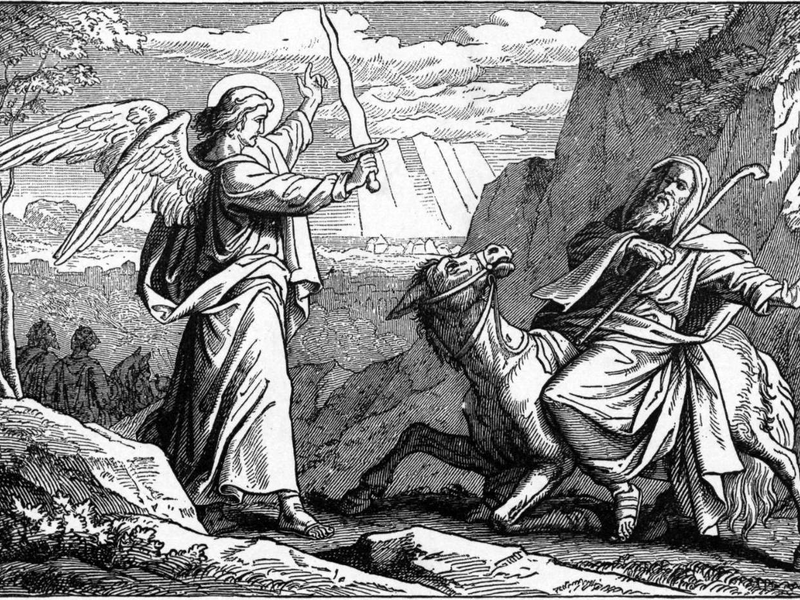
The Ass and the Messiah

There is an unspoken rule about typology that permeates Evangelical thinking. It goes something like this: “If the New Testament authors don’t use an Old Testament character as a type, we don’t either.” There is a soundness in this reasoning, at least in a preliminary sense. There is no better…

by Garrett SoucyMarch 16, 2021
screen-shot-2021-03-08-at-8-57-36-am
Church Calendar

The Sound of Silence

In The world of Silence, Max Picard writes, “There does not seem to be any space left where there could possibly have been anything but noise. We take it for granted much as we take the air itself for granted. Everything begins and ends with noise.” Is it fair to…

by Jacob SkogenMarch 9, 2021
esther
Hermeneutics

The Absent Presence of God: The Storied Theology of Esther for the Modern Age

God is Not There God is not in the book of Esther. Do a word search and you will get 0 results. Also try Lord, Yahweh, Prayer, Temple, or Sacrifice. Even names with God’s name in them, like Elijah, Jeremiah, or Daniel are missing. The fool says in his heart,…

by Ryan HandermannMarch 4, 2021

Showing page 57 of 309

See all
See all
History

Hermeticism and gnosticism

In his book on the hermeticist Hegel, Magee gives this helpful sketch of the differences between gnosticism and hermeticism: “Gnosticism and Hermeticism both believe that a divine ‘spark’ is implanted in man, and that man can come to know God. However, Gnosticism involves an absolutely negative account of creation. It…

August 16, 2006
Philosophy

Hegel and Hermes

In a 2001 book (Cornell), Glenn Magee argues that Hegel must be understood as a hermetic thinker. Hegel claims to have moved beyond the ancient notion of philosophy as “pursuit of wisdom” to an absolute knowledge that is simply identical with wisdom. As Magee says, “Hegel’s claim to have attained…

August 16, 2006

MacIntyre on Heroic virtue

In After Virtue , Alasdair MacIntyre provides a neat discussion of the virtue and selfhood in Greek antiquity. The unity of ARETE, virtue, “resides . . . in the concept of that which enables a man to discharge his role,” and refers to “excellence of any kind,” whether in a…

August 16, 2006
Philosophy

Logos: Harmony and Recipe

One Marc Cohen of the University of Washington, offers this account of the “logos” of Heraclitus in an online lecture outline: First, “There is an orderly, law-governed process of change in the universe. (Compare fragment 80 with Anaximander, who equates strife with injustice; for Heraclitus, strife is justice, and is…

August 16, 2006

Life of Heraclitus

Some selections from Diogenes Laertius’ “Life of Heraclitus, from his “Lives and Opinions of Eminent Philosophers: “He was above all men of a lofty and arrogant spirit, as is plain from his writings, in which he says, ‘Abundant learning does not form the mind; for if it did, it would…

August 16, 2006
History

Asocial sociability

Seigel devotes a fascinating section of his book ( Idea of the Self ) to a summary of Mandeville’s Fable of the Bees , in which Mandeville describes what Kant characterized as the “asocial sociability” of human nature. Social in the sense that even in a natural state, prior to…

August 15, 2006

Showing page 1809 of 2212

Browse by Category

In Medias Res

Your weekly digest for all things Theopolis.

Donate

Theopolis is nearly 100% donor-supported. Consider joining us on our mission.