Theopolis Logo

Writing

Explore our collection of theological essays, biblical studies, and reflections on faith and culture.

See all
james-coleman-642705-unsplash
Biblical Studies

The Literary Structure of the Whole Bible

In this essay we will think about how the whole Bible is structured as one Word of God. To begin with, there is only one Bible, not two. While we divide the Bible into Old and New Testaments, that division has no more meaning than divisions into chapters and verse,…

by James B. JordanMay 16, 2019

img_1689
Catholicity

Catholicity and Integrity

How should one badly bruised and inadequate church relate to another? (I am not addressing the blessed possessors of absolutely perfect churches, naturally.) I believe there are three things to bear in mind. First, we must be open to the values in other Christian traditions - even Roman Catholic and…

by James B. JordanMay 14, 2019
screen-shot-2019-05-09-at-2-51-07-pm
Chiasm

Fertile Meaning

The third and sixth day have a second creative act. Note the chiastic arrangement of the material in these special acts and the parallelism between them, see the figure below. The author arranges the description of each day as a chiasm. Each line in the chiasm is mated with a…

by Scott FairbanksMay 9, 2019
29994-adam-and-eve-in-the-garden-of-eden-800w-tn
Biblical Theology

Nakedness and Clothing

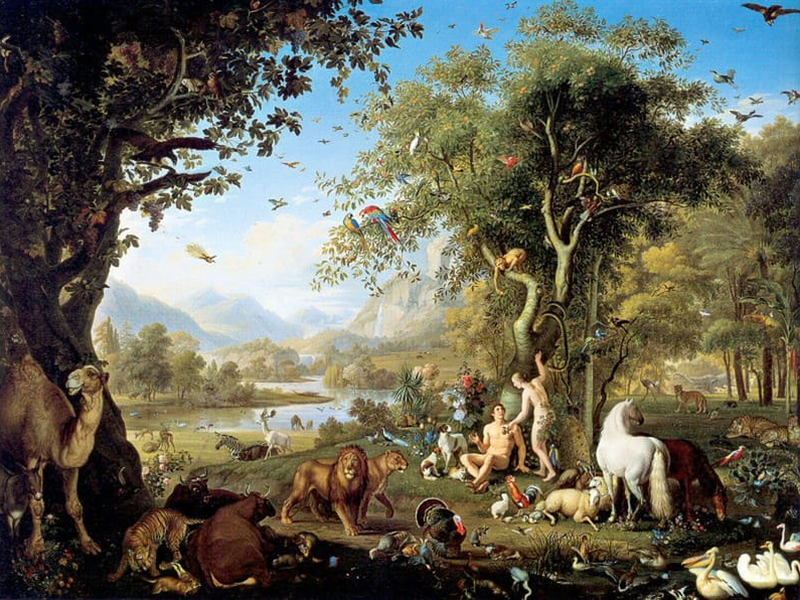
Now the two of them were naked, the man and his woman, and they did not sense shame (Genesis 2:25) The nakedness of Adam and Eve requires several comments. First of all, against those who think that nakedness is what God intended for humanity as a permanent estate, we have…

by James B. JordanMay 7, 2019
screenshot-2023-10-27-at-1-23-26-pm
Epistemology

Restoring the “Other” in Mother

I’ve been reflecting on the meaning of integration, and our longing for integration in a fragmented world. I’ve been connecting my own covenant epistemology further with the thought of scientist-philosopher Michael Polanyi, artist Makoto Fujimura, and Classical Christian metaphysician D.C. Schindler. In my last post , and now in this…

by Esther Lightcap MeekApril 30, 2019
sixteen-miles-out-al48tflf4e8-unsplash
Hermeneutics

Go Tell that Vixen!

Luke 13:31-33 is one of the strangest passages in the Gospel of Luke. It begins with a time note that sounds emphatic “At that very hour.” Then, we are told of Pharisees bringing a message that Herod wants to kill Jesus! In His answer, Jesus speaks of a three day…

by Ralph Allan SmithApril 23, 2019

Showing page 79 of 309

See all
See all
Philosophy

Descartes’s Double Self

In his history of modern Western views of the self ( The Idea of the Self , Cambridge 2005), Jerrold Seigel offers what he believes is a fresh interpretation of the implications Descartes’s cogito . He asks, Who is the subject, the “I,” implied by the cogito and the sum…

August 12, 2006
Philosophy

Descartes’s Double Self

In his history of modern Western views of the self ( The Idea of the Self , Cambridge 2005), Jerrold Seigel offers what he believes is a fresh interpretation of the implications Descartes’s cogito . He asks, Who is the subject, the “I,” implied by the cogito and the sum…

August 12, 2006
History

Reaching back

Bruce Holsinger shows that “postmodern” theory reaches back beyond the modern period to find resources for anti-modern critique in the medieval world. Early modern thinkers made a similar move: Stephen McKnight notes (in a Mars Hill Audio interview) that early modern scientists like Francis Bacons claimed to be recovering an…

August 12, 2006
History

Descartes’s ambitions

Descartes’s original title for Discourse on Method was “Project for a Science that Can Raise our Nature to its Highest Degree of Perfection.” And for a number of years he worked on a treatise in which he “resolved to explain all the phenomena of nature, that is all of physics”…

August 12, 2006
History

Descartes’s ambitions

Descartes’s original title for Discourse on Method was “Project for a Science that Can Raise our Nature to its Highest Degree of Perfection.” And for a number of years he worked on a treatise in which he “resolved to explain all the phenomena of nature, that is all of physics”…

August 12, 2006
Theology

Not Quite Postmodern

In his very fine, lucid book, Who’s Afraid of Postmodernism? (Baker 2006), James KA Smith notes that many postmodern theologies, especially influenced by Derrida’s apophaticism, are anti-dogmatic: “postmodern religious faith eschews knowledge and therefore also eschews the particularity of dogma and doctrine. In other words, according to this line of…

August 11, 2006

Showing page 1813 of 2212

Browse by Category

In Medias Res

Your weekly digest for all things Theopolis.

Donate

Theopolis is nearly 100% donor-supported. Consider joining us on our mission.