
Theopolis Logo

Writing

Explore our collection of theological essays, biblical studies, and reflections on faith and culture.

See all
brian-moats-2
Theopolis News

Meet Brian Moats

Theopolis is delighted to announce that we have hired Brian Moats as Assistant to President Peter Leithart. An Alabama native and graduate of Boyce College in Louisville, Brian is a professional photographer who has also worked as a salesman and dispatcher for Charter Communications and Wayne's Environmental Services. Brian and…

by TheopolisJune 10, 2015
theopolis-liturgy
History

Christians, Liturgy, and the Past, (Part 1)

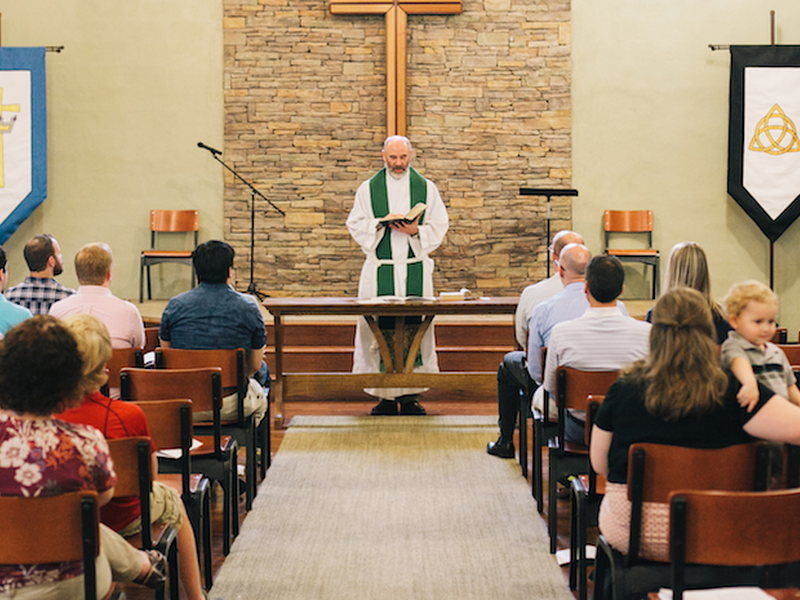
Over the last few years, I have had frequent cause to return to the question of the ways in which the past and its forms of liturgy should be handled within the Church today. Keeping faith with the past is seldom as straightforward an endeavour as it might initially appear,…

by Alastair RobertsJune 9, 2015
medievalilluminatedmanuscript
Hermeneutics

The Dramatic Structure of Proverbs

The book of Proverbs appears as a largely random collection of aphorisms drawn from experience saturated in law. Despite its random arrangement, however, the book does have an over-arching structure that reinforces its main themes. One way to gather clues regarding the structure of a biblical book (or any book)…

by Peter LeithartJune 4, 2015
milwaukee
Charity

Mission to Milwaukee

Prior to attending the week-long intensive course on Holistic Mission, my wife and I were living two counties away from Milwaukee, in the comfortably quiet and rural village of Slinger, Wisconsin. In God’s providence, after nearly ten years of living in Slinger, we realized some changes to our comfortable and…

by Jonathan SedlakJune 2, 2015
james-coleman-orks2dpueo0-unsplash
Bonaventure

One Body and One Loaf: Eucharistic Unity Through the Theology of St. Bonaventure

I have many Roman Catholic friends. Leading from my time at Saint Louis University and continuing through various scholarly engagements I often get an opportunity to discuss history and theology with Roman Catholics who are very well educated in their tradition and practice, some of whom are leading scholars in…

by Timothy LeCroyMay 28, 2015
107394ab
Theopolis News

Music in Life and Liturgy

Theopolis ended its second year of operation with its Pentecost Term course on Music in Life and Liturgy last week. Co-taught by Ken Myers of Mars Hill Audio and scholar-in-residence James Jordan, the Music course was the largest Theopolis course yet. Sixteen pastors, seminary students, and music ministers from nine…

by TheopolisMay 26, 2015

Showing page 152 of 309

See all
See all

Objective/Subjective

McGrath notes that Augustine interpreted the genitive in the phrase “righteousness of God” in Rom 1 objectively, so that it was understood as the righteousness that God gives in saving sinners (in “making” them righteous). Ambrosiaster, as I pointed out in an earliet post, interpreted the genitive subjectively - the…

April 20, 2006

Old Perspective on Paul

Ambrosiaster writes, “Iustitia est Dei, quia quod promisit dedit, ideo credens hoc esse se consecutum quod promiserat Deus per prophetas suos, iustum Deum probat et testis est iustitiae eius” (PL, 17.56b). McGrath explains: “God, having promised to give salvation, subsequently gives it, and as a result is deemed to be…

April 20, 2006
History

Unfinished Reformation

Nevin wrote: “There is more a great deal in Christianity, I firmly believe, more in the idea of hte Holy Catholic Church, than has yet been attained, either in the way of knowledge or in the way of life, by the Protestant Reformation.”

April 20, 2006

Factitive Justification

There was a consensus among the theologians of Trent, McGrath argues, that justification was “factitive,” a view that excluded that “a sinner may be justified solely as a matter of reputation or imputation, while remaining a sinner in fact.” But of course that raises the question, What exactly is a…

April 20, 2006

True Lutherans

McGrath traces the odd development in Lutheran Orthodoxy of the notion that regeneration and faith precede justification in such a way that “where Luther had understood justification to concern the unbelieving sinner, orthodoxy revised this view, referring justification to the believing sinner.” This takes Lutheran Orthodoxy back in the direction…

April 20, 2006

Ontological change

McGrath notes, “While justification was universally understood to involve the regeneration of humanity, the opinion that an ontological change is thereby effected within humans is particularly associated with the period of High Scholasticism and the development of the concept of created grace. The earlier medieval theologians expressed the change effected…

April 20, 2006

Showing page 1854 of 2212

Browse by Category

In Medias Res

Your weekly digest for all things Theopolis.

Donate

Theopolis is nearly 100% donor-supported. Consider joining us on our mission.