Theopolis Logo

Writing

Explore our collection of theological essays, biblical studies, and reflections on faith and culture.

See all
sunrise-2
Creation

Maker of Heaven and Earth, (Part 4)

In my previous two posts, I looked at aspects of Psalms 93, 95, 96 and 98 that declare Yahweh, the divine King, to be the world’s own Creator. In my next post, I plan to argue that the creation theology of the sub-section constituted by Psalms 93-100 contributes to the…

by Stephen LongApril 23, 2015
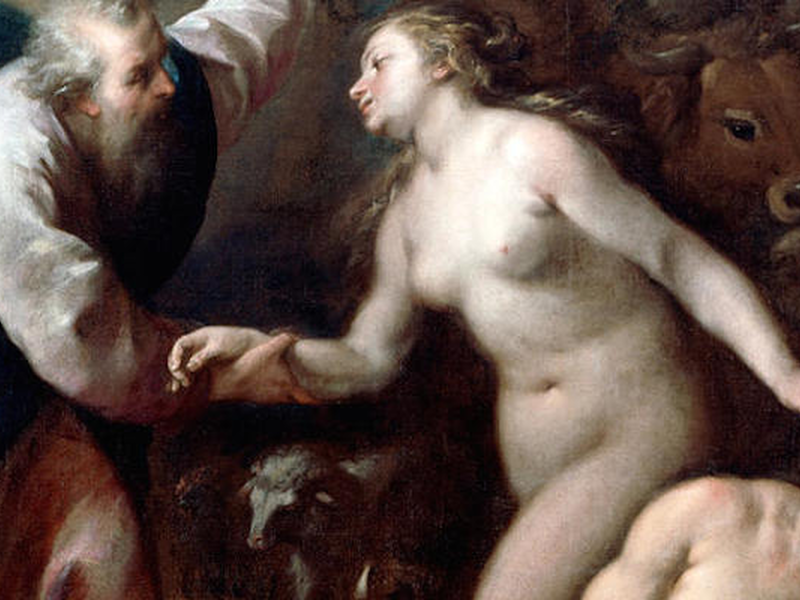
creation-eve
Otherness

Sexual Difference, Liberal and Christian

Ethika Politika has published a fascinating interview within which the French Catholic philosopher Fabrice Hadjadj discusses his recent work on the subject of sexuality. While there are many points where our lines of reasoning as Protestants will sharply diverge from Hadjadj’s, there is also much that is deeply perceptive in…

by Alastair RobertsApril 21, 2015
giammarco-zeh-ljawhtg-unsplash
Literature

Macbeth and the Fall of Adam

For anyone in Shakespeare’s audience who knew the real story of Macbeth, his play must have been surprising. Shakespeare changed so many important details of the historical Macbeth’s life that had Raphael Holinshed, the main author of the most popular history of the British Isles in Shakespeare’s day — Holinshed…

by Ralph Allan SmithApril 16, 2015
medievalilluminatedmanuscript
Creation

Maker of Heaven and Earth, (Part 3)

I started looking at a sequence of psalms on divine Kingship (Psalms 93-100) in my last post, part of a series looking at the Old Testament’s witness to Yahweh’s exercise of absolute mastery over his cosmos. I am not trying to “prove” a doctrine of creation ex nihilo directly from…

by Stephen LongApril 14, 2015
pearls
Anxiety

(Un)Holy Fear

Most of the time I believe that dread is wise, anxiety righteous, fear a holy thing. It sounds ridiculous, but bear with me. There are days when fear seems to be not only a rational response to my circumstances, but a moral duty. After all, being a grown-up means responsibility.…

by Leta SundetApril 11, 2015
emmanuel-phaeton-1bwmfmvybi8-unsplash
Psalms

Psalm 36 Commentary

Get the Psalm 36 Translation here Psalm 36 begins with several translation problems. First, the first word in the actual psalm, as it is found in the English text, is the word "oracle." This word also begins the second verse in the medieval Massoretic Hebrew text, which is our basic…

by James B. JordanApril 10, 2015

Showing page 155 of 309

See all
See all
History

Modernity and antiquity

Kumar suggests that “some of the principal hall-marks of modernity” are already evident in the Christian notions of time and history. Both Christianity and modernity separate time from nature, and humanize time; time is seen by both as “linear and irreversible”; both see history as an Aristotelian drama with beginning,…

February 24, 2006
History

First Modernity

The Latin modernus was coined in the late fifth century, as an antonym to antiquus , and variations of modernus became particularly common after the 10th century. Thus, Krishan Kumar writes, “Modernity is . . . an invention of the Christian Middle Ages,” and was used to emphasize the radical…

February 24, 2006
Philosophy

Computer Communications and the Self

Poster lists four effects that computer communications (email, chat groups, etc) have on the self: “1 they introduce new possibilities for playing with identities; 2 they degender communications by removing gender cues; 3 they destabilize existing hierarchies in relationships and re-hierarchize communications according to criterio that were previously irrelevant; and…

February 24, 2006
Philosophy

Computers, subjects and objects

Descartes famously contrasted the mind (res cogitans) with the external world (res extensa), but Mark Poster suggests that computer writing fudges that distinction: “the computer dematerializes the written trace. As inputs are made to the computer through the keyboard, pixels of phosphor are illuminated on the screen, pixels that are…

February 24, 2006
Media

Community and New Communications

Mark Poster points to a tension between the modern institutions of production and the postmodern technologies of communication, particularly as they impact the formation of the self: “If modernity or the mode of production signifies patterned practices that elicit identities as autonomous and (instrumentally) rational, postmodernity or the mode of…

February 24, 2006
Media

Telephone

Prior to World War I, Telefon Hirmondo, the telephone system of Budapest, was used as a broadcast system, with a published schedule of programs that were restricted to certain classes of people in Hungary. Only later did it develop into a communications system in which everyone could pass information to…

February 24, 2006

Showing page 1878 of 2212

Browse by Category

In Medias Res

Your weekly digest for all things Theopolis.

Donate

Theopolis is nearly 100% donor-supported. Consider joining us on our mission.