Theopolis Logo

Writing

Explore our collection of theological essays, biblical studies, and reflections on faith and culture.

See all
hard-to-be-a-god
Books

Let us Fix the World: An Admonition from the Strugatsky Brothers

That there is something wrong with the world is obvious. It does not take much time or brilliance to notice it. Once we get the feeling that we could imagine a better world, we are tempted to fix it or, if we cannot, to escape it. For both the world-fixers…

by Bogumil JarmulakApril 6, 2021

patrick-fore-b_shpu5m3nk-unsplash
Prayer

The Lord’s Prayer Exposited

“Our Father in heaven,” what is man that we should be called your sons and daughters, beloved children of God Almighty, Maker of heaven and earth, Yahweh of Hosts, the Ancient of Days. You are not a father preoccupied with work or engrossed in your smartphone; you are a present…

by Drew KnowlesMarch 30, 2021
lisanto-4irss8spks4-unsplash
Pastoral Ministry

Pastoral Reflections on Purity Laws

The Son of God took on human flesh and entered into the sin and suffering of our world. His life and teaching and suffering from His conception to His suffering on the cross teaches us a lot about how the good news enters into the world. Recently, I was teaching…

by Nathan ZekveldMarch 23, 2021
foster_balaam
Hermeneutics

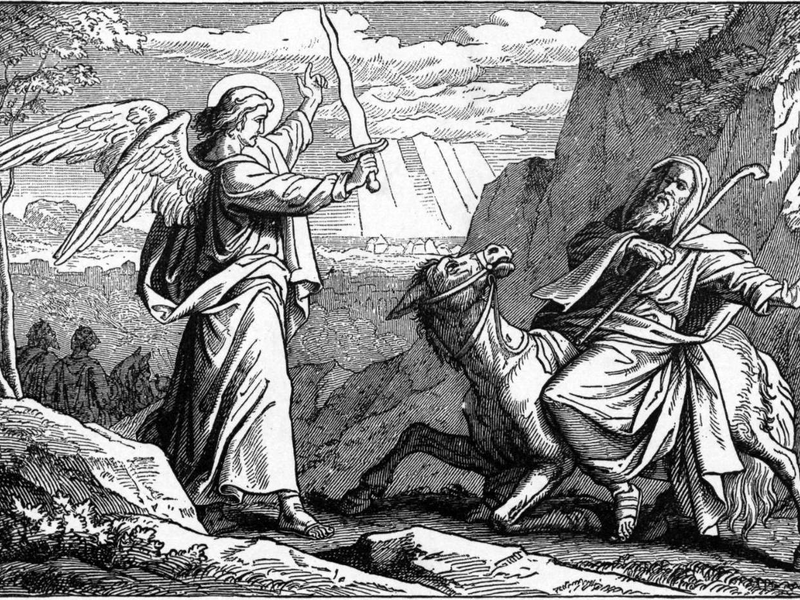
The Ass and the Messiah

There is an unspoken rule about typology that permeates Evangelical thinking. It goes something like this: “If the New Testament authors don’t use an Old Testament character as a type, we don’t either.” There is a soundness in this reasoning, at least in a preliminary sense. There is no better…

by Garrett SoucyMarch 16, 2021
screen-shot-2021-03-08-at-8-57-36-am
Church Calendar

The Sound of Silence

In The world of Silence, Max Picard writes, “There does not seem to be any space left where there could possibly have been anything but noise. We take it for granted much as we take the air itself for granted. Everything begins and ends with noise.” Is it fair to…

by Jacob SkogenMarch 9, 2021
esther
Hermeneutics

The Absent Presence of God: The Storied Theology of Esther for the Modern Age

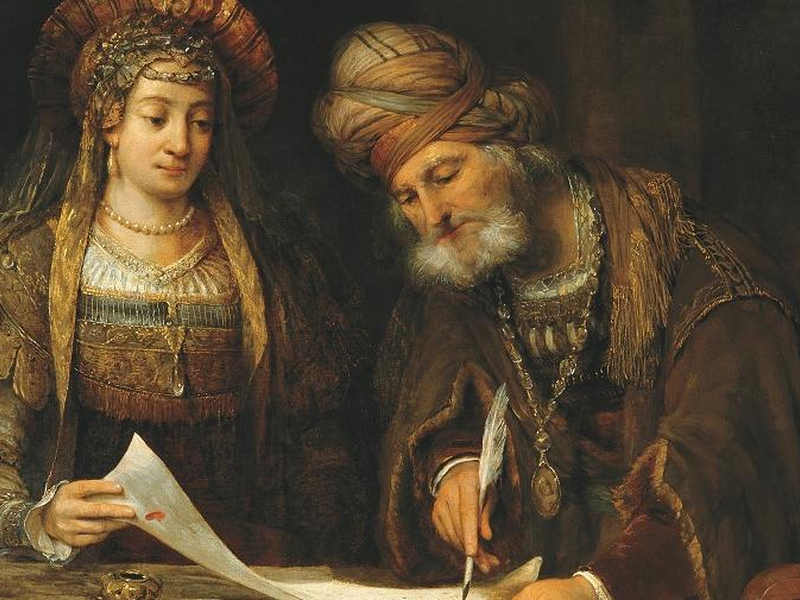
God is Not There God is not in the book of Esther. Do a word search and you will get 0 results. Also try Lord, Yahweh, Prayer, Temple, or Sacrifice. Even names with God’s name in them, like Elijah, Jeremiah, or Daniel are missing. The fool says in his heart,…

by Ryan HandermannMarch 4, 2021

Showing page 57 of 309

See all
See all
History

Modernity and antiquity

Kumar suggests that “some of the principal hall-marks of modernity” are already evident in the Christian notions of time and history. Both Christianity and modernity separate time from nature, and humanize time; time is seen by both as “linear and irreversible”; both see history as an Aristotelian drama with beginning,…

February 24, 2006
History

First Modernity

The Latin modernus was coined in the late fifth century, as an antonym to antiquus , and variations of modernus became particularly common after the 10th century. Thus, Krishan Kumar writes, “Modernity is . . . an invention of the Christian Middle Ages,” and was used to emphasize the radical…

February 24, 2006
Philosophy

Computer Communications and the Self

Poster lists four effects that computer communications (email, chat groups, etc) have on the self: “1 they introduce new possibilities for playing with identities; 2 they degender communications by removing gender cues; 3 they destabilize existing hierarchies in relationships and re-hierarchize communications according to criterio that were previously irrelevant; and…

February 24, 2006
Philosophy

Computers, subjects and objects

Descartes famously contrasted the mind (res cogitans) with the external world (res extensa), but Mark Poster suggests that computer writing fudges that distinction: “the computer dematerializes the written trace. As inputs are made to the computer through the keyboard, pixels of phosphor are illuminated on the screen, pixels that are…

February 24, 2006
Media

Community and New Communications

Mark Poster points to a tension between the modern institutions of production and the postmodern technologies of communication, particularly as they impact the formation of the self: “If modernity or the mode of production signifies patterned practices that elicit identities as autonomous and (instrumentally) rational, postmodernity or the mode of…

February 24, 2006
Media

Telephone

Prior to World War I, Telefon Hirmondo, the telephone system of Budapest, was used as a broadcast system, with a published schedule of programs that were restricted to certain classes of people in Hungary. Only later did it develop into a communications system in which everyone could pass information to…

February 24, 2006

Showing page 1878 of 2212

Browse by Category

In Medias Res

Your weekly digest for all things Theopolis.

Donate

Theopolis is nearly 100% donor-supported. Consider joining us on our mission.