Theopolis Logo

Writing

Explore our collection of theological essays, biblical studies, and reflections on faith and culture.

See all
tanner-mardis-xuxghzhibn4-unsplash-1-2
Biblical Studies

Tweets-turned-Notes on the Bible’s Chronology

Summary In what follows, I will consider the “year-stamps” employed in Scripture, i.e., statements of the form, “Such-and-such an event took place in the Xth year of Y.” In the process, I will suggest some ways in which the Biblical narrative might relate to events in the extra-Biblical world, though…

by James BejonJuly 16, 2019
durer-prodigal-son-2
Luke

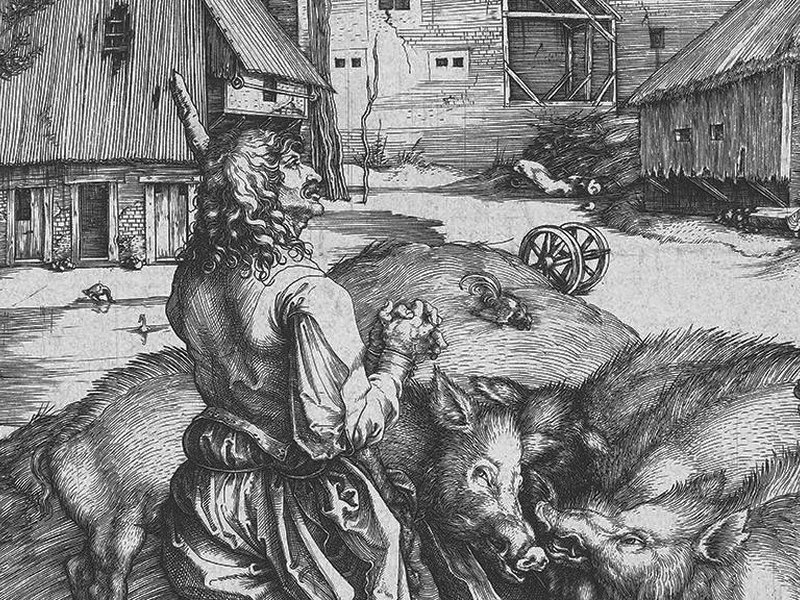
Perspectives on the Prodigal, (Part 2)

In the first essay on the parable of the Prodigal Son, I suggested that the problems commentators and others encounter in interpreting Jesus three-part parable are not accidental. These are not just problems in our ignorance of cultural background. They are intentional features of the stories —stories designed to poke…

by Ralph Allan SmithJuly 11, 2019
durer-prodigal-son-2
Luke

Perspectives on the Prodigal, (Part 1)

The story of the Prodigal Son is perhaps the most well-known story in the Bible. As others have observed, it may also be one of the most misunderstood. In two short essays, I will point out features of this story that are commonly neglected, aspects of Jesus’ parable that might…

by Ralph Allan SmithJuly 9, 2019
de-rijke-man-en-de-arme-lazarus-by-jacopo-da-ponte-16th-century
Luke

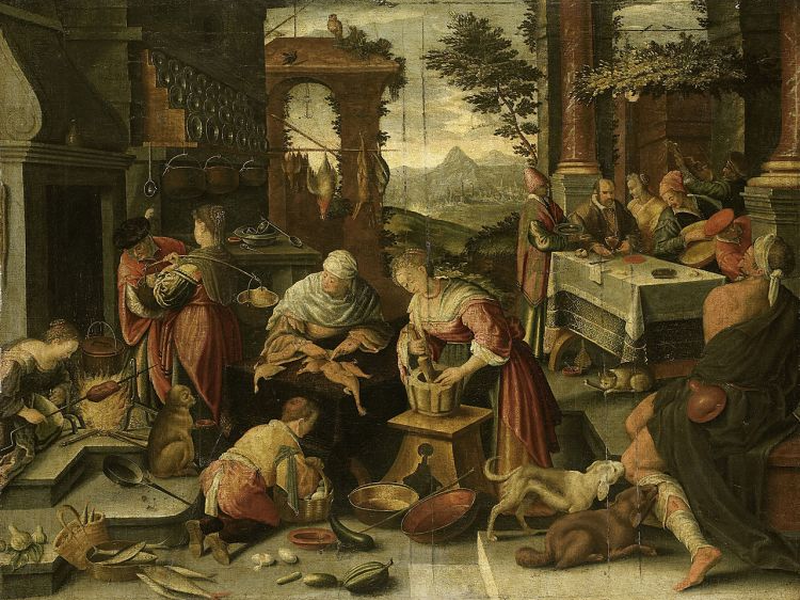
Lazarus and the Rich Man

The parable of Lazarus and the nameless rich man is not an independent story. It is part of a long context that begins in Luke 15:1, where Jesus is eating with tax collectors and sinners and the scribes and Pharisees grumble. In response to their hardheartedness, Jesus tells a three-part…

by Ralph Allan SmithJuly 4, 2019
aaron-burden-uynrnfdkjwg-unsplash
Luke

Everybody has Dropsy - Luke 14:1-24

The Bible is written so that even when a reader cannot pick up on what might be deeper or more detailed aspects of a text, there is virtually always a message to be heard. In the ancient world, where the “reader” of Scripture would likely be a church official facing…

by Ralph Allan SmithJuly 2, 2019
communion
Biblical Theology

Fruit Trees and Grain Plants

The distinction between garden (or vineyard) and field begins in Genesis 2. This relates to the ordering of the formless world. Plants of the field are contrasted with the garden planted by God in Genesis 2:5&8. Later on, under the Old Covenant the Israelites will be required to keep their…

by James B. JordanJune 27, 2019

Showing page 77 of 309

See all
See all

Judge Judged and Judging

Marcus shows that Daniel 7, cited in Mark 14:62, is lurking behind the trial narrative as a whole. Daniel 7 tells about judgment being passed against the bestial empires in favor of the people of the saints of the most high, with the result that all dominion and power is…

January 19, 2006

Inference

According to the Westminster Confession of Faith, “The whole counsel of God, concerning all things necessary for his own glory, man’s salvation, faith, and life, is either expressly set down in Scripture, or by good and necessary consequence may be deduced from Scripture.” But what counts as a “good and…

January 19, 2006

Mark and Psalm 2

Marcus notes that Mark’s attention to Psalm 2 is not exhausted by quoting the words from heaven at Jesus’ baptism: “the whole series of pericopes in 1:9-11, 12-13, 14-15 reflects the basic ‘plot’ of the psalm, and its influence may extend further into Mark’s story. The enemy forces, concretizations of…

January 19, 2006

Way of Yahweh, Way of Jesus

Joel Marcus’ study of Mark’s use of Scripture ( The Way of the Lord , W/JK, 1992) begins with an illuminating discussion of the opening verses of the gospel. The quotation from Isaiah brings the whole of Isaiah’s second-exodus eschatology into play, with Jesus playing the role of the triumphant…

January 19, 2006
Literature

AC Bradley’s Hamlet

AC Bradley’s 1904 lectures on Shakespearean tragedy are deservedly regarded as classics of criticism. His analysis of Hamlet is deservedly famous, particularly his discussion of the famed problem of Hamlet’s delay. He classifies theories of the delay into several large categories. First are those that suggest that Hamlet delays mainly…

January 19, 2006
Literature

AC Bradley’s Hamlet

AC Bradley’s 1904 lectures on Shakespearean tragedy are deservedly regarded as classics of criticism. His analysis of Hamlet is deservedly famous, particularly his discussion of the famed problem of Hamlet’s delay. He classifies theories of the delay into several large categories. First are those that suggest that Hamlet delays mainly…

January 19, 2006

Showing page 1897 of 2212

Browse by Category

In Medias Res

Your weekly digest for all things Theopolis.

Donate

Theopolis is nearly 100% donor-supported. Consider joining us on our mission.