Theopolis Logo

Writing

Explore our collection of theological essays, biblical studies, and reflections on faith and culture.

See all
sixteen-miles-out-al48tflf4e8-unsplash
Food

Gluttony In The Bible (As Opposed To Gluttony In The American Church)

In the Bible, fatness is such a blessing, that it is especially hard to understand why wicked men are permitted to enjoy such a state. It requires a theodicy and faith in God. Thus: “For they have no pangs until death; their bodies are fat and sleek . They are…

by Mark HorneAugust 12, 2013

jeremy-yap-j39x2xx_8cq-unsplash
How to Worship

Biblical Worship (Video with James B. Jordan)

[fve]http://vimeo.com/71901553[/fve]

by Peter LeithartAugust 8, 2013
chris-bair-ndczc5739ck-unsplash
Deuteronomy

Holy Things for Holy People

The allusion to the Exodus story is contained in the first words of Deuteronomy 14:1 — “ye are the sons of Yahweh your God” — as well as in 14:2 in the use of the technical term translated “treasured possession,” “His own possession,” “peculiar people,” “precious people,” and so forth.…

by Ralph Allan SmithAugust 5, 2013
adam-and-eve-in-the-garden-of-eden-wenzel-peter
Deuteronomy

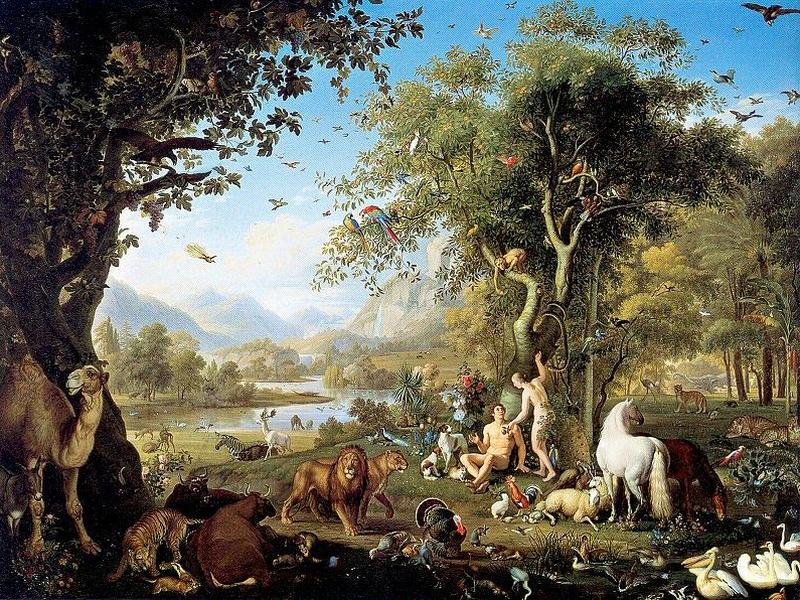
Forbidden Foods

I have argued that Deuteronomy 14:1-21 is an independent literary unit that applies the Third Word to the lives of Israelites from the time of Moses and Joshua. In this short pericope, Moses suggests broad and deep meaning by means of literary allusion to the stories of the creation and…

by Ralph Allan SmithJuly 31, 2013
david-weber-fwuo_zluhnw-unsplash
How to Worship

Pro-Sacramental Reformation

In his recently republished The New Creation , the late, delightful Herbert McCabe defends the priesthood of the plebs as roundly as anyone could want. Citing Hebrews, he claims that "there is an essential difference between the Christian community and the community of the Old Law, or any other religious…

by Peter LeithartJuly 29, 2013
eric-ward-7kqe_8meex8-unsplash
Augustine

Sexual Idolatry

Augustine famously prayed, “Our hearts our restless until they rest in You.” True indeed. Being creatures, we inherently sense our ontological poverty—our innate condition of dependence—and are compelled to find a sense of security. And it is also true—as Augustine’s own narrative painfully illustrates—that one of the things we most…

by Gerald HiestandJuly 24, 2013

Showing page 190 of 309

See all
See all
History

Pentecostalism

Philip Jenkins’ The Next Christendom is packed with stimulating historical insights. But this is one of the most striking: Most ?listings of major trends of the past century?Ehave ?rightly devoted much space to political movements like fascism and communism, but ignored vital religious currents like Pentecostalism. Yet today, Fascists or…

May 14, 2005

Fenrir’s bonds

The Edda records: “The unbreakable fetters which bound down the Great Wolf Fenrir had been cunningly forged by Loki from these: the footfall of a cat, the roots of a rock, the beard of a woman, the breath of a fish, the spittle of a bird.” Who knows what that…

May 13, 2005

Fenrir’s bonds

The Edda records: “The unbreakable fetters which bound down the Great Wolf Fenrir had been cunningly forged by Loki from these: the footfall of a cat, the roots of a rock, the beard of a woman, the breath of a fish, the spittle of a bird.” Who knows what that…

May 13, 2005
Philosophy

Literary Wittgenstein

Terry Eagleton reviews a new book on The Literary Wittgenstein (edited by John Gibson and Wolfgang Huemer) in the April 29 issue of the TLS. There are a number of highlights: 1) Eagleton sets Wittgenstein firmly in the glitzy, kitchy world of Vienna. “The place,” he writes, “was a cockpit…

May 13, 2005

Justification and eschatology

The notion of a “future justification” has come under criticism from some Reformed writers, though the idea has a fairly established place in Reformed thought (beginning at least with Vos). The opposition to the idea suggests that some Reformed soteriology is eschatologically schizophrenic. Consider: It seems clear that adoption is…

May 12, 2005
Theology

Infra/Supra and Narrative theology

Awhile back, I suggested some reasons for leaning toward supralapsarianism. Here’s some more: Infra seems to lack an eschatology. Creation is made, the fall is decreed, and then salvation is seen as a rescue from the fall. In supra, creation is never considered apart from a consummation. Salvation is not…

May 10, 2005

Showing page 1981 of 2212

Browse by Category

In Medias Res

Your weekly digest for all things Theopolis.

Donate

Theopolis is nearly 100% donor-supported. Consider joining us on our mission.