Theopolis Logo

Writing

Explore our collection of theological essays, biblical studies, and reflections on faith and culture.

See all
tanner-mardis-xuxghzhibn4-unsplash-1-2
Biblical Studies

Tweets-turned-Notes on the Bible’s Chronology

Summary In what follows, I will consider the “year-stamps” employed in Scripture, i.e., statements of the form, “Such-and-such an event took place in the Xth year of Y.” In the process, I will suggest some ways in which the Biblical narrative might relate to events in the extra-Biblical world, though…

by James BejonJuly 16, 2019
durer-prodigal-son-2
Luke

Perspectives on the Prodigal, (Part 2)

In the first essay on the parable of the Prodigal Son, I suggested that the problems commentators and others encounter in interpreting Jesus three-part parable are not accidental. These are not just problems in our ignorance of cultural background. They are intentional features of the stories —stories designed to poke…

by Ralph Allan SmithJuly 11, 2019
durer-prodigal-son-2
Luke

Perspectives on the Prodigal, (Part 1)

The story of the Prodigal Son is perhaps the most well-known story in the Bible. As others have observed, it may also be one of the most misunderstood. In two short essays, I will point out features of this story that are commonly neglected, aspects of Jesus’ parable that might…

by Ralph Allan SmithJuly 9, 2019
de-rijke-man-en-de-arme-lazarus-by-jacopo-da-ponte-16th-century
Luke

Lazarus and the Rich Man

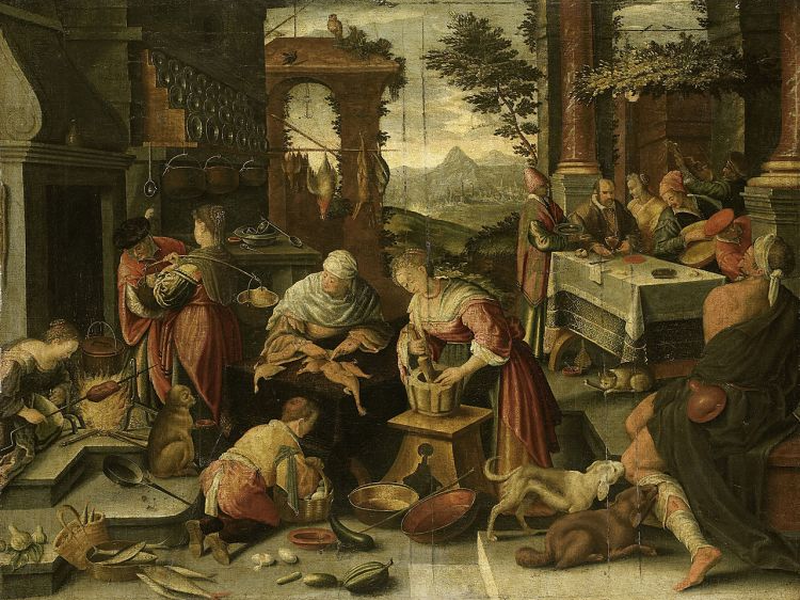
The parable of Lazarus and the nameless rich man is not an independent story. It is part of a long context that begins in Luke 15:1, where Jesus is eating with tax collectors and sinners and the scribes and Pharisees grumble. In response to their hardheartedness, Jesus tells a three-part…

by Ralph Allan SmithJuly 4, 2019
aaron-burden-uynrnfdkjwg-unsplash
Luke

Everybody has Dropsy - Luke 14:1-24

The Bible is written so that even when a reader cannot pick up on what might be deeper or more detailed aspects of a text, there is virtually always a message to be heard. In the ancient world, where the “reader” of Scripture would likely be a church official facing…

by Ralph Allan SmithJuly 2, 2019
communion
Biblical Theology

Fruit Trees and Grain Plants

The distinction between garden (or vineyard) and field begins in Genesis 2. This relates to the ordering of the formless world. Plants of the field are contrasted with the garden planted by God in Genesis 2:5&8. Later on, under the Old Covenant the Israelites will be required to keep their…

by James B. JordanJune 27, 2019

Showing page 77 of 309

See all
See all

Baptism meditation, May 1

Why do we baptize babies? This seems to many Christians, especially in America, like a strange tradition, a leftover of the formalism and nominal Christianity of the medieval Roman Catholic church. And even to many of us who believe we should baptize our babies, it seems like a somewhat extraneous…

May 1, 2005

Exhortation, May 1

Suppose I told you that Trinity Reformed Church had been asked to perform a choir concert this morning? Would you be prepared? Or would it be like one of those dreams where you find yourself taking a test without studying, or realizing suddenly that you?ve arrived at church in your…

May 1, 2005

Romans 8, continued

CONTRASTING MINDSETS, Romans 8:5-13 Paul has announced that through the work of Father, Son and Spirit, we who are in Christ have been set free from Sin and Death, and are now capable of keeping the requirement of the Law. Torah aimed at giving life; but that purpose cannot not…

April 30, 2005

Salome Factor

In the Spring issue of the American Scholar, William Deresiewicz discusses the sexualization of dance during the twelve years he write dance criticism for various publications: “For one thing, dancers have been wearing less and less. Sometimes they don’t wear anythng at all, though this nudity or semi-nudity almost never…

April 30, 2005

Aquinas on justification

Notes on Thomas Aquinas on The Effects of Grace, ST I-II, q. 113. 1) Article 1: Justification of the ungodly consists in the remission of sins, Aquinas argues, over against the claim that justification must involve some movement toward justice and that the remission of sins is not a movement.…

April 28, 2005

Augustine on Spirit and Letter

Some notes on Augustine?s Treatise on the Spirit and the Letter . 1) Augustine treats ?letter?Ein 2 Corinthians as a reference to the law itself, which kills. The law kills, however, in the absence of the Spirit: ?the letter of the law, which teaches us not to commit sin, kills,…

April 28, 2005

Showing page 1986 of 2212

Browse by Category

In Medias Res

Your weekly digest for all things Theopolis.

Donate

Theopolis is nearly 100% donor-supported. Consider joining us on our mission.