Theopolis Logo

Writing

Explore our collection of theological essays, biblical studies, and reflections on faith and culture.

See all
31-03-0213
Hermeneutics

Apocalyptic Eyes

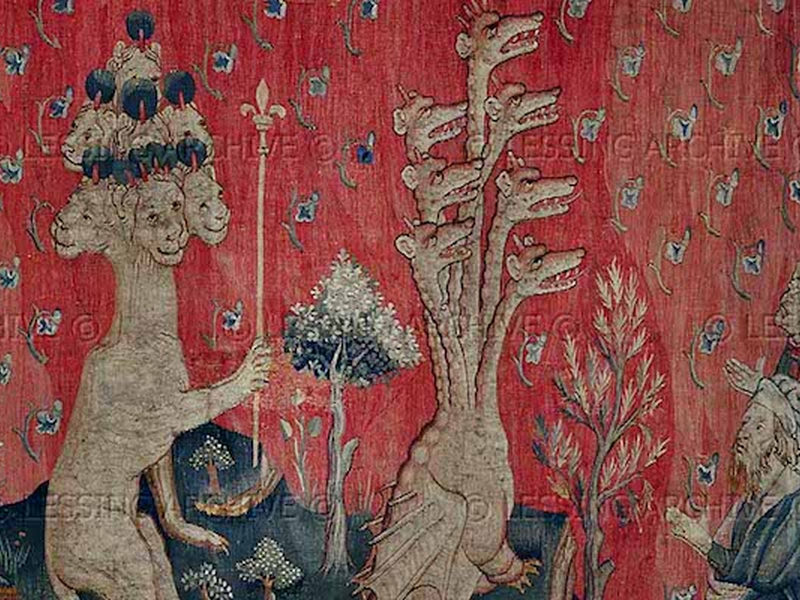
Flying scrolls. Red horses. Beasts coming out of the sea. Winged women. The list goes on. Apocalyptic literature in the Bible is like a cross between science fiction and Marvel comics. And the Bible has a fair bit of this sort of thing. Daniel sees visions in Babylon, Zechariah sees…

by Toby SumpterNovember 4, 2014

bhm-skyline-2
Theopolis News

New Name, New Look

Trinity House Institute has taken a new name, the Theopolis Institute. This striking new name expresses our unique vision and mission and captures the unified purpose behind all our specific programs and activities. We still have Bible, liturgy, and culture in our tagline. We still offer the same courses on…

by TheopolisNovember 4, 2014
istock_000012860926small
Atonement

Not Fearing the Devil

Adam Kotsko offers a socio-political variation on the Christus Victor atonement theory in his 2010 study, The Politics of Redemption: The Social Logic of Salvation . He does this by explaining "the devil" in terms of the Hegelian concept of "objective spirit," Geist . As Kotsko puts it, Geist "refers…

by Peter LeithartOctober 13, 2014
jez-timms-8muutamcwu4-unsplash
Leviticus

The Meaning of Sacrifice

Two factors keep Nahtali Meshel from discussing the meaning of sacrifice until late in his The "Grammar" of Sacrifice . The first has to do with the texts he draws from: "P says little about the meaning of its rituals" (174). The other has to do with the grammatical theory…

by Peter LeithartOctober 8, 2014
jez-timms-8muutamcwu4-unsplash
Leviticus

Praxemics

Chapter 5 of Naphtali Meshel's The "Grammar" of Sacrifice focuses on "praxemics," the physical actions of sacrificial ritual. Praxemes are constituted by six elements: an "atomact," an elementary physical act or gesture; an actor; an object that is acted up; a target for the action and often for the object…

by Peter LeithartOctober 6, 2014
markus-winkler-aid-xyrtlec-unsplash
Leviticus

Jugation and Hierarchy

Two chapters of Naphtali Meshel’s The “Grammar” of Sacrifice cover what he calls “jugation” and “hierarchies.” The first involves the addition of other materials to an animal offering. Jugates include wine, cereal, and oil that are added to the animals (zoemes) that are offered in sacrifice. Some jugates are coordinated…

by Peter LeithartOctober 1, 2014

Showing page 167 of 309

See all
See all

Scriptural Use of “Justification”

James White (in The God Who Justifies )issues this important caution in his treatment of the meaning of the Hebrew and Greek word-groups for justification and righteousness: “there are obvious instances in which the biblical term speaks of a moral or ethical quality when it speaks of someone being righteous.…

November 26, 2004

Scriptural Use of “Justification”

James White (in The God Who Justifies )issues this important caution in his treatment of the meaning of the Hebrew and Greek word-groups for justification and righteousness: “there are obvious instances in which the biblical term speaks of a moral or ethical quality when it speaks of someone being righteous.…

November 26, 2004

Incredibles

I’m not the first one to notice, by any means, but let me chime in: The Incredibles is an overt attack on egalitarianism. All the bad guys in the movie want to flatten out the differences between “supers” and everyone else - the litigious people who are injured during rescues,…

November 25, 2004
Theology

Reno on Genesis

Rusty Reno had some sharp observations on the importance of creatio ex nihilo in a paper giving a preview of his theological commentary on Genesis. He said that it fit with the overall Scriptural polemic against idolatry, and demonstrates that idolatry is fundamentally nihilism ?Edevotion to nothing, what does not…

November 25, 2004

Written or Oral?

Does the OT show signs of being a product of long oral tradition? In his 2004 book Biblical Narrative and the Death of the Rhapsode (Indiana University Press), Robert S. Kawashima argues that it does not. He believes that the Bible manifests a very different narrative art from the epic…

November 25, 2004

Gathercole on Sin in Romans

Simon Gathercole had some interesting points in his paper on “Jewish and Gentile sin in Paul.” He wanted to show that the “history of sin” was revelatory of God’s character, and had an integral role in the work of redemption. He defended this thesis by examining parallels between Romans 1:18-32…

November 25, 2004

Showing page 2035 of 2212

Browse by Category

In Medias Res

Your weekly digest for all things Theopolis.

Donate

Theopolis is nearly 100% donor-supported. Consider joining us on our mission.