Theopolis Logo

Writing

Explore our collection of theological essays, biblical studies, and reflections on faith and culture.

See all
screenshot-2024-06-06-at-8-49-49-am
Biblical Theology

Incarnation, Church, & the New Heart

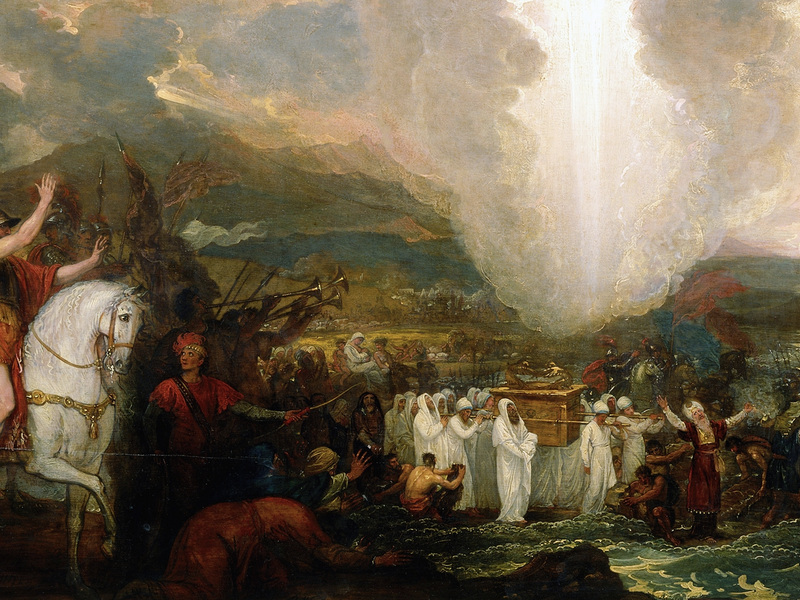
“And it shall be in those days when you are multiplied and increased in the land,” declares the Lord, “they shall say no more, ‘The Ark of the Covenant of the Lord.’ And it shall not come to mind, nor shall they remember it, nor shall they miss it, nor…

by Mark HorneJune 6, 2004
e99a4713
Grace

Grace & Justice in Unexpected Places

Elsewhere, I have argued that there is grace in the so-called covenant of works (see, e.g., my colloquium essay, “A Response to ‘The Biblical Plan of Salvation,’” in The Auburn Avenue Theology: Pros and Cons , edited by Calvin Beisner (pages 118-148). It may be equally surprising to find justice…

by Rich LuskJune 6, 2004
amjd-rdwan-erymmvvsy1y-unsplash-1
Theologia

Trust & Obey

Years ago, as a layman, I had the privilege of attending a Bible study led by a gifted teacher. His story was interesting: back when he was a student he had been severely sanctioned for affirming that one must repent in order to be saved, that one must trust Jesus…

by Mark HorneJune 5, 2004
daniel-born-yw_qx-i8ln4-unsplash
Theologia

The World is Built on Faith

Believing that God really exists Defining “faith” is sometimes made too complicated. The theologian, Louis Berkhof, for example, distinguishes “faith in general” from “faith in the religious sense and particularly saving faith.” Berkhof’s core definition of saving faith is not so bad. He says that it is “a certain conviction,…

by Mark HorneJune 5, 2004
ben-white-qdy9ahp0mto-unsplash
Apostasy

The Children of Christians Are Christians

It is generally acknowledged that when Paul wrote letters to churches, he expected his letters to be read in the worship service to the congregation. It is interesting, then, that when Paul wrote letters to a congregation he could feel free to address children and tell them to obey their…

by Mark HorneJune 5, 2004
24542-cropped-john-calvin
Ecclesiology

Calvin on the Pastor and Community

Book 4 of Calvin’s Institutes of the Christian Religion is a classic work of ecclesiology. This book is the longest section of the Institutes , showing Calvin’s deep interest in and love for the church. Among its many salutary features is a full scale exposition of those ecclesiastical leaders Calvin…

by Rich LuskJune 5, 2004

Showing page 224 of 309

See all
See all

Architecture of Fancy

T he title essay of John Summerson's Heavenly Mansions sets Gothic architecture in a story of the architecture of fancy. He begins with doll houses, and moves to aedicules, originally small buildings holding the image of a god that eventually became purely decorative alcoves. In Gothic, the ornament is turned…

February 17, 2017

Slow Grow

I n his Rise and Fall of American Growth , Robert J. Gordon argues that the growth rates for the American economy have leveled because the rate of innovation has leveled. And the rate of innovation has leveled, in part, because some innovations happen only once: The flood of inventions…

February 17, 2017

Anthropology of Deficiency

A ccording to Ingolf Dalferth ( Creatures of Possibility ), Christianity “contradicts a view that understands human beings in their fundamental dependence, finitude, and passivity, not merely biologically, but anthropologically, as deficient beings , interpreting their absolute dependence as absolute neediness, their finitude as a metaphysical evil, and their experience…

February 17, 2017

Passive Creativity

C hristian theology has long taught that we are “finite copies of the infinite Creator: created creators” (Dalferth, Creatures of Possibility , 198). Christian anthropology is eschatologically oriented: “Who we are is not determined by our origin; it will become evident in our future” (198). This comes to expression in…

February 17, 2017

Slackers

I t’s a challenge to get a clear idea of what slackers are really all about. Tom Lutz isolates the dilemma in his Doing Nothing (18-19): The famous or almost-famous idlers, loafers, loungers, and slackers throughout history had to produce work about not working in order for us to know…

February 17, 2017

Living Sacrifices

J oseph Ratzinger reflects on Romans 12:1-2 in his Theology of the Liturgy (349-51), which is evident in the Roman Canon's prayer that “our sacrifice may be rationabilis .” He writes: It is not enough—indeed, it is quite wrong—to translate this as saying that it should become rational. We are…

February 17, 2017

Showing page 205 of 2212

Browse by Category

In Medias Res

Your weekly digest for all things Theopolis.

Donate

Theopolis is nearly 100% donor-supported. Consider joining us on our mission.