Theopolis Logo

Writing

Explore our collection of theological essays, biblical studies, and reflections on faith and culture.

See all
screen-shot-2023-02-24-at-1-48-41-pm
Biblical Chronology

Chronologies and Kings: Part 3

The chronology of the Kings of Judah and Israel can be divided into three periods with clearly defined boundaries. The first period begins with the death of Solomon and the accessions of Rehoboam in the south (Judah) and Jeroboam in the north (Israel). It ends with the deaths of Ahaziah…

by James B. JordanSeptember 22, 1991

johann-walter-bantz-clv9dfjlwac-unsplash-1-5
Art

Arts & Play, Part 1

Most modern people regard the arts as essentially decorative. They are hardly very important, as compared to business, politics, or religion. Yet, from a Biblical point of view, the arts lie close to the heart of human life. The universe that God created is itself an artistic masterpiece by the…

by James B. JordanSeptember 22, 1991
6273e95e0f5ac766258d8cf3_joshuasconquestoftheland-2
Exodus

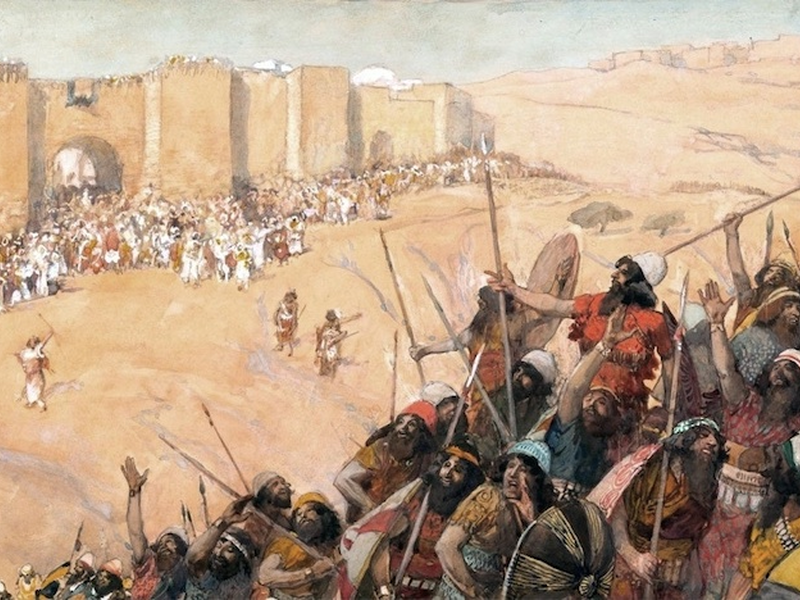
Chronologies and Kings, Part 2

Before we move into a detailed survey of the history and chronology of the kings of Israel and Judah, let us review the chronological information that leads from creation to the kingdom. This will be helpful both to new readers of these essays, and a reminder for those who have…

by James B. JordanAugust 22, 1991
screen-shot-2023-02-24-at-1-48-41-pm
Biblical Chronology

Chronologies and Kings, Part 1

We have completed our overall survey of Biblical chronology, and now turn to a detailed examination of the Biblical information regarding the chronology of Israel’s kings. The first piece of chronological information we have regarding Israel’s kings is very cryptic, and it serves as an guide to the interpretation of…

by James B. JordanJuly 22, 1991
screenshot-2023-08-09-at-2-13-32-pm
Biblical Horizons

Book Review - To Take Place: Toward Theory in Ritual

Jonathan Z. Smith, To Take Place: Toward Theory in Ritual (Chicago: University of Chicago Press, 1987). Reviewed by Peter J. Leithart. The philosophes of the 18th century often attacked Christendom using the tools of anthropology and comparative religion. Rousseau contrasted the idyllic equality of primitive, natural peoples with the bondage…

by Peter LeithartJuly 6, 1991
screenshot-2023-08-09-at-1-47-41-pm
Biblical Horizons

Book Review: The Rise of Magic in Early Medieval Europe

Valerie I. J. Flint, The Rise of Magic in Early Medieval Europe (Princeton University Press, 1991). Reviewed by Peter J. Leithart. Valerie I. J. Flint, Professor of History at the University of Auckland, New Zealand, is refreshingly candid about her reasons for undertaking a study of The Rise of Magic…

by Peter LeithartJuly 6, 1991

Showing page 295 of 309

See all
See all
Literature

The Bible and Other Tragedies

In a book written in the late 1370s, the surgeon John Arderne prescribed “the Bible and other tragedies” as remedies. These books were good sources, as Henry Ansgar Kelly explains in summarizing Arderne’s point, “for humorous stories of a good and decent kind that doctors can use to provoke their…

January 28, 2004
Theology

Barth on Faith

Barth defines faith as the “determination of human action by the being of the Church and therefore by Jesus Christ, by the gracious address of God to man.” While there may be weaknesses with this, there are several commendable things about the definition: 1) It does not polarize faith and…

January 27, 2004
Theology

Theology as Science Again

If, as Barth says, theology NEED not be part of the genus “science,” why has it been so designated? It appears that the impetus is an effort to achieve precisely the things that Barth says it does NOT need from science. Barth says, “As regards method, [theology] has nothing to…

January 27, 2004
Theology

Theology as Science?

Barth quotes from J. Gerhard, who rejected the designation of theology as a science. One of his grounds was: ” scientiae certitudo ab internis et inhaerentibus principiis, fidei vero ab externis videlicet ab autoritate revelantis pendet ,” which in substance means that science derives its certainty from principles that are…

January 27, 2004

The Oikoumene in the NT

Jim Jordan has pointed out that the Greek word “oikoumene” is used in the NT to refer to the Hellenistic and Helleno-Roman world, rather than to the entire inhabited earth. It could be translated as “empire.” Against this background, the usage in Heb 2:5 is very striking, since it talks…

January 27, 2004

Adam and the Dragon

A discussion of death in the prefall world led to this thought: What was Adam supposed to do when a big dragon came to his wife and began tempting her to sin? I think he was supposed to do exactly what the Last Adam did: Crush the serpent’s head. But…

January 26, 2004

Showing page 2131 of 2212

Browse by Category

In Medias Res

Your weekly digest for all things Theopolis.

Donate

Theopolis is nearly 100% donor-supported. Consider joining us on our mission.