Theopolis Logo

Writing

Explore our collection of theological essays, biblical studies, and reflections on faith and culture.

See all
screenshot-2024-04-04-at-4-49-39-pm
Apologetics

Christianity: Who Needs It?

Evangelistic Message to the Uninformed: 1 Timothy 3.14-16 Even though this is written as a sermon for delivery, and even though it was preached in a homiletics class, I decided I can’t post it as a sermon because it was not truly preached at a place where nonchristians wanted to…

by Mark HorneMay 7, 2024
carlo-alberto-burato-smdx3gleu_m-unsplash
Acts

Jesus’ Post-Resurrection Appearances

If we only read the Gospels of Mark and Luke, we might get the impression that Jesus’ ascension was on resurrection Sunday. Matthew speaks of going to Galilee but he does not put things into a clear time frame. John shows us that Jesus appeared to the disciples eight days…

by Ralph Allan SmithMay 1, 2024
alfons-morales-ylswjsy7stw-unsplash-1
Biblical Studies

The Bible and Western Literature

The most cursory glance at the history of Western literature reveals that it has been deeply influenced by the Bible. Some of the greatest classics of Western literature draw their plots, characters, and ideas largely from Scripture; Dante’s Divine Comedy and Milton’s Paradise Lost are two of the most notable…

by Peter LeithartApril 24, 2024
cederic-vandenberghe-21dp3hytvhw-unsplash
Biblical Theology

Inglorious Bastards

Few themes emerge as profoundly and persistently in the streams of biblical narrative as the conflict between light and darkness, and the juxtaposition of humanity with monstrosity. These themes not only weave through the fabric of Scripture, emerging in stories from Genesis to Revelation, but also stitch together the human…

by Kyle LammottApril 17, 2024
screenshot-2024-04-09-at-11-22-50-am
Luke

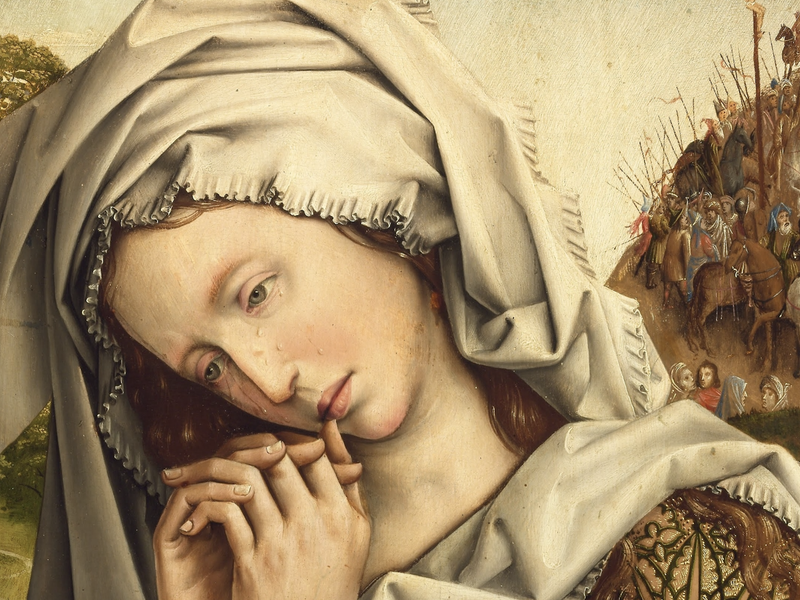
Mary Magdalene: Sister, Sinner, Saint

In John Wenham’s work, Easter Enigma , he devotes an entire chapter to Mary Magdalene, which is rephrased and summarized here. 1 One of the interesting things that Wenham said was that Mary Magdalene was the second “most favored woman in the Bible.” 2 He adds, “Yet apart from a…

by Ralph Allan SmithApril 9, 2024
screenshot-2024-04-04-at-4-50-53-pm

Daily Mutual Encouragement

God made man to live in a larger relational context, and even in high rebellion, man cannot escape his created nature. Instead, that nature takes revenge on rebellious man. Autonomous and alone, the self craves absolution but recognizes no authority that might give it; it thirsts for glory but rejects…

by Tim NicholsApril 4, 2024

Showing page 21 of 309

See all
See all

Poesis in Renaissance

More evidence of “poesis” in Renaissance notions of human nature and “self-fashioning.” The first quotation is from Pico, and is drawn from Lewis’s English Literature in the Sixteenth Century : God’s words to Adam at creation were: “To thee, O Adam, we have given no certain habitation nor countenance of…

January 14, 2004

Greenblatt on Fashion

A couple of quotations from Stephen Greenblatt’s Renaissance Self-Fashioning , with a comment appended. He is talking about the changing meanings of “fashion” in the English Renaissance: “In the sixteenth century there appears to be an increased self-consciousness about the fashioning of a human identity as a manipulable, artful process.…

January 13, 2004
Philosophy

Quotations from Michel de Montaigne

Some fun quotations from Michel de Montaigne, taken from Stephen Toulmin’s excellent Cosmopolis: The Hidden Agenda of Modernity : “He who wants to detach his soul, let him do it. When his body is ill, to free it from the contagion; at other times, on the contrary, let the soul…

January 13, 2004
Philosophy

Zizek on Modernity

Slavoj Zizek has this to say at the beginning of his The Puppet and the Dwarf : “One possible definition of modernity is: the social order in which religion is no longer fully integrated into and identified with a particular cultural life-form, but acquires autonomy, so that it can survive…

January 13, 2004
Philosophy

Derrida on Presence and Absence

Joel Garver helpfully explains Derrida’s deconstruction of “presence/absence” by suggesting that Derrida is attacking a particular view that assumes absolute presence and absolute absence. Either a thing is here or it is not, we instinctively thing, but in fact in all kinds of ways absent things leave “traces” of their…

January 13, 2004
Theology

Barth on God’s Omnipotence

Barth has a wonderful discussion of the omnipotence of God in Dogmatics in Outline (pp 48-49). He disputes the notion of absolute power, power in itself, as a description of God’s almightiness, and concludes (in line with the tradition of God’s simplicity) that God’s power is His holiness, righteousness, mercy,…

January 12, 2004

Showing page 2137 of 2212

Browse by Category

In Medias Res

Your weekly digest for all things Theopolis.

Donate

Theopolis is nearly 100% donor-supported. Consider joining us on our mission.