Theopolis Logo

Writing

Explore our collection of theological essays, biblical studies, and reflections on faith and culture.

See all
528977ldsdl
Theologia

Reflections on the Importance of Predestination in the Christian Mindset

But I say to you who hear, love your enemies, do good to those who hate you, bless those who curse you, pray for those who mistreat you. Whoever hits you on the cheek, offer him the other also; and whoever takes away your coat, do not withhold your shirt…

by Mark HorneJune 4, 1998

aaron-burden-1ebsmyrau-s-unsplash
Biblical Horizons

The Case Against Western Civilization, Part 5

Part 5: Laying New Foundations in a Dying World As I mentioned above, the history of Israel involved several centuries as a church-without-a-culture, and then several centuries as a culture-without-a-city. To be sure, there was an informal culture around the church of the Patriarchs, but the civilization of free farmers…

by James B. JordanJune 4, 1998
yucar-studios-cfr-v1quekw-unsplash-1
Baptism

Why Do We Baptize?

In the Reformation Tradition we baptize both professing believers and their children. In the case of infants it is now commonly insisted that this is done because the children are already in covenant with God. Baptism is a sign and seal of a previously existing reality. Despite the popularity of…

by Mark HorneJune 3, 1998
aaron-burden-qjdzyt_k8xg-unsplash
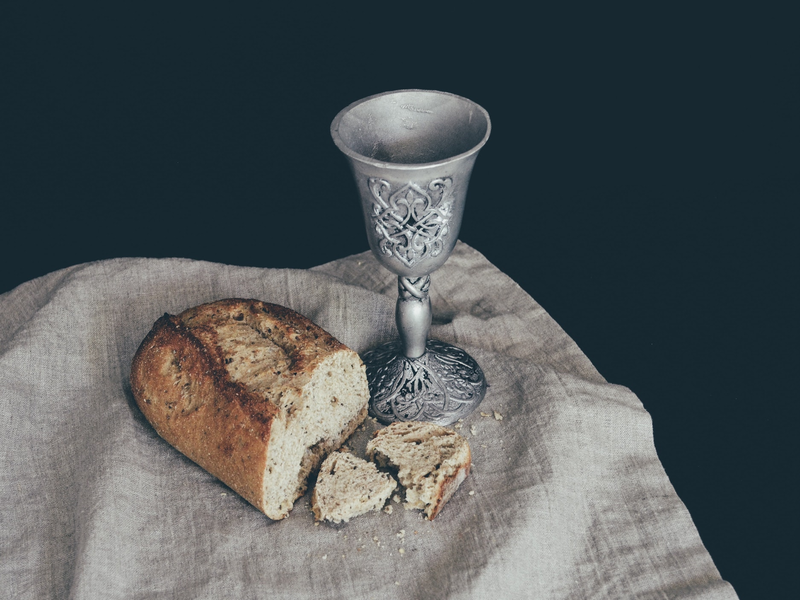
Eucharist

This Is What We Are:

Concerning Sex & the Sacrament of the Lord’s Supper Is not the cup of blessing which we bless a sharing in the blood of Christ? Is not the loaf of bread which we break a sharing in the body of Christ? Since there is one loaf, we who are many…

by Mark HorneJune 3, 1998
debby-hudson-qa74yh6-xlc-unsplash
Baptism

Sacramental Efficacy

Protestant-Catholic debates about the sacraments have usually taken the form of debates about sacramental efficacy. Protestants claim that Catholics believe that sacraments work ex opere operato, virtually a magical view of the sacraments. A priest goes through the motions and says the mumbo-jumbo and — presto! — the sacraments confer…

by Peter LeithartJune 3, 1998
aaron-burden-qjdzyt_k8xg-unsplash
Baptism

Baptism and the Church

In 27.2, the Westminster Confession says that because of the “spiritual relation” between sacraments and the things they represent, “the names and effects of the one are attributed to the other.” Applied to baptism, this means that when the Bible says that we are baptized into Christ (Rom. 6), it…

by Peter LeithartMay 29, 1998

Showing page 249 of 309

See all
See all

Day of Wrath (Romans 2)

What about taking “day of wrath” in Romans 2 as AD 70? Some arguments: 1) Dunn lists the verses that use similar phrases for “wrath and indignation” and “tribulation and distress,” and most of them are about historical judgments on Israel. There’s a cluster of uses in Deut 28:55ff, which…

November 7, 2003
Theology

Intellectualism and Voluntarism both arise

Intellectualism and voluntarism both arise from the same theological error: from the assumption that there is some realm that is independent and autonomous. This is most obvious with intellectualism: For intellectualists, things have indepdendent value that God recognizes and evaluates. Voluntarists are, however, making the same error. They assume that…

November 6, 2003

Studebaker on Pauw

Steve Studebaker writers in the Scottish Journal of Theology (56:3) about Edwards’s trinitarian theology, and includes an extended critique of Amy Plantinga Pauw’s treatment of Edwards’s incipient “social trinitarianism.” According to Studebaker, Pauw’s analysis only works if one assumes that the history of Trinitarian theology can be sketched out as…

November 5, 2003

The Olive Tree (Romans 11)

In the same issue of JSNT, Philip Esler examines ancient oleiculture to illumine Paul’s use of the olive tree image in Romans 11. When he describes branches being grafted into an olive tree, Paul refers to a common practice. But the normal practice is to graft cultivated olive branches onto…

November 5, 2003

Acts 20:20

Jerome Neyrey has an interesting article on Acts 20:20 in the current issue of JSNT. He examines the cultural background to Paul’s use of the phrase “in public and from house to house” by examining various expressions in Greek and Latin writers that correspond to modern “public” and “private.” These,…

November 5, 2003
Literature

Modernity

To what extent is modernity merely a recovery of the tragic? Tragedy, to my knowledge, simply didn’t exist in the medieval world. Drama revived late in the medieval period, but tragedy was reintroduced by the Renaissance. In Shakespeare, the tragic is set in a larger Christian comic setting, with profoundly…

November 5, 2003

Showing page 2170 of 2212

Browse by Category

In Medias Res

Your weekly digest for all things Theopolis.

Donate

Theopolis is nearly 100% donor-supported. Consider joining us on our mission.