Theopolis Logo

Writing

Explore our collection of theological essays, biblical studies, and reflections on faith and culture.

See all
31-03-0213
Hermeneutics

Apocalyptic Eyes

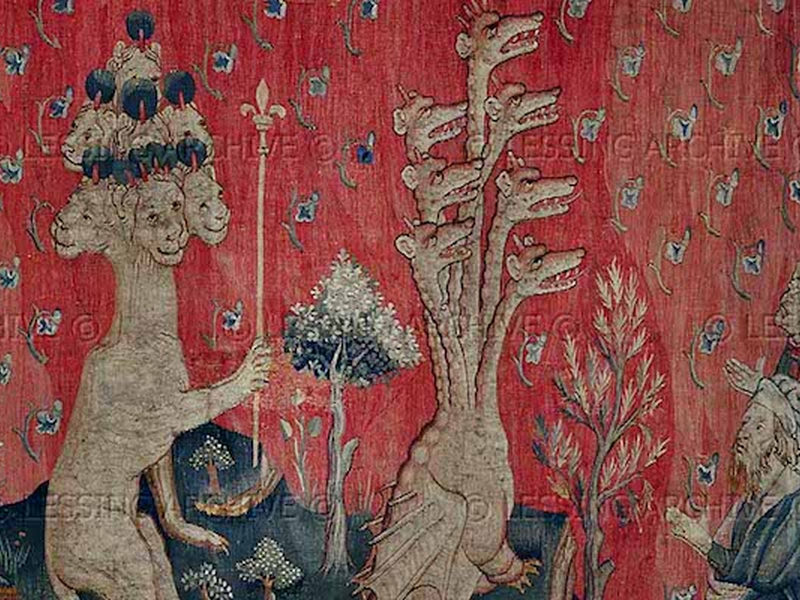
Flying scrolls. Red horses. Beasts coming out of the sea. Winged women. The list goes on. Apocalyptic literature in the Bible is like a cross between science fiction and Marvel comics. And the Bible has a fair bit of this sort of thing. Daniel sees visions in Babylon, Zechariah sees…

by Toby SumpterNovember 4, 2014

bhm-skyline-2
Theopolis News

New Name, New Look

Trinity House Institute has taken a new name, the Theopolis Institute. This striking new name expresses our unique vision and mission and captures the unified purpose behind all our specific programs and activities. We still have Bible, liturgy, and culture in our tagline. We still offer the same courses on…

by TheopolisNovember 4, 2014
istock_000012860926small
Atonement

Not Fearing the Devil

Adam Kotsko offers a socio-political variation on the Christus Victor atonement theory in his 2010 study, The Politics of Redemption: The Social Logic of Salvation . He does this by explaining "the devil" in terms of the Hegelian concept of "objective spirit," Geist . As Kotsko puts it, Geist "refers…

by Peter LeithartOctober 13, 2014
jez-timms-8muutamcwu4-unsplash
Leviticus

The Meaning of Sacrifice

Two factors keep Nahtali Meshel from discussing the meaning of sacrifice until late in his The "Grammar" of Sacrifice . The first has to do with the texts he draws from: "P says little about the meaning of its rituals" (174). The other has to do with the grammatical theory…

by Peter LeithartOctober 8, 2014
jez-timms-8muutamcwu4-unsplash
Leviticus

Praxemics

Chapter 5 of Naphtali Meshel's The "Grammar" of Sacrifice focuses on "praxemics," the physical actions of sacrificial ritual. Praxemes are constituted by six elements: an "atomact," an elementary physical act or gesture; an actor; an object that is acted up; a target for the action and often for the object…

by Peter LeithartOctober 6, 2014
markus-winkler-aid-xyrtlec-unsplash
Leviticus

Jugation and Hierarchy

Two chapters of Naphtali Meshel’s The “Grammar” of Sacrifice cover what he calls “jugation” and “hierarchies.” The first involves the addition of other materials to an animal offering. Jugates include wine, cereal, and oil that are added to the animals (zoemes) that are offered in sacrifice. Some jugates are coordinated…

by Peter LeithartOctober 1, 2014

Showing page 167 of 309

See all
See all

Decolonized World

I n their just-released Decolonization: A Short History , Jan Jansen and Jurgen Osterhammel observe that decolonization not only remade the maps of former colonies, but also involved the “Europeanization of Europe” and produced changes in political norms and expectations. “Decolonization,” they write “led to ‘Europe falling back on itself,'…

January 13, 2017

Caldwell on America's Fighting Faith

Christopher Caldwell's review of Walter McDougall's The Tragedy of U.S. Foreign Policy is sooo good. McDougall explains (as his subtitle has it) “How America's Civil Religion Betrayed the National Interest.” That betrayal arises from several sources. One is the vagueness of American civil religion, which means, Caldwell says, that it…

January 13, 2017

Eucharistic Sacrifice

T he joint Lutheran-Catholic reflection on the Reformation, From Conflict to Communion , acknowledges that medieval Catholicism was muddled on Eucharistic sacrifice. As a result of a “loss of an integrative concept of commemoration, Catholics were faced with the difficulty of the lack of adequate categories with which to express…

January 12, 2017

Iustus et Peccator?

F rom Conflict to Communion , the Lutheran-Catholic commemoration of the 500th anniversary of the Reformation, offers a summary of Luther's theology, particularly on the points of dispute between Catholics and Lutherans. They offer the following summary of Luther's claim that believers remain simul iustus et peccator , simultaneously just…

January 12, 2017

David's Ammonite War

1 Chronicles 18–20 record David's wars with immediate neighbors of Israel. The chapters are organized chiastically: A. War with Philistia and Moab, 18:1 B. War with Ammon, Aram, and Edom, 18:2-13 C. David reigns with justice and righteousness, 18:14-17 B'. War with Ammon and Aram, 19:1-20:3 A'. War with Philistia,…

January 11, 2017

The Geography of David's Conquest

1 Chronicles 18–20 brings together David's conquests into a neatly packaged unit. (In Samuel, the same wars are scattered over several chapters.) By the end of chapter 20, David has established control over greater Israel, the ideal kingdom promised to Abraham (Genesis 15), stretching from the Euphrates (18:4) to the…

January 10, 2017

Showing page 218 of 2212

Browse by Category

In Medias Res

Your weekly digest for all things Theopolis.

Donate

Theopolis is nearly 100% donor-supported. Consider joining us on our mission.