Theopolis News
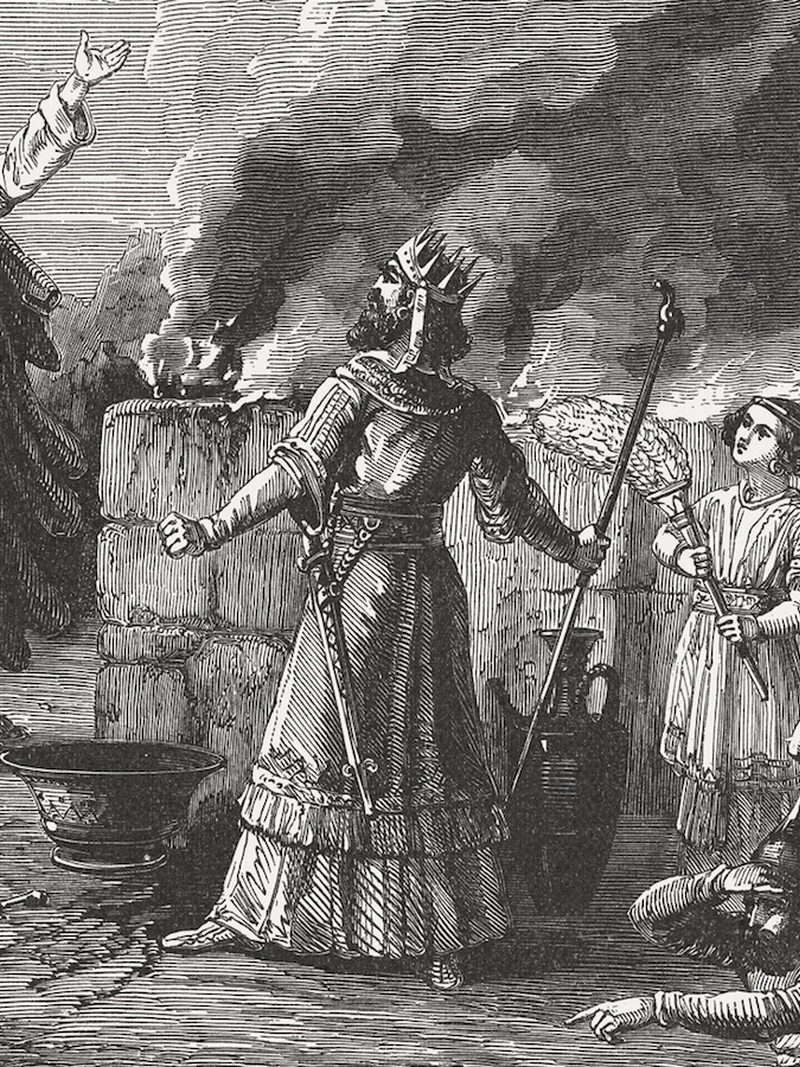
Constantine the Pious
Trinity House President Peter Leithart will deliver a lecture on "Constantine the Pious" at Oregon State University, Wednesday, October 30, at 7:00 PM.
by Peter LeithartOctober 29, 2013
Explore our collection of theological essays, biblical studies, and reflections on faith and culture.
Trinity House President Peter Leithart will deliver a lecture on "Constantine the Pious" at Oregon State University, Wednesday, October 30, at 7:00 PM.

In his rich study, We Have Never Been Modern (Harvard 1993), Bruno Latour describes modernity in terms of a dual process of “purification” and “hybridization.” Purification involves the clean construction of a nature (and science) separated off from society and the self, while hybridization involves mixtures of nature and culture.…
In James K.A. Smith’s excellent book, Introducing Radical Orthodoxy: Mapping a Post-secular Theology , he explains recent developments in theology and philosophy among mostly post-liberal (some Catholic) theologians. As with everything Dr. Smith writes, his prose is accessible, and written with clarity and precision as he describes the contribution made…

This is the last of a three-part series. 1:14-19 – The Lights in the Firmament The fourth day is the first day where God sets out His mediators and rulers. In the celestial bodies, God sets out His mediators and rulers in the same single class of created beings. We…
Trinity House President Peter Leithart will be in Chicago this weekend lecturing on Revelation. Sign up here .
Only two more weeks to register for the Trinity House Advent class on the book of Genesis. Register before the late fees kick in!
Showing page 185 of 309
Showing page 40 of 43
“R emember His wonders which He does,” the Levites sing when the ark is brought to Jerusalem (1 Chronicles 16:12a), doubtless referring preeminently to the wonders of the exodus but more distantly to the wonder of doing/making creation. At creation and in the exodus, God's wonders are the wonders of…
T oward the end of the rambunctious Paris Review interview , sometimes a meta-interview about the process of interviewing, Mark Helprin answers the question, Why do you write? As always, he answers circuitously, by contrasting creativity in pre- and modern art: . . . in a secular world, each artist…
I n a NYRB review of Anthony Gottlieb’s Dream of Enlightenment , Thomas Nagel corrects Gottlieb’s account of Hobbes’s moral philosophy. He lucidly summarizes Hobbes’s moral argument for absolutism: Hobbes’s theory, and what led to his being attacked as a moral nihilist, was his refusal to appeal to any concern…
I n his poignant, deeply personal New York essay on his distraction addiction, Andrew Sullivan reflects on the silence of sacred places: “From the moment I entered a church in my childhood, I understood that this place was different because it was so quiet. The Mass itself was full of…
M axwell Anderson’s forthcoming Antiquities surveys the world of antiquities, summarizing law, history of collection, the difference between the interests of archeologists and antiquities dealers, forgeries and their detection, the market in antiquities. Everything you’d want to know. Anderson places the rise of interest in antiquities in the context of…
S tuart Banner attempts to draw the fine line between investment and gambling in his forthcoming Speculation . Among other things, his book is a history of America’s double-mindedness about speculative investing. Visitors to the early US regularly made comments like this from German journalist Francis Grund: “An American merchant…
Showing page 250 of 2212
Your weekly digest for all things Theopolis.