Theopolis Logo

Writing

Explore our collection of theological essays, biblical studies, and reflections on faith and culture.

See all
timothy-eberly-djj49s6ud2o-unsplash
Leviticus

Yahweh's War Against Death

Stories, frankly all human stories are practically always about one thing aren’t they? Death. The inevitability of death. . . . “There is no such thing as a natural death. Nothing that happens to man is ever natural, since his presence calls the whole world into question. All men must…

by Brian MarrApril 14, 2014

screenshot-2023-09-21-at-4-52-42-pm
Matthew

Inescapable Blood

Matthew is organized around 5 discourses, which trace out the history of Jesus as a recapitulation of the history of God and Israel in the Old Testament. Jesus first speaks as a new Moses, instructing His disciples on a mountain about a righteousness that surpasses the righteousness of the scribes…

by Peter LeithartApril 10, 2014
screen-shot-2022-05-12-at-12-07-23-pm
Angels

Did Angels Marry People? The Sin of Cultural Intermarriage

The fall of the Sethites in Genesis 6 is the third fall of mankind, or the third degree of Adam’s original fall. Adam sinned in a Garden against his Father by stealing something he was supposed to wait to obtain. (“Every tree shall be food for you” Genesis 1:29.) Cain…

by James B. JordanApril 7, 2014
sixteen-miles-out-al48tflf4e8-unsplash
Angels

Did Angels Marry People? The Sons of God in Genesis 6

The recent fantasy film Noah and a slightly related blog comment by my friend Douglas Wilson have stirred up again the question of whether the “sons of God” in Genesis 6 who married the “daughters of men” were fallen angels or the priestly line of Seth. Doug argues for angels,…

by James B. JordanApril 4, 2014
kiwihug-l4gw27xzn1i-unsplash
Angels

The Angels of Jude

The prophecy of Jude concerns apostasy. An illustration of apostasy and its consequences is found in verse 6, which the New American Standard Bible translates this way: "And angels who did not keep their own domain, but abandoned their proper abode, He has kept in eternal bonds under darkness for…

by James B. JordanApril 3, 2014
screenshot-2023-09-21-at-4-22-42-pm
Matthew

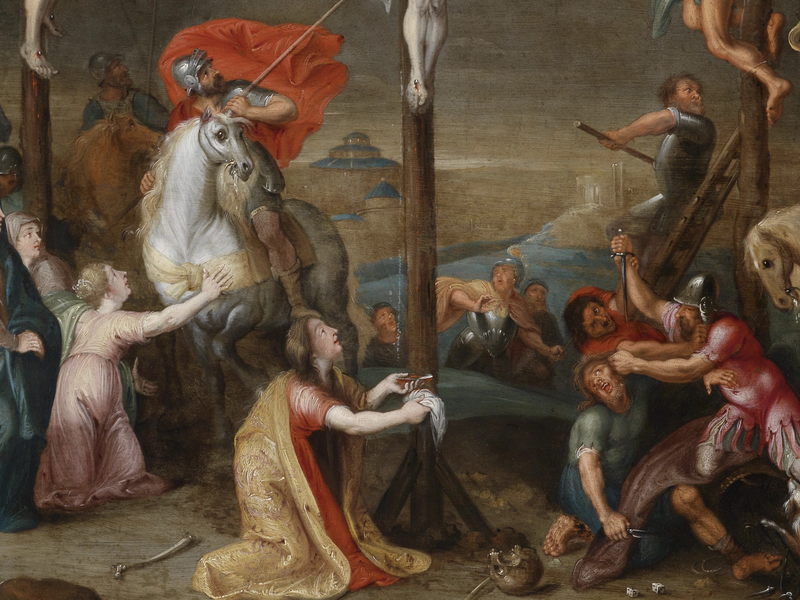
Women at the Cross

At His death, Jesus is surrounded by a Roman centurion and his cohort of Gentile solders. Matthew doesn't say that any disciples are there. But women are, and so is Joseph of Arimathea, identified as a “disciple” but, as John tells us, a “secret disciple for fear of the Jews,”…

by Peter LeithartMarch 31, 2014

Showing page 176 of 309

See all
See all

Jacob Have I Loved

W illiam Johnstone points out in the first volume of his commentary on 1 & 2 Chronicles that the Chronicler's (C) list of the kings of Edom oddly repeats the phrase “then king so-and-so died and there reigned in his place” seven times. In part, this places greater stress on…

June 23, 2016

Jesus the Teacher

I f not unique, Robert Banks's Reenvisioning Theological Education is a rarity among studies of theological education in the amount of attention he devotes to biblical models of education and training. In reviewing recent literature on efforts to rethink seminary education, he notes again and again that little attention is…

June 23, 2016

Fulfilling Paganism

R obert Pogue Harrison ( The Dominion of the Dead ) spends several pages on Walter Pater's novel, Marius the Epicurean . A deathbed convert to Christianity, Marius is struck in his first encounter with the church by the continuities between Christianity and the oldest of Roman religions, the religion…

June 22, 2016

Ancient Memory

R emember the poor,” Paul told the Galatians. But what did that mean? Peter Brown ( The Ransom of the Soul: Afterlife and Wealth in Early Western Christianity , 39-40) explains that “For early Christians, as for many other ancient persons, memory was far more than a passive storage space.…

June 22, 2016

Attention Deficit

A ccording to Lily Gurton-Wachter's Watchwords: Romanticism and the Poetics of Attention , “the first documentation of the disorder we now call Attention Deficit Hyperactivity Disorder” is found in “a medical text published in London in 1798.” Scottish physician Alexander Crichton described the “morbid alterations to which attention is subject”…

June 22, 2016

Can An Architect Save Us?

R obert Pogue Harrison calls the twentieth century “the fitful and prolonged continuation of a process that began in earnest a century earlier: the end of the Neolithic era” ( Dominion of the Dead , 31). One might think that we left the Neolithic a long time ago, but Harrison…

June 21, 2016

Showing page 276 of 2212

Browse by Category

In Medias Res

Your weekly digest for all things Theopolis.

Donate

Theopolis is nearly 100% donor-supported. Consider joining us on our mission.