Theopolis Logo

Writing

Explore our collection of theological essays, biblical studies, and reflections on faith and culture.

See all
indiana-protests
American Politics

In Whom Do We Trust?

"Put not your trust in princes, in a son of man, in whom there is no salvation. When his breath departs, he returns to the earth; on that very day his plans perish. Blessed is he whose help is the God of Jacob, whose hope is in the Lord his…

by Gregory LaughlinMarch 31, 2015
macbeth
Literature

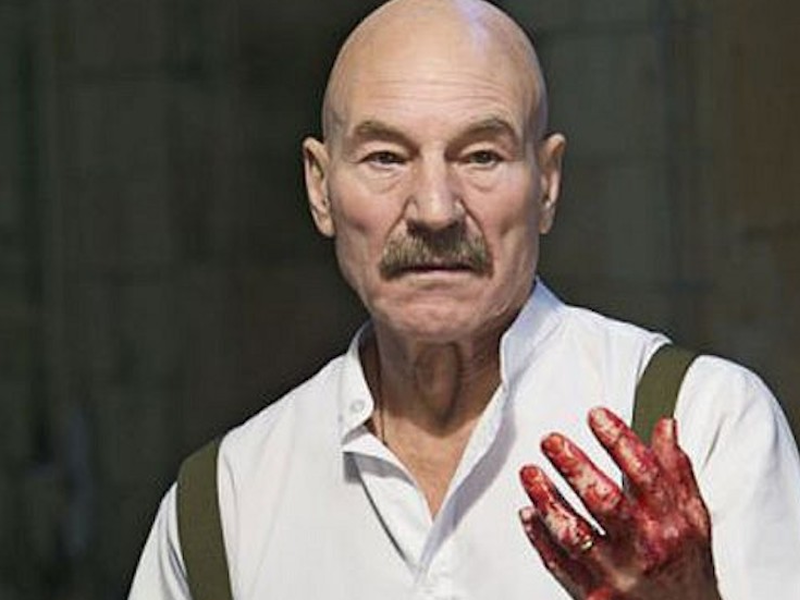
Macbeth and Nihilism

When it comes to the interpretation of Shakespeare, Harold Bloom is my favorite enemy. His writing is brilliant, his knowledge of things Shakespearean encyclopedic, and the insights he offers may puzzle, startle, or amaze, but they always educate. How then can he be an enemy? Because his anti-Christian bias is…

by Ralph Allan SmithMarch 31, 2015
london
Theopolis News

Theopolis in the UK

Theopolis President Peter Leithart spent the last week of March lecturing on worship and sacraments in England. He delivered four lectures on liturgy in Bolton, a town north of Manchester, arguing that Christian worship must be worship fit for the king and fit for the kingdom that has come in…

by TheopolisMarch 31, 2015
claudel-rheault-zvbv1aka-l4-unsplash
Creation

Heavenizing Earth: Eschatology in the Beginning

When we think about eschatology, we think immediately of Daniel, of Matthew 24-25, of 1 Corinthians 15 and 2 Thessalonians 2, and of course of Revelation. We don’t, I suspect, think about Genesis. Perhaps Genesis 3:15, with its promise of the woman’s seed, would come to mind. So might the…

by John BarachMarch 26, 2015
baptism
Baptism

Baptism as Exorcism

Alexander Schmemann in his book, Of Water and the Spirit, expounds the question that appears in nearly all the older baptismal liturgies, “Do you renounce the devil and all his works, the vain pomp and glory of the world and all sinful lusts of the flesh.” This renunciation, according to…

by Steve WilkinsMarch 24, 2015
day-2-ferguson-protests-nationwide
American Culture

Franklin Graham and the Problem of Reaction

Franklin Graham recently posted the following statement on his Facebook page: “Listen up—Blacks, Whites, Latinos, and everybody else. Most police shootings can be avoided. It comes down to respect for authority and obedience. If a police officer tells you to stop, you stop. If a police officer tells you to…

by A. K. ShaukuMarch 20, 2015

Showing page 157 of 309

See all
See all

Simon, Son of John

A fter sharing a breakfast of fish at the shore of Tiberius with his disciples, Jesus speaks directly to Peter (John 21). Peter had denied Jesus three times; now Jesus confirms his love three times. Peter denied Jesus at a charcoal fire in the high priest's court; now he's restored…

May 30, 2016

Choosing Apocalyptics

I n the closing chapter of Heaven on Earth , Richard Landes considers the import of the two major apocalyptic threats of the early twenty-first century—anthropogenic global warming (AGW) and global jihad warming (GJW). Both seem to portend TEOTWAWKI, the end of the world as we know it. What we…

May 27, 2016

DysUtopian Literature

I n his study of The Dystopian Impulse in Modern Literature , Keith Booker observes that “much of the history of recent utopian thought can be read as a gradual shift from utopian to dystopian emphases, while utopian thought itself has come more and more to be seen as escapist…

May 27, 2016

God-Fearers

W e are apt to think of a deeply religious person as a ‘true believer,' writes Howard Wettstein in The Significance of Religious Experience . In the Hebrew Bible, though, “there is no expression . . . that corresponds to our term, ‘believer.' The phrase that comes closest is ‘…

May 27, 2016

Varieties of Apocalypse

R ichard Landes's Heaven on Earth is a study of millennial apocalyptic movements, that is, movements that share a belief in “ a millennial vision of the world transformed, and an apocalyptic belief in that transformation’s imminence ” (22). Though the movement he explores share a belief in the transformation…

May 26, 2016

Millennial Modernity

According to Richard Landes ( Heaven on Earth ), traditional societies are organized by a “prime divider,” a boundary between elites and commoners. He follows Ernest Gellner in called these “agro-literate” societies, since that phrase names two key technologies that mark the division. More generally, “Elites construct prime dividers along…

May 26, 2016

Showing page 285 of 2212

Browse by Category

In Medias Res

Your weekly digest for all things Theopolis.

Donate

Theopolis is nearly 100% donor-supported. Consider joining us on our mission.