Theopolis Logo

Writing

Explore our collection of theological essays, biblical studies, and reflections on faith and culture.

See all
25f3baab-e5a9-42ec-aab6-649e53879085-3
Revelation

Rescuing Revelation: Part II

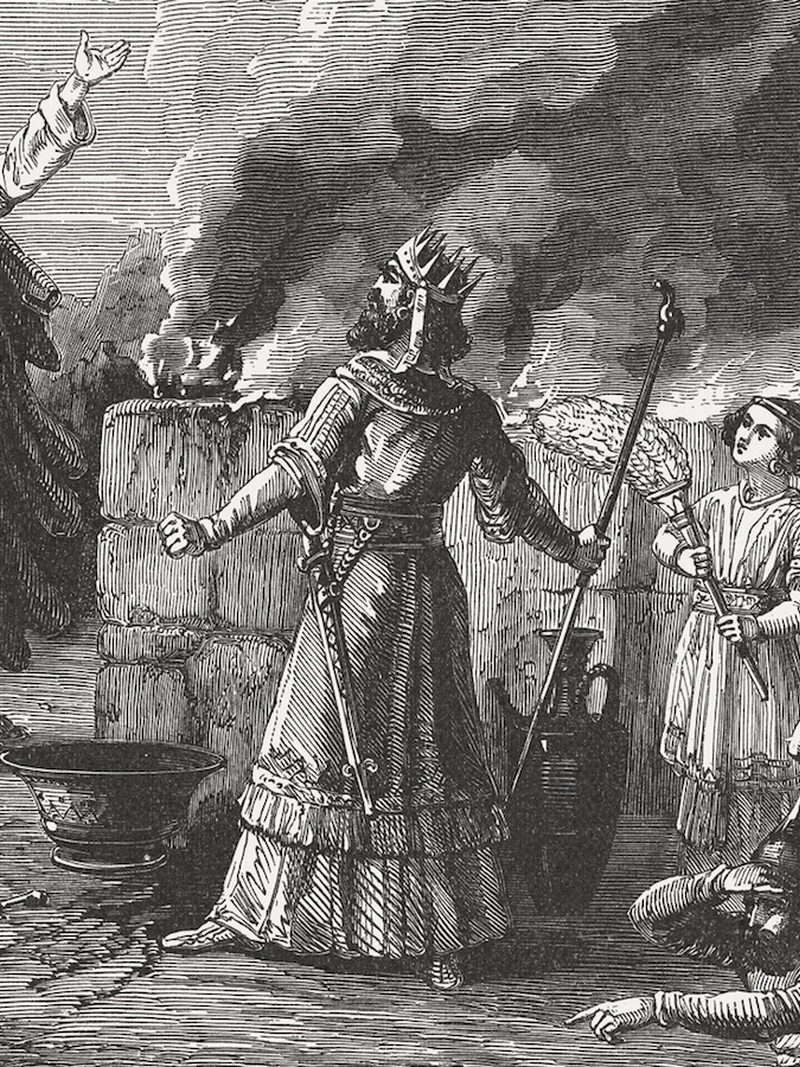
This is Part II of a 2-part essay. For Part 1, click HERE . Covenant context Most Bible teachers apply the teachings of Jesus and the Apostles directly to Christians today without any thought of the historical – and more importantly, legal – context. The ministry of Christ and the…

by Mike BullOctober 10, 2017

25f3baab-e5a9-42ec-aab6-649e53879085-3
Revelation

Rescuing Revelation: Part 1

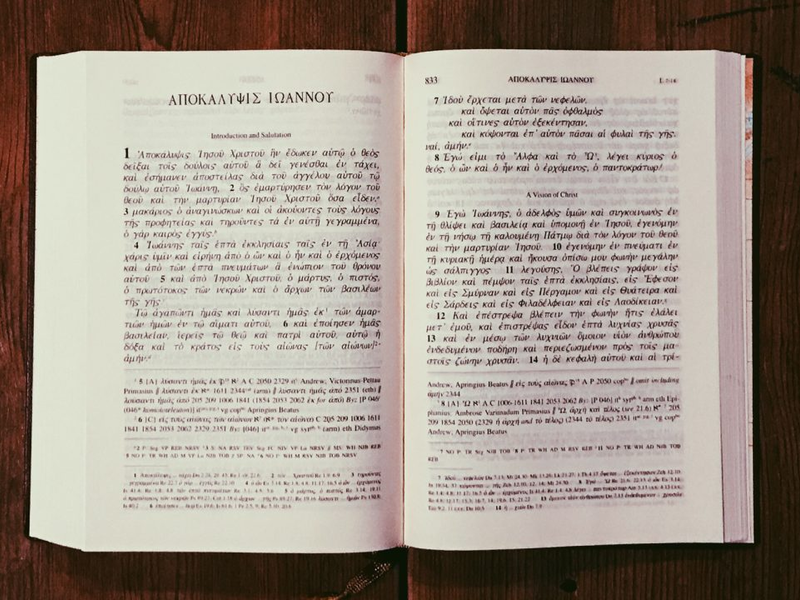
Introduction The book of Revelation polarises Christians. Some become obsessed with ‘cracking its code’ while others throw it into the too hard basket. Thankfully, recent advances in biblical theology enable us to liberate this enigmatic book from both mistreatment and obscurity. The prophecy is attractive to some because of its…

by Mike BullOctober 5, 2017
aaron-burden-1ebsmyrau-s-unsplash
Biblical Theology

Abraham's Life as a Type

I'm considering the possibility that the life of Abraham as recounted in Genesis contains a typological prophecy of the history of Israel; that is, that the events in Abraham’s life broadly anticipate events in Israel’s history. This kind of pattern is seen in the case of Moses, for instance, because…

by James B. JordanOctober 3, 2017
e99a7787
Culture

Teenagers and the Smartphone Beast

According to this recent article in The Atlantic , teenage promiscuity is decreasing. Apparently there is a general "decline in dating" which also "tracks with a decline in sexual activity." The figures are startling: The drop is the sharpest for ninth-graders, among whom the number of sexually active teens has…

by Steve JefferySeptember 28, 2017
img_4660-2
Matthew

Fulfilling the First Commandment

"Jesus said to him, “‘You shall love the Lord your God with all your heart, with all your soul, and with all your mind.'" - Matthew 22:37 Jesus says that this is the most important commandment: to love God with our heart, soul, and mind. If we obey this command,…

by Lindsey TollefsonSeptember 26, 2017
david-weber-fwuo_zluhnw-unsplash
Eucharist

Strange and Glorious New Rites

At the last supper, Jesus took bread and, having given thanks, He broke it and gave it to His disciples while saying, "Take, eat, this is My body given for you. Do this for My memorial." What Jesus did was recognized by the disciples, because it took place every morning…

by James B. JordanSeptember 21, 2017

Showing page 105 of 309

See all
See all

Easy Sainthood

Rowan Williams concludes a brief summary of the patristic debates about the double/single will of Jesus by saying “we are encouraged to see Jesus as fully aware of the general possibilities of human nature, including the possibilities of betrayal, cowardice, and self-gratification, aware of those as part of his composition…

May 17, 2016

Ministering Sacraments by Faith

For many Christians, sacraments are locked in a winner-take-all battle with faith. Are we reconciled to God by faith or by baptism? Do we feed on Christ by believing or by eating bread and drinking wine? When we place too much emphasis on sacraments, many believe, we run the risk…

May 17, 2016

Why Do We Want Houses?

Peter King begins his Private Dwelling by posing what he describes as simple, silly, obvious questions about housing: What is its use? Who needs it? What is housing for? Early on, he points to the “iconography” implied by our language about housing: “There is an iconography attached to housing that…

May 16, 2016

Sensitivity to Intrinsic Rightness

Charles Taylor's The Language Animal is a defense of HHH against HLC. That is, he thinks the linguistic perspective developed by Hamann, Herder, and Humboldt is superior to the rationalist and empiricist tradition of Hobbes, Locke, and Condillac. HLC “tried to understand language within the confines of the modern representational…

May 16, 2016

A Community of the Fearless

Monks fled. They did not flee from community or contact with others. They fled in order to become more deeply engaged with others in a more radical form of community. Rowan Williams writes ( Silence and Honey Cakes ), “What is learned in the desert is clearly not some individual…

May 16, 2016

Benjamin and Art's Disenchantment

Walter Benjamin had no totalizing philosophical system. He was an essayist, admits Ranier Rochlitz ( The Disenchantment of Art ). Rochlitz doesn't use the term to demean, however. Benjamin “is not an essayist in the manner of Montaigne; the scientific imperative is not lacking in his essays. He conducts concrete…

May 13, 2016

Showing page 289 of 2212

Browse by Category

In Medias Res

Your weekly digest for all things Theopolis.

Donate

Theopolis is nearly 100% donor-supported. Consider joining us on our mission.