Theopolis Logo

Writing

Explore our collection of theological essays, biblical studies, and reflections on faith and culture.

See all
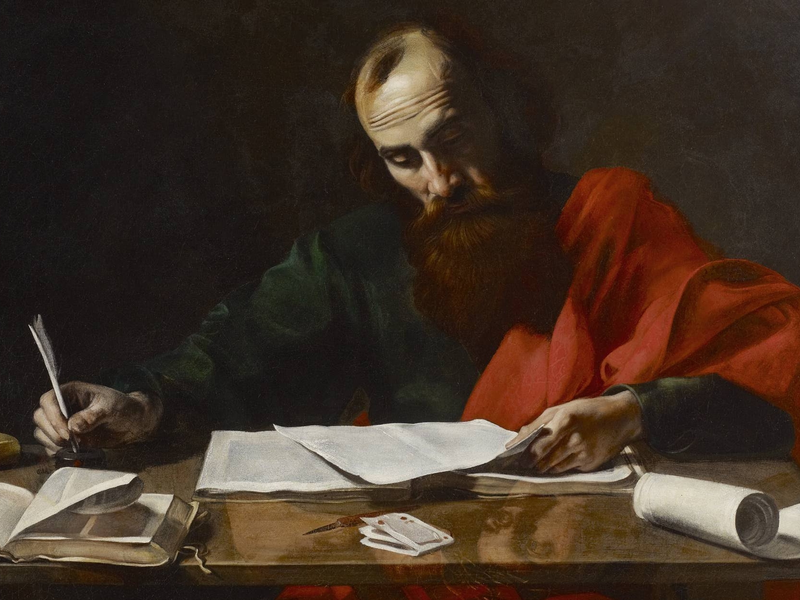
13071-probablyvalentindeboulogne-saintpaulwritinghi-1
1 Corinthians

The Great Exchange: Understanding Second Corinthians 5.21

He made Him who knew no sin to be sin on our behalf, that we might become the righteousness of God in Him. My argument is simple: What Paul means in writing the quotation above in context is the same as what he was telling the Ephesians when he wrote,…

by Mark HorneJune 7, 2004

ben-white-w8qqn1pmqh0-unsplash
Biblical Theology

What is Biblical Theology (Part 3) : The Art of Biblical Theology

THE ART OF BIBLICAL THEOLOGY IN PRACTICE: INTERTEXTUALITY AND TWO PAULINE CASE STUDIES The Art of Biblical Theology: Intertextuality Biblical Theology is really an art. Like other skills of this sort, it is not a matter of following rules (though there are certainly guidelines and techniques). Rather, it’s matter of…

by Rich LuskJune 6, 2004
malcolm-lightbody-tc2f02iq8le-unsplash
Biblical Theology

What is Biblical Theology: (Part 2) The Christotelic Spiral

Click HERE for Part 1 Reading Christotelically Jesus Christ is the heart of God’s plan for creation and history. There is no “hidden plan” or “hidden God” lurking behind Christ; rather, in and through Christ God has revealed himself and his intentions towards the world. In Christ, the Father has…

by Rich LuskJune 6, 2004
aaron-burden-qjdzyt_k8xg-unsplash
Biblical Studies

What is Biblical Theology? (Part 1)

STORY THEOLOGY AND A THEOLOGY OF STORY Defining Biblical Theology What is Biblical Theology? How does it compare to other ways of doing theology, such as Systematic Theology? Geerhardus Vos suggested that whereas Biblical Theology draws a line, Systematic Theology draws a circle. That is to say, Biblical Theology is…

by Rich LuskJune 6, 2004
screenshot-2023-09-21-at-3-59-23-pm
Hebrews

Living by His Faith: Some Rough Thoughts on the Faithfulness of Christ

The gospels strongly imply Jesus lived by faith in the promise of his heavenly Father. How else can his prayer life understood? How else could he have wrestled through the Gethsemane experience? How else could he have committed himself into his Father’s care at death? How could Jesus have presented…

by Rich LuskJune 6, 2004
sixteen-miles-out-al48tflf4e8-unsplash
John

John 3:16

John 3:16 is probably best-known, or at least, best-liked Bible passage in North America: “For God so loved the world, that he gave his only Son, that whoever believes in him should not perish but have eternal life.” This declaration of God’s love of the whole world is greatly comforting…

by Mark HorneJune 6, 2004

Showing page 223 of 309

See all
See all

Shakespeare on Sacraments

In their essay on the Eucharist in Cultural Reformations , David Aers and Sarah Beckwith notes that “one of the central images in the exhortations to Holy Communion in the Book of Common Prayer and also in the ‘Homily of the Worthy Reception’ is the image of the heavenly banquet…

May 13, 2016

Reformation Crucifixion

In the second volume of his study of the cross in Western art ( The Triumph of the Cross ), Richard Viladesau notes that “the period immediately preceding the Reformation was one in which Christ's passion was treated with graphic emphasis on the violence of the events and on the…

May 13, 2016

Worthy Reception

In a contribution to Cultural Reformations , David Aers and Sarah Beckwith explain that “One of the chief reasons why Cranmer and other reformers thought the rejection of transubstantiation was so essential was that it negated the act of repentance and reception. If the body of Christ was e x…

May 12, 2016

Augustinian Eucharist

David Aers and Sarah Beckwith argue that Augustine's interpretation of John 6 cannot be understood in a Zwinglian or Wycliffite sense (essay in Cultural Reformations , 153). Augustine does say “Believe and you have eaten,” but Augustine's framework for saying this is corporate and ecclesial. As evidence, they summarize Augustine's…

May 12, 2016

Disenchantment and the Sacrifice of Intellect

Theology often lays claim to scientific status, Weber observes, but in doing so does something that no genuine science does: It operates with substantive presuppositions, especially the assumption that the cosmos is meaningful. In “Science as a Vocation,” he writes, “All theology represents an intellectual rationalization of the possession of…

May 12, 2016

From the Mountain

John is carried by the Spirit to a “great and high mountain” (Revelation 21:9-10), where he sees new Jerusalem descend from heaven. It's the last mountain in Bible, in line with Eden, Sinai, Zion, Moriah, Tabor, Olives. The link with Sinai is especially important, but not because this is a…

May 11, 2016

Showing page 290 of 2212

Browse by Category

In Medias Res

Your weekly digest for all things Theopolis.

Donate

Theopolis is nearly 100% donor-supported. Consider joining us on our mission.