Theopolis Logo

Writing

Explore our collection of theological essays, biblical studies, and reflections on faith and culture.

See all
kelly-sikkema-gpoh17dxqdm-unsplash
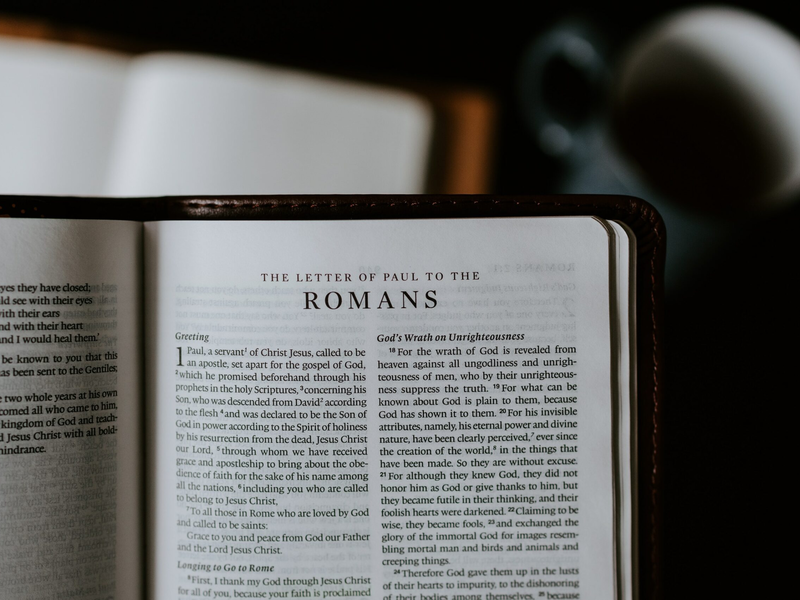
Romans

A Pathway into Romans, Addendum

An addendum to the earlier post on Romans. In my first essay, I pointed out how the role of the sin of Joseph’s brothers in bringing about Joseph’s exaltation in Egypt, and the resulting salvation of the world from famine, might show us and explanation to some of the distinctive…

by Mark HorneMarch 7, 2013

kelly-sikkema-gpoh17dxqdm-unsplash
Romans

A Pathway into Romans

When Paul wrote to the Romans, he was obviously writing a missionary support letter of a sort. One can read Romans 1.15 and then jump into 15.23 (“[S]ince I no longer have any room. . . .) without losing virtually any coherence. Yet into this letter he “dropped,” as it…

by Mark HorneMarch 5, 2013
preston-goff-xncifslw0jw-unsplash
Biblical Studies

Mapping of Time

The Westminster Confession says that each passage has one meaning , not many, and that gets picked up on by lots of people who are suspicious of and do not like typological readings of Scripture. I will defer to wiser and more learned heads than mine as to exactly what…

by Richard BledsoeMarch 1, 2013
kiwihug-l4gw27xzn1i-unsplash
John

How Jesus Saved the World | (Part 2)

By arresting, torturing, and killing Jesus, the authorities thought that they were securing well being and peace again in their society by means of the tried and true method of a single-victim scapegoat. Everyone’s thirst for violence will be satisfied and we can get on with the business of everyday…

by Jeff MeyersFebruary 28, 2013
lea-v-z2ied5ktd-8-unsplash
Ecclesiology

A Vision of Social Harmony

This is the second in a series of essays on "Continuing the Reformation." In his important though sadly unavailable book, Calvin's Doctrine of the Church (Brill, 1970), Benjamin Charles Milner argues persuasively that in Calvin's view God's perfect order for His creation, an order that was to grow and develop…

by James B. JordanFebruary 25, 2013
markus-winkler-aid-xyrtlec-unsplash
Theopolis News

Jordan Lectures

Trinity House Fellow James Jordan recently gave a series of lectures in London on how to read the Bible. They are available online at NorthLondonChurch.org .

by Peter LeithartFebruary 24, 2013

Showing page 198 of 309

See all
See all

Donne and Sacramental Poetics

Sophie Read's Eucharist and the Poetic Imagination in Early Modern England examines six early modern English poets on the assumption that “particularities of belief can be made manifest in the verbal texture of a literary work: that there is an analogy between the rhetorical and theological plans of understanding, and…

April 29, 2016

Preaching to Spirits

Karen Jobes ( 1 Peter ) understates the point when she says that 1 Peter 3 is “more obscure than we might wish,” but she highlights the central point of Peter's odd claim that Jesus preached to spirits in prison: “(1)Being linked with 3:13-17 by hoti kai (because also, 3:18),…

April 28, 2016

Rabbinic Welfare

Susan Holman devotes a few pages of her The Hungry Are Dying , a study of “beggars and bishops” in Cappadocia, to a sketch of Rabbinic teaching on almsgiving, drawn from the writings of the Talmudim. The poor appear in three main contexts in rabbinic writing: “First, they are recognized…

April 28, 2016
Ritual

Biblical Terms for “Ritual”

English Bibles rarely employ the words “ceremony,” “rite,” or “ritual” to translate biblical terms. The NASB, for example, uses the words “ritual” and “rite” in only three instances, all having to do with the Passover (Exodus 12:25-26; 13:5). The Authorized Version uses the word “ritual” only at Number 9:3. The…

April 27, 2016

Weber's Liberal Protestantism

Anthony Carroll summarizes his Protestant Modernity in a 2009 article in the Archives of European Sociology . Recognizing that Weber's theory of secularization “has greatly influenced later social theorists in their accounts of secularisation, rationalisation, and modernisation,” he wanted to set Weber's theory “within its liberal Protestant heritage.” This is…

April 27, 2016

No Longer

The ruined city Babylon is a city where things that used to happen don't happen anymore. John's description is under the rubric “no longer” ( ou eti , used 6x in Revelation 18:21-24). In Babylon, music, crafts, milling, light, and weddings have ceased. The old has passed, the new has…

April 26, 2016

Showing page 295 of 2212

Browse by Category

In Medias Res

Your weekly digest for all things Theopolis.

Donate

Theopolis is nearly 100% donor-supported. Consider joining us on our mission.