Theopolis Logo

Writing

Explore our collection of theological essays, biblical studies, and reflections on faith and culture.

See all
screen-shot-2022-08-04-at-9-36-57-am
Matthew

Paul Doesn't Care About Universal Individual Sinfulness or General Revelation

One reason readers assume Paul is trying to prove that all human beings are sinful is that they understand him to be arguing that no one can keep the law. That means, they think, his opponents must believe that human nature is potentially sinless. Taking Paul’s statement that, if you…

by Mark HorneJune 17, 2013

karsten-wurth-imegmbunara-unsplash
Mission

Dreams and Visions

[Note: This post was written prior to our name changing to Theopolis Institute.] What is Trinity House for? Three things: We aim to advance the reformation of the church and, through the church, to promote the renewal of culture; in furthering reformation, we aspire to be a site of fraternal,…

by Peter LeithartJune 12, 2013
sixteen-miles-out-al48tflf4e8-unsplash
Deuteronomy

Sons to Yahweh your God!

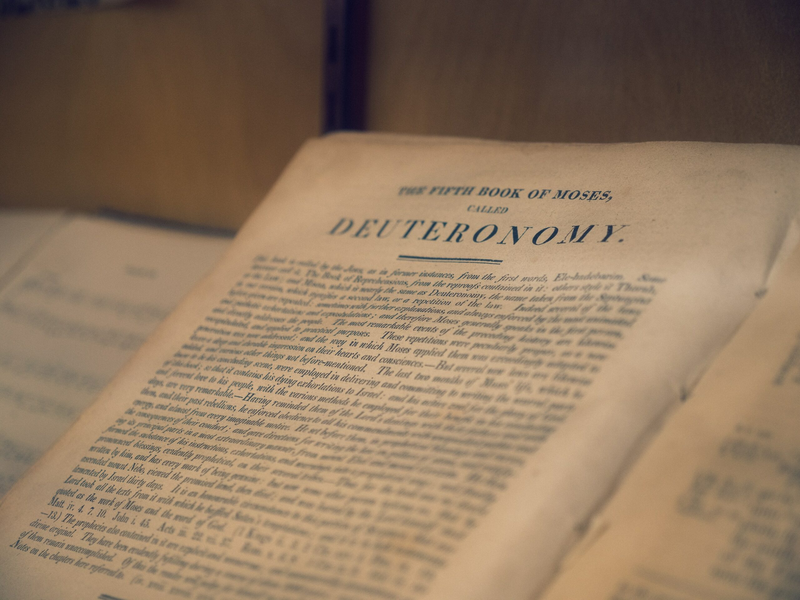
This is the third in a series of studies of the Third Word, and especially of Deuteronomy 14. In 1979 Stephen Kaufman penned a groundbreaking essay on Deuteronomy, arguing that it was a meticulously structured and carefully composed book. In his view, chapters 12 to 26 in particular follow the…

by Ralph Allan SmithJune 10, 2013
kelly-sikkema-gpoh17dxqdm-unsplash
Romans

How is Wrath Revealed?

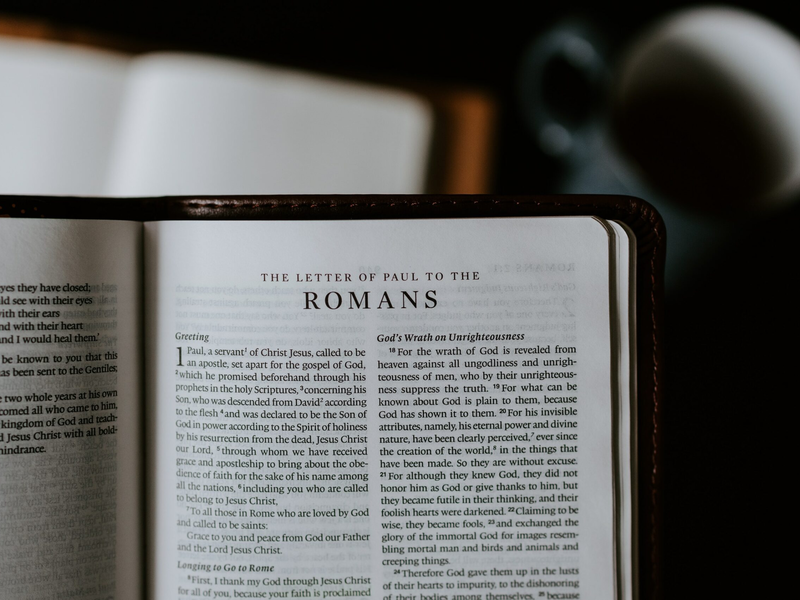
A large mistake is made in understanding Romans if one assumes that Paul is concerned with proving the fact that no one can ever live without sin—or that all attempts at obeying God’s commands are at least tainted with human sinfulness. The first problem with such an assumption is that…

by Mark HorneJune 5, 2013
chris-bair-ndczc5739ck-unsplash
Deuteronomy

The Third Word

This is the second in a series of studies on the Third Word, and especially on the food laws of Deuteronomy 14. In the second part of this series, I argue that Moses’ reworking of the Ten Words in Deuteronomy 5 includes adding nuance to the Third Word. This prepares…

by Ralph Allan SmithJune 3, 2013
yannis-papanastasopoulos-if_29sed7ta-unsplash
Culture

Turning Babel into a Beast

Recent months have brought a lively discussion of Christian participation in the culture war. On the one hand, the pro-life movement appears to be making some slow progress on the abortion issue. The trial of abortionist and serial murderer Kermit Gosnell has the potential to awaken those who are nominally…

by Joe RigneyMay 29, 2013

Showing page 193 of 309

See all
See all

Death and Resurrection in 1 Chronicles 2

1 Chronicles 2 begins with a list of the sons of Israel, organized not in birth order but by mother. It is chiastically arranged to place Rachel's sons at the center: A. 6 sons of Leah B. 1 son of Bihah, Rachel's maid (Dan) C. 2 sons of Rachel (Joseph,…

March 2, 2016

Rage Against the Machine

Camille Paglia nails the reason for the unlikely rise of Bernie-mania. It's a strike against the “soulless juggernaut”: “A vote for Bernie Sanders is a vote against the machine, the obscenely money-mad and soulless juggernaut that the Democratic Party has become. Perhaps there was a time, during the Hubert Humphrey…

March 2, 2016

Heroes and Hero Worship

In Heroes and Hero-Worship , Thomas Carlyle argues that hero-worship is the source of all religion, including Christianity, the form of all loyalty and faith, the foundation of human society. All ranks, he says, “are what we may call a Hero archy (Government of Heroes)—or a Hierarchy, for it is…

March 2, 2016

Wilderness Sins

In his typological reading of the exodus (1 Corinthians 10), Paul warns the Corinthians not to commit the sins that their fathers committed in the wilderness, specifically idolatry and sexual immorality. By these, and by their grumbling, the Israelites tested the Lord and provoked His anger. These are the same…

March 1, 2016

Three Forms of Tyranny

Tyranny is a constant in human history, argues Waller Newell in his forthcoming Tyrants . But the character of tyranny is not constant. Newell analyzes three forms of tyranny. The first is the “garden-variety” tyrant, most common in the ancient world: “These are basically men who dispose of an entire…

March 1, 2016

2-3-74

During February and March of 1974, science fiction writer Philip K. Dick experienced a series of mystical revelations. The source was an entity known as “Zebra,” which revealed that time had stopped back in the mid first-century and that all time since had been an illusion. Guided by Zebra, Dick…

March 1, 2016

Showing page 315 of 2212

Browse by Category

In Medias Res

Your weekly digest for all things Theopolis.

Donate

Theopolis is nearly 100% donor-supported. Consider joining us on our mission.