Theopolis Logo

Writing

Explore our collection of theological essays, biblical studies, and reflections on faith and culture.

See all
sixteen-miles-out-al48tflf4e8-unsplash
Food

Gluttony In The Bible (As Opposed To Gluttony In The American Church)

In the Bible, fatness is such a blessing, that it is especially hard to understand why wicked men are permitted to enjoy such a state. It requires a theodicy and faith in God. Thus: “For they have no pangs until death; their bodies are fat and sleek . They are…

by Mark HorneAugust 12, 2013

jeremy-yap-j39x2xx_8cq-unsplash
How to Worship

Biblical Worship (Video with James B. Jordan)

[fve]http://vimeo.com/71901553[/fve]

by Peter LeithartAugust 8, 2013
chris-bair-ndczc5739ck-unsplash
Deuteronomy

Holy Things for Holy People

The allusion to the Exodus story is contained in the first words of Deuteronomy 14:1 — “ye are the sons of Yahweh your God” — as well as in 14:2 in the use of the technical term translated “treasured possession,” “His own possession,” “peculiar people,” “precious people,” and so forth.…

by Ralph Allan SmithAugust 5, 2013
adam-and-eve-in-the-garden-of-eden-wenzel-peter
Deuteronomy

Forbidden Foods

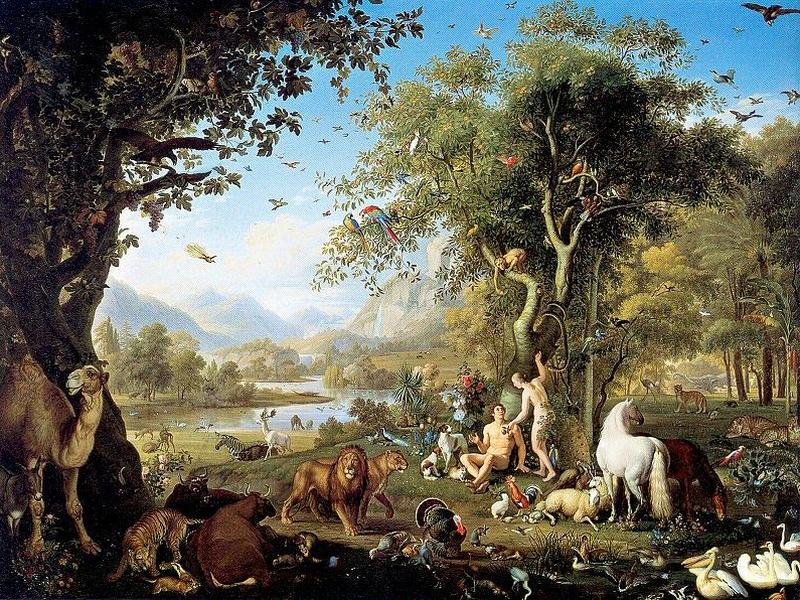
I have argued that Deuteronomy 14:1-21 is an independent literary unit that applies the Third Word to the lives of Israelites from the time of Moses and Joshua. In this short pericope, Moses suggests broad and deep meaning by means of literary allusion to the stories of the creation and…

by Ralph Allan SmithJuly 31, 2013
david-weber-fwuo_zluhnw-unsplash
How to Worship

Pro-Sacramental Reformation

In his recently republished The New Creation , the late, delightful Herbert McCabe defends the priesthood of the plebs as roundly as anyone could want. Citing Hebrews, he claims that "there is an essential difference between the Christian community and the community of the Old Law, or any other religious…

by Peter LeithartJuly 29, 2013
eric-ward-7kqe_8meex8-unsplash
Augustine

Sexual Idolatry

Augustine famously prayed, “Our hearts our restless until they rest in You.” True indeed. Being creatures, we inherently sense our ontological poverty—our innate condition of dependence—and are compelled to find a sense of security. And it is also true—as Augustine’s own narrative painfully illustrates—that one of the things we most…

by Gerald HiestandJuly 24, 2013

Showing page 190 of 309

See all
See all

Why Protestants Can't Write, II

If the writer must be open to the manifestation of God in “what-is,” she must begin with the senses. Following Aquinas, Flannery O'Connor writes, “The beginning of human knowledge is through the senses, and the fiction writer begins where human perception begins. He appeals through the senses, and you cannot…

January 29, 2016

Apocalyptic Herods

C. E. Douglas's 1915 study of Revelation, The Mystery of the Kingdom , is an eccentric work in a number of ways, but for just that reason highly stimulating, provocative of insight. He rejects, for instance, both the “standard” dating of the book in the reign of Domitian (based on…

January 29, 2016

Den of Thieves

Jesus condemned the temple as a “den of thieves.” He was quoting Jeremiah, who said that the Jews of his time were using the temple as a “safe house” where they could store and enjoy their ill-gotten gains. The temple was not where their thieving took place, but their hideout.…

January 29, 2016

Holy One of Israel

Yahweh is the “Holy One of Israel” ( qedosh yisrael ). It is a name used almost exclusively in Isaiah. It appears once in Kings (2 Kings 19:22), three times in the Psalms (71:22; 78:41; 89:18), a couple of times in Jeremiah. Isaiah uses the name twenty-five times (significant? 2…

January 28, 2016

Kings and the Land

Israelite kings were not to be like kings of the nations (Deuteronomy 17). Kings from the nations multiplied wealth and lived in luxury; they built military machines to conquer their neighbors; they kept harems full of princesses, wives and concubines that represented political alliances. Israel's kings were to be different…

January 28, 2016

Why Protestants Can't Write, I

Blame it on Marburg. The 1529 Colloquy at Marburg attempted to reconcile Lutherans and Zwinglians on the doctrine of the real presence, and was nearly able to achieve its aim. To Luther's surprise, the Zwinglian party agreed with fourteen of his fifteen propositions, and even conceded most of what was…

January 28, 2016

Showing page 327 of 2212

Browse by Category

In Medias Res

Your weekly digest for all things Theopolis.

Donate

Theopolis is nearly 100% donor-supported. Consider joining us on our mission.