Theopolis Logo

Writing

Explore our collection of theological essays, biblical studies, and reflections on faith and culture.

See all
sixteen-miles-out-d40gdcd_-he-unsplash
Federal Vision

The Covenant of Works: The Mosaic Covenant & the Necessity of Obedience for Salvation in the Day of Judgment

When someone expounds the way of salvation found in the Westminster Confession and Catechisms and in the easily-accessible writings of the Reformed heritage, he often finds him embroiled in a debates about the covenant of works and the Mosaic Covenant. One is “proven” to be aberrant by allegations that one…

by Mark HorneMay 29, 2005
james-coleman-hoznesupplm-unsplash
Baptism

Rome Won't Have Me

The ultimate condemnation of a position in Reformed circles is to show that it “leads back to Rome.” Indeed, one gets the feeling that Rome is a worse destination for a Presbyterian than even hell itself. The accusation of Rome stings deeply, of course, because it means that all the…

by Rich LuskOctober 24, 2004
aaron-burden-qjdzyt_k8xg-unsplash
Federal Vision

Mixing “Law” & Gospel in the Abrahamic Promise: A Response to Michael Horton

One of the odd features of Michael Horton’s version of Covenant theology is his interpretation of the covenant God made with Abraham 1 in Genesis 15. According to Horton, The very way in which God made the covenant with Abraham (putting him to sleep; walking through the torn animals by…

by Mark HorneSeptember 22, 2004
jan-kahanek-g3o5ztrk2e4-unsplash
Mark

The Victory According to Mark

What was I trying to do, when I wrote my book on Mark’s Gospel ? Fundamentally, I wanted a book that would change readers by making them better readers of the Gospel of Mark. My ideal reader is not someone who goes to the book to use as a resource…

by Mark HorneSeptember 7, 2004
sixteen-miles-out-d40gdcd_-he-unsplash
Baptism

Sacramental Assurance & the Reformed Faith: The Biblical Perspective of the Westminster Standards

Why do we need sacraments? According to the Westminster Confession, sacraments were instituted by Christ “to confirm our interest in him” (27.1), “to strengthen and increase” the “faith” of those within the Covenant of Grace and “to distinguish them from those that are without” that covenant (Westminster Larger Catechism, #162).…

by Mark HorneSeptember 3, 2004
sinitta-leunen-dvibhmzsy8e-unsplash
Isaiah

“What More Could I Have Done?” | Some Thoughts on the Mystery of Divine Sovereignty and Covenant Responsibility

In Isaiah 5:1-7, we have a typical covenant lawsuit, in which the Lord accuses his people of rejecting his grace and mercy. It is not my intention here to exegete the entire passage, or to look at the way the vineyard image used here serves as a metaphor in other…

by Rich LuskJune 7, 2004

Showing page 222 of 309

See all
See all
Liturgy

Sabbath Threshing

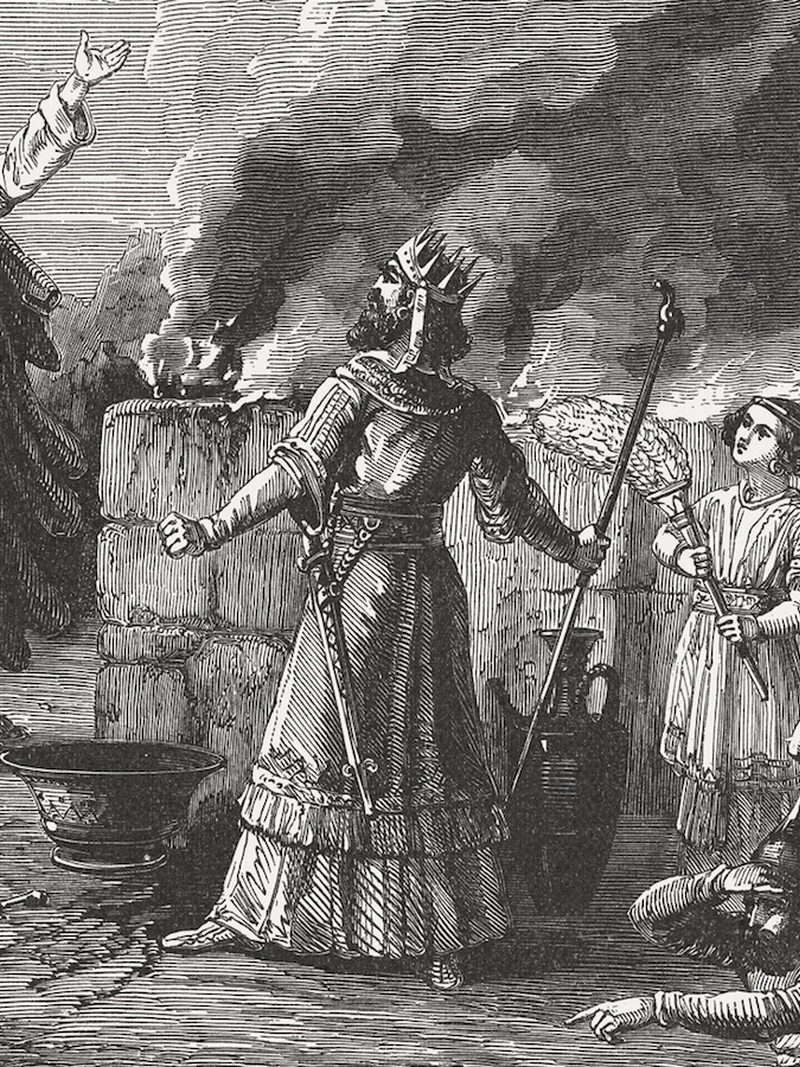
Solomon built the temple on the threshing floor that David bought from Araunah the Jebusite (2 Samuel 24; 2 Chronicles 3). What might that mean? Grain is threshed when an animal walks over it, sometimes dragging a threshing sledge, to separate the grain from the chaff. Threshed grain is winnowed,…

October 23, 2015
Art

Life and Culture Series

These are remarks delivered to introduce conductor John Mason Hodges as the first Birmingham Life and Culture speaker. This is the first of what we hope will be an annual lecture on the arts and culture. Each year, we’ll bring a painter, musician, poet, sculptor, novelist, critic, architect, or scholar…

October 22, 2015

Two Tables

Jesus’ action in the temple was a symbolic enactment of the coming destruction of the temple. The Jewish leaders had turned what should have been a house of prayer for the Gentiles into a den of brigands. Jesus overturned the tables and chairs to dramatize what lay on the horizon…

October 22, 2015

Double Time in Othello

AC Bradley ( Shakespearean Tragedy ) points out that Othello has an unusual structure for a Shakespeare tragedy. The main conflict doesn't arise until the third act, and then the pressure and movement is relentless from that point to the end. In the other tragedies, the crisis emerges earlier, Act…

October 22, 2015

The Quadrigal Form of Christian Thought

The quadriga - the fourfold sense, consisting of literal, allegorical, tropological, and anagogical - isn't only a “method” for interpreting Scripture but a framework for interpreting everything . Two assumptions guide my reflections here. First, medieval biblical scholars insisted that biblical allegory and typology was not merely a method of…

October 22, 2015
Rosenstock-Huessy

Listening

Theories of language, Rosenstock-Huessy comments, focus almost exclusive attention on the speaker or writer, and almost none on the listener: “Our philology is built around the process of talking, speaking, writing.” Listening is emphasized in “military training for obedience, understanding to psychology, listening and learning to acoustics and education.” But…

October 21, 2015

Showing page 360 of 2212

Browse by Category

In Medias Res

Your weekly digest for all things Theopolis.

Donate

Theopolis is nearly 100% donor-supported. Consider joining us on our mission.