
Theopolis Logo

Writing

Explore our collection of theological essays, biblical studies, and reflections on faith and culture.

See all
freysteinn-g-jonsson-2baa-syyptk-unsplash
American Religion

Protestantism's Lost Soul

D. G. Hart’s The Lost Soul of American Protestantism vividly clarifies the differences between evangelical and Confessional Protestantism. In part the book is a manifesto for historians of American religion. Hart argues that historians of American Protestantism have operated with a simplistic binary contrast of evangelical/conservative v. liberal/progressive. At best,…

by Peter LeithartAugust 18, 2015
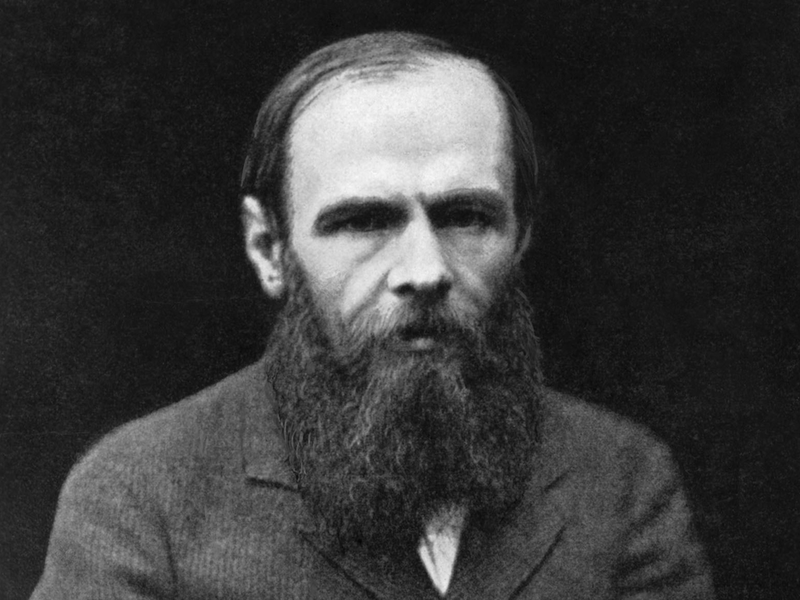
dostoyevsky
Books

The Idiot and the Limits of Compassion

Dostoyevsky’s novel, The Idiot , like his other major works, is a complex evaluation of the human condition—a juxtaposition of the innate goodness and innate evil that resides within every human heart. There is much one can say about The Idiot . I am no specialist of Russian literature, or…

by Gerald HiestandAugust 13, 2015
same-sex-celebrations-2
Homosexuality

If There is “Natural Law” How Can People Believe in Same-Sex Marriage?

At risk of violating some secret handshake agreement on some important nuance to “natural law,” I will sum up what I understand in my own words. As far as I can tell natural law is supposed to be an area of knowledge that all people should be able to agree…

by Mark HorneAugust 11, 2015
falling-star
Biblical Studies

Cosmic Language, 2

The first installment of this article may be found here . The Image of Man This brings us to a substitutionary atonement which we do understand, the fulfilment of the cruciform Tabernacle in the cross of Christ. Although Jesus’ execution was Physical and Social, it was primarily Personal . Beginning…

by Mike BullAugust 6, 2015
branagh-macbeth
Genesis

Every Noise Appalls

The first two essays in this series drew attention to the structure of the first part of Macbeth and to the way Shakespeare incorporates the Garden of Eden into his story. Macbeth , we saw, is a temptation story in which, compared to the Biblical story, the temptation itself is…

by Ralph Allan SmithAugust 4, 2015
new-jerusalem
Revelation

The Warrior and the City: A Wedding Homily

Revelation 19:6-9 Then I heard something like the voice of a great multitude and like the sound of many waters and like the sound of mighty peals of thunder, saying, “Hallelujah! For theLord our God, the Almighty, reigns. Let us rejoice and be glad and give the glory to Him,…

by Peter LeithartAugust 3, 2015

Showing page 146 of 309

See all
See all

Ritual and Spontaneity

For the first 1500 years of its existence, Christianity was a liturgical faith. That began to change with Wyclif and the Hussites, and the Reformation produced permanent forms of un- and even anti-liturgical Christianity. Ceremony took on negative connotations, synonymous with hollowness and superstition. Ritual was no longer seen as…

October 13, 2015

Locusts and Honey

John the Baptist is presented in the gospels as the fulfillment of the Old Testament promise that God would send His messenger to prepare the way for the coming of the glory of the Lord (Isaiah 40), and the promise to send Elijah before Him to turn the people to…

October 12, 2015
Eucharist

Showing the Lord's Death

How does the Lord’s Supper proclaim the death of Jesus until He comes? (1 Corinthians 11:26). Historically, liturgists have attempted to locate some act in the rite of the Supper that corresponds to the death of Jesus: the fraction (breaking of bread), or the fact that bread and wine are…

October 12, 2015

Eucharistic Modalism

One of the earliest Trinitarian heresies is called “modalism.” It taught that the “persons” of the Trinity are not distinct persons, but only the masks or roles that the one Person of God adopts at various times. The fundamental problem with modalism is that it stretches out a veil, or…

October 12, 2015

Irritability and Intellect

We like to pretend our notions are the product of careful study and rational analysis. We like to pretend our likes and dislikes are deeply rooted in principle. Montaigne thought otherwise. In “An Apology for Raymond Sebond,” he wrote, “I have seen some, who without infringing their patience, could not…

October 12, 2015

From the Mouth

Four times Revelation refers to the sword that comes from the mouth of Jesus, twice at the beginning of the book (1:16; 2:16) and twice at the end (19:15, 21). Jesus' mouth-sword frames the book, and the four uses hint at His universal conquest: Jesus will extend the reign of…

October 9, 2015

Showing page 365 of 2212

Browse by Category

In Medias Res

Your weekly digest for all things Theopolis.

Donate

Theopolis is nearly 100% donor-supported. Consider joining us on our mission.