Theopolis Logo

Writing

Explore our collection of theological essays, biblical studies, and reflections on faith and culture.

See all
max-kukurudziak-qbc3zmxw0g8-unsplash
History

Report from Ukraine

We lost Crimea. That is very clear. Putin proved he was not lying when he said he would place women and children ahead of his soldiers to storm Ukrainian military bases. Russian soldiers did exactly that with women (some who volunteered and some who were forced). Russia now occupies all…

by San SanychMarch 28, 2014

screenshot-2023-09-21-at-3-59-23-pm
Church Calendar

God Gone Silent

Sound is an indicator of life and energy. “Sound signals the present use of power, since sound must be in active production to exist at all.” Things don’t have to be alive to make themselves visible, and “a primitive hunter can see, feel, smell, and taste an elephant when the…

by Peter LeithartMarch 26, 2014
web-lead-image_final_dostoevsky
Books

Dostoevsky the Liberal

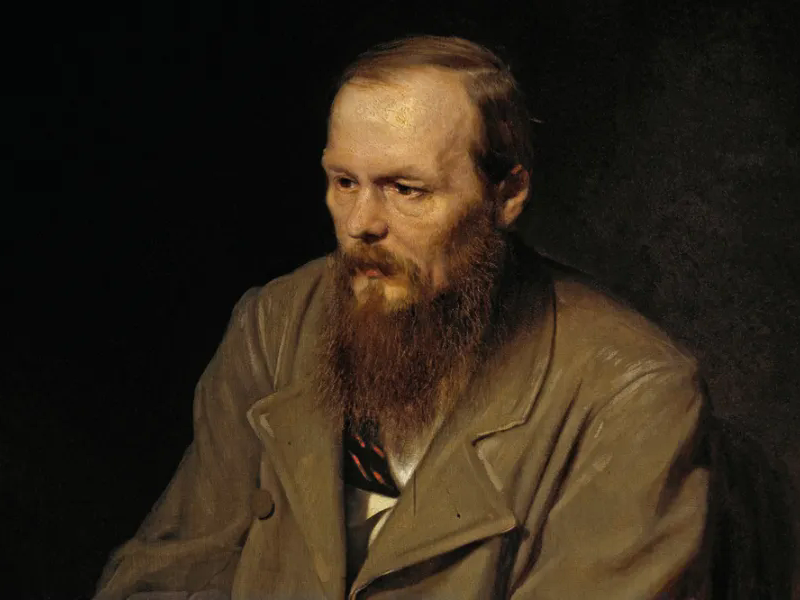
In the most famous section of his best-known novel, Dostoevsky’s Ivan Karamazov brings forward his case against God. He opens with a horrific litany of outrages against children. Turkish soldiers make a baby laugh and then shoot a pistol into his face. A little girl is beaten, thrashed, kicked by…

by Peter LeithartMarch 24, 2014
kelly-sikkema-ggs0_g6wi-i-unsplash
Epistemology

Subsidiary-Focal Integration and Liturgy

​At the heart of Esther Lightcap Meek's splendid ​Little Manual for Knowing is a concept she picked up from Michael Polanyi, "subsidiary-focal integration." The concept begins from the insight that all our knowing, all our experience, is double. We focus on something, but we are capable of "indwelling" that focal…

by Peter LeithartMarch 19, 2014
engin-akyurt-uz9qpvbol0e-unsplash
Revelation

White Stone

Jesus promises the overcomers of Pergamum "hidden manna" and a "white stone." The hidden manna is often linked with the manna stashed away in the ark of the covenant. The white stone has proved more elusive. Exodus tells us that manna was white (Exodus 16:31) and like bdellium (Numbers 11:7),…

by Peter LeithartMarch 17, 2014
226961fgsdl
Leviticus

A Theology of Festivity

Leviticus 23 begins with a reference to “Yahweh’s appointed times” ( mo’ade-YHWH ). Mo’ed is the common term for the feasts of Israel. A few dimensions to this term. First, it means “appointed time” or “designated time.” It is a time set by Yahweh. Yahweh has claimed certain times as…

by Peter LeithartMarch 12, 2014

Showing page 177 of 309

See all
See all

Eucharist, Evangelical and Catholic

Theodore Beza's opening speech at the Colloquy of Poissy was a model of irenic Protestantism (Nugent, Ecumenism is the Age of the Reformation ). He stressed the creedal commonalities of Rome and the Reformed, and argued that the differences were “matters of interpretation” and unnecessary accretions” (97). As Nugent says,…

September 16, 2015

Phone Booth

Way out in the Mojave desert is a phone booth. Some years ago, a resident of LA published a picture, which inspired Godfrey Daniels to start calling the phone. He was prepared to keep calling for years until someone picked up. A month later, Lorene Aiken, who worked at the…

September 16, 2015

Conformist Subversives

To secular analysts, “Progressive Pentecostals” seem naively apolitical. In their study of Global Pentecostalism , Donald Miller and Tetsunao Yamamori agree that the “integral” or “holistic” Pentecostals that they study are not social gospellers or liberation theologians. They don't aim to “reform social structures or challenge government policies.” They are…

September 16, 2015

Exit and Voice

What do people do when social institutions go wrong? Albert Hirschman ( Exit, Voice, and Loyalty ) argues that there are two main alternatives: One withdraws (exit) or one speaks out (voice). He admits that these categories sound “suspiciously neat,” but defends them because they “reflect a more fundamental schism:…

September 15, 2015

Deuteronomic Penalties

Deuteronomy 25 begins like a law-and-order text. Judges are to condemn the wicked and justify the innocent. Convicted criminals are beaten, and beaten publicly “in the presence” of the judge, beaten as much as his crime deserves (v. 2). Verse 3 takes a slight turn: It places a limit on…

September 15, 2015

Irenicism in the Reformation

“Perhaps irenicism is the finest synthesis of Renaissance and Reformation,” writes Donald Nugent in his 1974 monograph on the Colloquy of Poissy, Ecumenism in the Age of the Reformation (4). The irenicists had roots in the late medieval conciliarism and in Cusa's efforts to unite contraries, but it was humanism…

September 15, 2015

Showing page 376 of 2212

Browse by Category

In Medias Res

Your weekly digest for all things Theopolis.

Donate

Theopolis is nearly 100% donor-supported. Consider joining us on our mission.