Theopolis Logo

Writing

Explore our collection of theological essays, biblical studies, and reflections on faith and culture.

See all
aaron-burden-qjdzyt_k8xg-unsplash
Federal Vision

Justification by Union with Christ Only Through Living Faith

A Brief Comparison of Calvin’s Institutes with the Westminster Confession and Catechisms regarding the shape of imputation This essay is a brief argument that the soteriology of John Calvin in his Institutes of the Christian Religion regarding union with Christ and the imputation of his righteousness is the same as…

by Mark HorneJune 5, 2003

ben-white-mo9vkbg5csg-unsplash
Baptism

Some Thoughts on the Means of Grace: A Few Proposals

The thoughts in this paper were largely prompted by a study of Walter E. Krebs, “The Word and the Sacraments,” Mercersburg Review (July, 1867), 366-383. The discussion in this paper presupposes my earlier studies of baptism, “Baptismal Efficacy and the Reformed Tradition: Past, Present, and Future” and “Calvin on Baptism,…

by Rich LuskJune 3, 2003
aaron-burden-qjdzyt_k8xg-unsplash
Baptism

Faith, Baptism, & Justification

Sometimes our systematic theology creates an illusion of precision. For example, we distinguish the ground and instrument of justification. Justification is grounded in Christ’s work alone, and is instrumentally received by faith alone. That makes good sense and guards us from thinking that faith itself is somehow meritorious. All the…

by Rich LuskJune 1, 2003
todd-cravens-g2pdilavgcy-unsplash
Covenant

DO THIS AS MY MEMORIAL: Understanding How the Lord’s Supper Reminds God to Keep Covenant

Whenever we participate in the Sacrament of the Eucharist, we remember Christ and His Work for us. We remember. And in remembering, we imitate God, as His creatures made after His image. God remembers. This is mysterious to us because we usually think of remembering in the context of our…

by Mark HorneMay 30, 2003
24542-cropped-john-calvin
Baptism

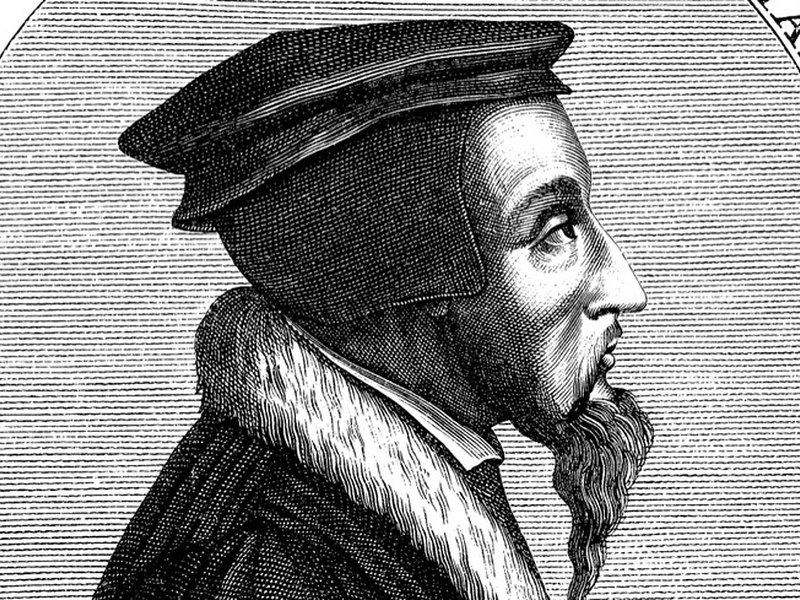
Calvin & the Efficacy of Infant Baptism

It is standard in paedobaptist circles to argue for the baptism of infants out of the Old Covenant system. Because there is no explicit command in the New Testament, we are left to the broader principles and patterns of Scripture. In the Old Covenant, we continually find that the children…

by Rich LuskMay 30, 2003
sixteen-miles-out-d40gdcd_-he-unsplash
Biblical Theology

Why the Law/Gospel Paradigm is Flawed

Luther popularized the law/gospel hermeneutic. Luther argued that any demands God made upon us fell into the category of “law” and could only condemn. By contrast, anything God gave us was “gospel” and came with no strings attached. Calvin paid lip service to this law/gospel antithesis, even though it was…

by Rich LuskMay 29, 2003

Showing page 232 of 309

See all
See all

Why Now?

Jesus prayed that the church's unity would reflect the unity of the Father and Son. Paul urged the Ephesians to cultivate the virtues of peace that would express the sevenfold unity of the church (Ephesians 4). That demand is a perennial one. But we've been divided for a long time.…

March 12, 2015

Fragile Fruitfulness

Israel is a vine, transplanted from Egypt (Psalm 80; Isaiah 5). She exists to produce wine that gladdens the hearts of men. Israel is the Dionysian people. Ezekiel brings out another dimension of the vine image: “Son of man, how is the wood of the vine better than any wood…

March 12, 2015

Judgment to the Corners

The oracle of judgment in Ezekiel 14:12-23 is structured as a fourfold judgment: sword, famine, beasts, plague (v. 21). The descriptions of judgment are laid out in four paragraphs that use repetitive, stereotyped language. Throughout, Yahweh says that even the intercession of Noah, Daniel, and Job could not rescue Judah…

March 12, 2015
Fairy Tales

The Political Economy of Fairy Tales

In a TLS review of several recent books on fairy tales, Fracesca Wade points to the political context and economic setting of early folk and fairy tale collections. Inspired by Herder, the Grimms, she observes, intended to recover Germanitas by study of natural German poetry: “Although the brothers drew widely…

March 12, 2015

Remembering the Present

In his Deja Vu and the End of History , Italian philosopher Paolo Virno explores the phenomenology of memory, especially in its relation to philosophies of history. The deja vu of the title isn't a metaphor; following Henri Bergson, Virno argues that it represents “the untrammelled extension of memory's jurisdiction,…

March 11, 2015

Potential, Act, and Violence

Paolo Virno ( Deja Vu and the End of History ) observes that potential and act occur simultaneously. Take language: “The language faculty irrupts into becoming in concomitance with the phrase that I am speaking. It appears precisely now, as I speak, neither before nor afterwards: but, note, right now…

March 11, 2015

Showing page 453 of 2212

Browse by Category

In Medias Res

Your weekly digest for all things Theopolis.

Donate

Theopolis is nearly 100% donor-supported. Consider joining us on our mission.