Theopolis Logo

Writing

Explore our collection of theological essays, biblical studies, and reflections on faith and culture.

See all
woman-bw
Grace

Never Be Dismayed

I'm afraid of messing up. Not just of messing up in general, but of messing this up—the big This that is the story that is my life, the story that God is attempting to tell with me as His material. The question casts its shadow over all my decisions. Can…

by Leta SundetOctober 6, 2015
jesus-with-sword
Revelation

Greater Phinehas

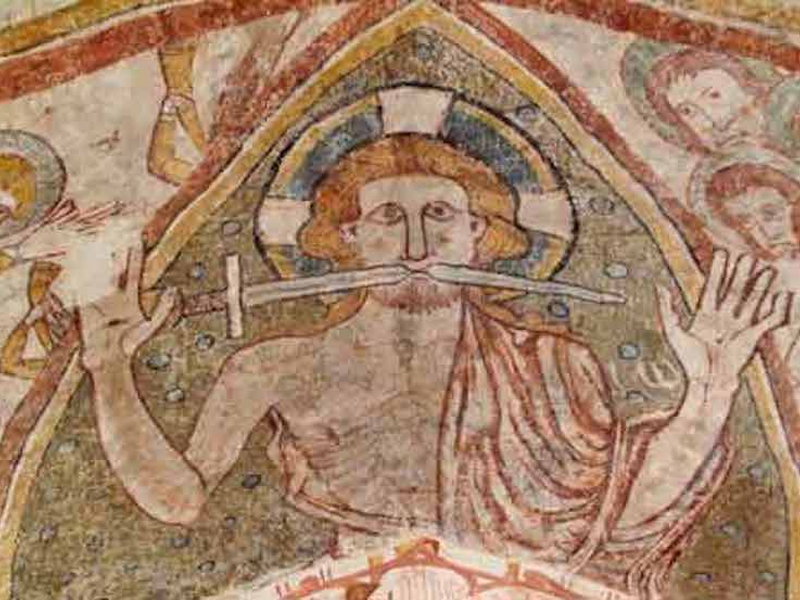
Jesus’ letter to Pergamum mentions Balaam and Balak (Revelation 2:14), and that is a signal that the whole message is running along the lines of Numbers 22-25. The death of the high priest is a sacrificial moment in the life of Israel. According to the rules of the cities of…

by Peter LeithartOctober 1, 2015
marriage
Marriage

The Glory of Self-Giving: A Wedding Homily

As you come to be joined in marriage today, I want to take a moment to focus on one important dimension of what it means to be married as Christians: that is as those who know Jesus and are being made into His likeness. This is a glorious day, full…

by Joshua AppelSeptember 29, 2015
jesus-centurion
Authority

Authority and Faith

When Jesus was entered into Capernaum, there came unto him a centurion, beseeching him, saying, “Lord, my servant lieth at home sick of the palsy, grievously tormented.” Jesus saith unto him, “I will come and heal him.” The centurion answered and said, “Lord, I am not worthy that thou shouldest…

by Lindsey TollefsonSeptember 24, 2015
creation-eve-2
Genesis

The Two Shall Become One Flesh: A Wedding Homily

Philosophers have measured mountains, Fathom'd the depths of seas, of states, and kings, Walk'd with a staff to heaven, and traced fountains But there are two vast, spacious things, The which to measure it doth more behove: Yet few there are that sound them; Sin and Love. The Agonie –…

by Joshua AppelSeptember 22, 2015
john-baptist-pointing
Luke

Of Sandals and Heroes

The third chapter of Luke famously opens with a list of mighty men, seven mighty men, potential heroes of the Mediterranean world. Beginning with Tiberius Caesar and Pontius Pilate, passing on to Herod the Tetrarch and his brothers, and ending with two High Priests, Luke says that the word of…

by Toby SumpterSeptember 17, 2015

Showing page 143 of 309

See all
See all

Anointed Bread

Leviticus is the oilest book of the Bible. The Hebrew shemen is used 42 times (6 x 7); the closest competitor is Numbers, with 34 uses. The uses of shemen are clustered. Leviticus 2 uses the word 9 times, all with reference to the preparation of the tribute offering (…

March 25, 2019
egptian-art

Broken Noses

Why do so many Egyptian statues have broken noses? Julia Wolkoff summarizes the answer of Brooklyn Museum curator Edward Bleiberg. Noses protrude, and so are more apt to be knocked off accidentally, but the pattern is too consistent to be accident. Erosion could account for some, but not all. Bleiberg…

March 20, 2019
13714bedda625c2ec1816f0890ed72f4-snow-storms-image-photography
Ecclesiology

Ecclesial Ethics

Some snippets from Philip Turner's Christian Ethics and the Church . The premise of Turner's book is well summarized by a passage he quotes from Sabina Lovibond's Ethical Formation : "The ethical, let us say, pertains to what people learn to value through immersion in a community acquainted with ideas…

March 13, 2019

Nose to Nose

Levitical offerings send a "soothing aroma" ( reyach nichoach ) to Yahweh. Israel needs to produce good smells because her sin is noxious to Yahweh. When Israel rebels, His "nose burns." By slaughtering a substitute animal and turing it to smoke, Israel soothes Yahweh's hot nose. But that can't be…

March 11, 2019
Pneumatology

Reading in the Spirit

“Spiritual reading” is usually associated with patristic, monastic, and medieval modes of reading. It's fruitful, however, to shift the focus and ask what the Spirit has to do with our reading. The Spirit is the enlivening breath of God, the water of God who makes us into a fruitful garden.…

March 6, 2019
capitol-dc
Liberalism

Liberalism and Ecclesia

Liberalism is "in origin primarily a refusal of ecclesial power." So write John Milbank and Adrian Pabst ( Politics of Virtue , 31). In refusing ecclesial power, early modern political theorists renounced the arrangement of Latin Christendom. The "first polity knowing no bounds and truly based upon the rule of…

March 4, 2019

Showing page 46 of 2212

Browse by Category

In Medias Res

Your weekly digest for all things Theopolis.

Donate

Theopolis is nearly 100% donor-supported. Consider joining us on our mission.