Theopolis Logo

Writing

Explore our collection of theological essays, biblical studies, and reflections on faith and culture.

See all
johann-siemens-epy0gbjzzzu-unsplash
Apologetics

A Sabbath Conversation: How Old is the Earth?

As Adam and Eve walked to the center of the Garden of Eden to meet with the LORD on their first Sabbath they conversed about the origin and age of the earth. Adam: You know, honey, we spent a lot of time yesterday making preparations for our house, and we…

by Jeff MeyersOctober 3, 1997
img_1043
Biblical Horizons

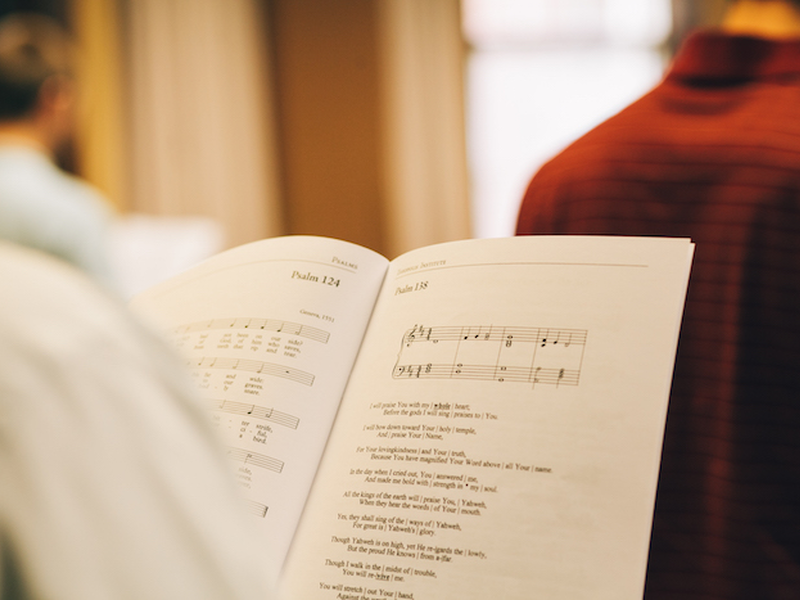
Psalms for Exile: The Narrative Progression in the Fifth Book of the Psalter

Some of our forefathers believed in reading/singing the psalms in order. Today, when the psalms are even used at all, they tend to be used randomly, though sometimes tied to a church calendar or to the pastor’s sermon. The Bible does not bind us to any particular practice, but there…

by James B. JordanSeptember 4, 1997
jordan-wozniak-xp_agmeea6s-unsplash-2
Biblical Chronology

The Anthropomorphic Days of C. John Collins, Part 2

Dr. Collins begins his essay with a brief statement of the Day Age view and then a brief statement of the Six Day view, focussing on the challenge to that view posed by modern "science." He ends this discussion by writing: "Two crucial points are at stake here: first, the…

by James B. JordanSeptember 4, 1997
john-salzarulo-wtjrpjzabcq-unsplash
Biblical Horizons

Paperweights and the Puzzles of Secularism

In his The Construction of Social Reality , Berkeley philosopher John Searle puzzles over the ontology of the products of human construction. Certain things – granite, platypi, weeping willows – occur naturally; while other realities – stone walls, zoos and parks, Chase Manhattan Bank – exist only as products of…

by Peter LeithartAugust 27, 1997
ales-krivec-4mibe6zg5r0-unsplash
Biblical Chronology

The Anthropomorphic Days of C. John Collins, Part 1

In the journal Presbyterion 20 (1994):109-130, published by Covenant Theological Seminary, Dr. C. John Collins sets forth a revision of the Day Age approach in his essay, "How Old Is the Earth? Anthropomorphic Days in Genesis 1:1–2:3." Dr. Collins’s essay has been widely accepted in evangelical Presbyterian circles as an…

by James B. JordanAugust 4, 1997
screenshot-2023-09-04-at-10-37-01-am
Biblical Horizons

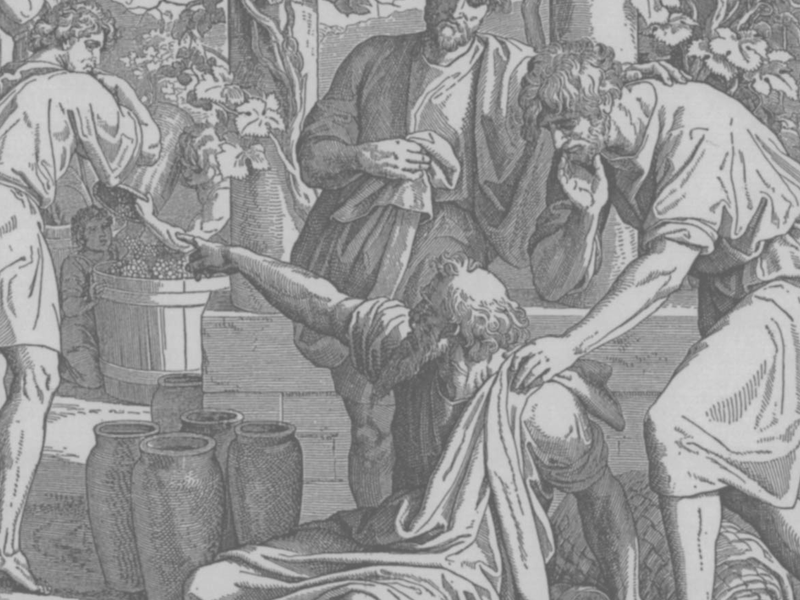
The Sin of Ham and the Curse of Canaan, Part 3 (An Exposition of Genesis 9:20-27)

The Righteousness of Shem and Japheth As noted above, the action of Shem and Japheth was purely symbolic. They did not need to cover Noah with a garment, for he was already covered by the tent. Their action was a symbolic affirmation of Noah’s authority, a symbolic rejection of Ham’s…

by James B. JordanAugust 4, 1997

Showing page 254 of 309

See all
See all
Christendom

For and Against Christendom

Someone asked me recently about my views on church and state. I replied that I advocate a "Christendom model" of church-state relations. Then I proceeded to qualify. When I was done qualifying, I suddenly wondered whether what I call "Christendom" corresponds to what other people understand by the word. It…

January 30, 2018

Nation of Kings

Ezra begins where 2 Chronicles ends, with the decree of Cyrus. Some scholars have argued that the repetition indicates that the books were once united. It's said that the doubling is an ancient literary device to knot together two sections of a text. Whether that is the case or not,…

January 29, 2018

Simplifying Space?

James Simpson briefly reviews the career of the 17th-century iconoclast William Dowsing in his history of iconoclasm, Under the Hammer . What motivated Dowsing, he argues, wasn't an effort to prioritize the word over the image, but a quest for "jurisdictional clarity." With the triumph of Parliament, the complex jurisdictional…

January 26, 2018

Freudianism Without Freud

The key question regarding Freud, says Rosenstock-Huessy ( In the Cross of Reality , 266), is "Whom did Freud obey when he began to develop his theory?" The question arises because "in Freud's relational system there is no place for Sigmund Freud's own experience." He shares this distinction of an…

January 26, 2018

Improving to Death

Alexandra Schwartz's New Yorker essay on self-improvement movements ( "Improving Ourselves to Death" ) starts out breezily enough, but it turns grim pretty fast. The "death" in her title isn't metaphorical. She summarizes the experiment of Carl Cederström and André Spicer, who tried to improve one area of their lives…

January 26, 2018

Dostoevsky's Doodles

In a TLS review of Kontantin Barsht's Drawings and Calligraphy of Fyodor Dostoevsky , Robert Bird reminds us that Dostoevsky was a "trained draughtsman" who "thought in images no less than in words: "He wrote frequently about painting, and many of his key terms suggest visual, rather than verbal communication,…

January 26, 2018

Showing page 100 of 2212

Browse by Category

In Medias Res

Your weekly digest for all things Theopolis.

Donate

Theopolis is nearly 100% donor-supported. Consider joining us on our mission.