Theopolis News
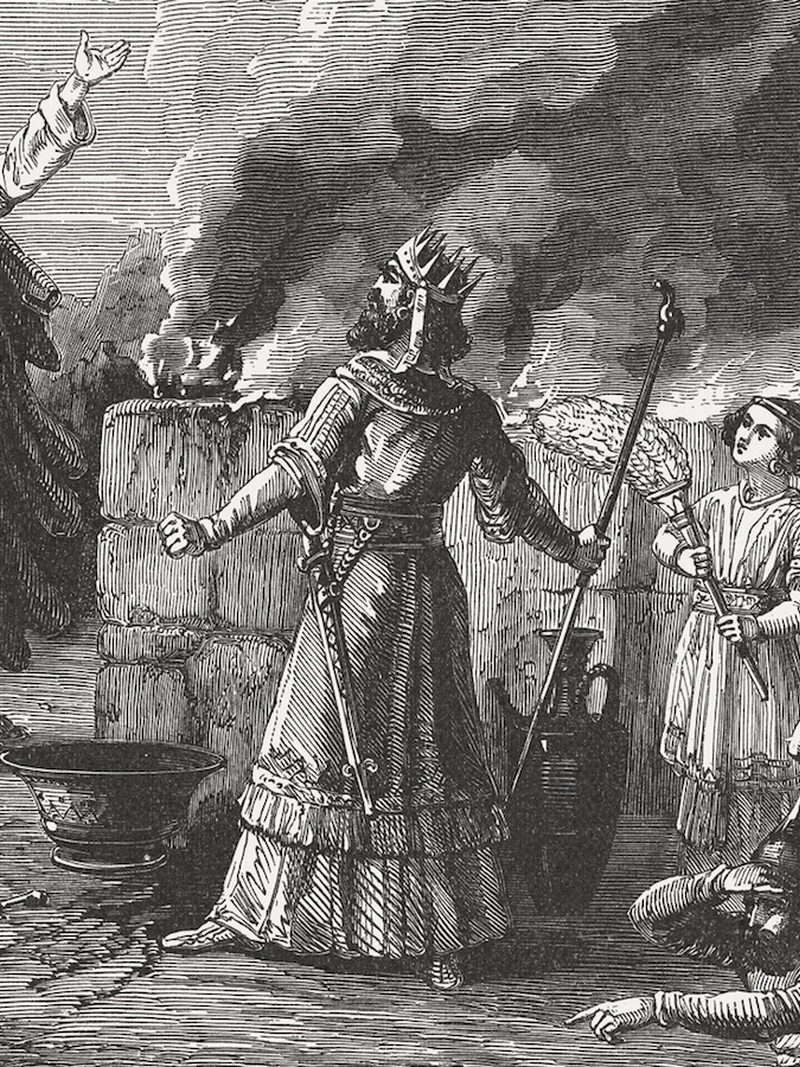
Constantine the Pious
Trinity House President Peter Leithart will deliver a lecture on "Constantine the Pious" at Oregon State University, Wednesday, October 30, at 7:00 PM.
by Peter LeithartOctober 29, 2013
Explore our collection of theological essays, biblical studies, and reflections on faith and culture.
Trinity House President Peter Leithart will deliver a lecture on "Constantine the Pious" at Oregon State University, Wednesday, October 30, at 7:00 PM.

In his rich study, We Have Never Been Modern (Harvard 1993), Bruno Latour describes modernity in terms of a dual process of “purification” and “hybridization.” Purification involves the clean construction of a nature (and science) separated off from society and the self, while hybridization involves mixtures of nature and culture.…

In James K.A. Smith’s excellent book, Introducing Radical Orthodoxy: Mapping a Post-secular Theology , he explains recent developments in theology and philosophy among mostly post-liberal (some Catholic) theologians. As with everything Dr. Smith writes, his prose is accessible, and written with clarity and precision as he describes the contribution made…

This is the last of a three-part series. 1:14-19 – The Lights in the Firmament The fourth day is the first day where God sets out His mediators and rulers. In the celestial bodies, God sets out His mediators and rulers in the same single class of created beings. We…
Trinity House President Peter Leithart will be in Chicago this weekend lecturing on Revelation. Sign up here .
Only two more weeks to register for the Trinity House Advent class on the book of Genesis. Register before the late fees kick in!
Showing page 185 of 309
Showing page 41 of 43
Modernity, Sergei Bulgakov once said, is a sphinx. It poses a riddle, and those who cannot or will not answer the riddle are devoured. The editors of Political Theology in Orthodox Christianity cite this at the beginning of their study to highlight the ambivalence of modernity. It has both constructive…
"One of the factors that has rendered [Bach's] Matthew Passion so successful over the course of its reception," writes John Butt ( Bach's Dialogue with Modernity , 36), "lies in its evocation of subjectivities that somehow resonate with those of the broader modern condition." Bach's Passions target "the individual believer,…
Alastair Roberts's contribution to Our Secular Age , a collection of essays on Charles Taylor's A Secular Age , focuses on the effect of secularism on liturgical piety. Taylor identifies "authenticity" as one of the features of our secular age, and Roberts observes that this can take the form of…
Graham Allison's Destined for War is a study of contemporary politics, Sino-American relations in particular. Along the way, he asks what we would think if China started acting like the U.S. did as we rose to global prominence. The career of Teddy Roosevelt makes the point: “ In the decade…
William Golding, writes Allan Massie in a review of John Carey's biography in the TLS , was "a late starter, one oppressed in youth by doubts and feelings of social, and perhaps intellectual, inferiority. Until his middle forties he was a poor, reluctant and unsatisfied provincial schoolmaster." He more than…
John Lanchester reviews James Scott's latest ( Against the Grain ) in the New Yorker . Scott contends that human civilization is the product of our mastery of fire. Fire enabled humans to cook food, and that gave us, Scott argues, and evolutionary advantage. Chimps put a lot of (unconscious)…
Showing page 141 of 2212
Your weekly digest for all things Theopolis.