Theopolis Logo

Writing

Explore our collection of theological essays, biblical studies, and reflections on faith and culture.

See all
31-03-0213
Hermeneutics

Apocalyptic Eyes

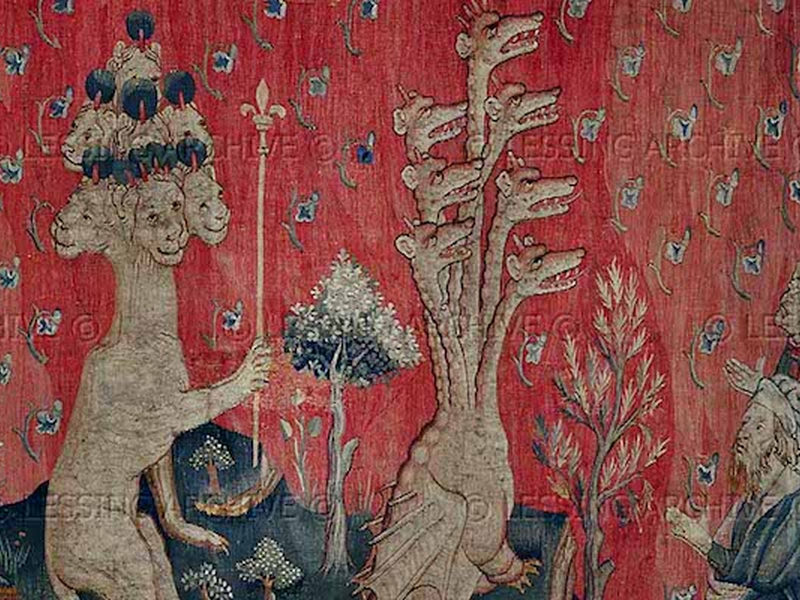
Flying scrolls. Red horses. Beasts coming out of the sea. Winged women. The list goes on. Apocalyptic literature in the Bible is like a cross between science fiction and Marvel comics. And the Bible has a fair bit of this sort of thing. Daniel sees visions in Babylon, Zechariah sees…

by Toby SumpterNovember 4, 2014

bhm-skyline-2
Theopolis News

New Name, New Look

Trinity House Institute has taken a new name, the Theopolis Institute. This striking new name expresses our unique vision and mission and captures the unified purpose behind all our specific programs and activities. We still have Bible, liturgy, and culture in our tagline. We still offer the same courses on…

by TheopolisNovember 4, 2014
istock_000012860926small
Atonement

Not Fearing the Devil

Adam Kotsko offers a socio-political variation on the Christus Victor atonement theory in his 2010 study, The Politics of Redemption: The Social Logic of Salvation . He does this by explaining "the devil" in terms of the Hegelian concept of "objective spirit," Geist . As Kotsko puts it, Geist "refers…

by Peter LeithartOctober 13, 2014
jez-timms-8muutamcwu4-unsplash
Leviticus

The Meaning of Sacrifice

Two factors keep Nahtali Meshel from discussing the meaning of sacrifice until late in his The "Grammar" of Sacrifice . The first has to do with the texts he draws from: "P says little about the meaning of its rituals" (174). The other has to do with the grammatical theory…

by Peter LeithartOctober 8, 2014
jez-timms-8muutamcwu4-unsplash
Leviticus

Praxemics

Chapter 5 of Naphtali Meshel's The "Grammar" of Sacrifice focuses on "praxemics," the physical actions of sacrificial ritual. Praxemes are constituted by six elements: an "atomact," an elementary physical act or gesture; an actor; an object that is acted up; a target for the action and often for the object…

by Peter LeithartOctober 6, 2014
markus-winkler-aid-xyrtlec-unsplash
Leviticus

Jugation and Hierarchy

Two chapters of Naphtali Meshel’s The “Grammar” of Sacrifice cover what he calls “jugation” and “hierarchies.” The first involves the addition of other materials to an animal offering. Jugates include wine, cereal, and oil that are added to the animals (zoemes) that are offered in sacrifice. Some jugates are coordinated…

by Peter LeithartOctober 1, 2014

Showing page 167 of 309

See all
See all

Multiple Meanings

What do we do when we disagree about what the Scriptures say? Augustine's answer to that question has rarely been put into practice. This from The Literal Meaning of Genesis : “And when we read in the divine books such a vast array of true meanings, which can be extracted…

August 11, 2017

Searching for Sincerity

Jon Baskin's piece on David Foster Wallace is the best thing I've come across on Wallace. He starts with the arresting claim that in time “it will be recognized that Wallace had less in common with Eggers and Franzen than he did with Dostoevsky and Joyce.” His fiction is a…

August 10, 2017

Creative Destruction

H ezekiah “completes” a Passover (2 Chronicles 31:1a), then starts breaking things. He continues until the destruction is also “complete” (2 Chronicles 31:1b; Heb. kalah ). He breaks pillars, cuts down Asherim, and pulls down high places and altars. Hezekiah's purge is described in a single complex verse, 2 Chronicles…

August 9, 2017

Kantian Emotions

A “Kantian chapter on emotion and responsibility,” write John Sabini and Maury Silver ( Emotion, Character, and Responsibility ), ...is easy to write and quick to read: the domain of the moral is the domain of the will expressed in action; it is the domain of that for which we…

August 8, 2017

Reformation Disenchantment?

S ince at least Max Weber, historians and sociologists have assumed that the Reformation contributed to what Weber called the “disenchantment” of the world. The thesis has inspired rich historical, sociological, and philosophical studies, from Keith Thomas's Religion and the Decline of Magic to Charles Taylor's A Secular Age .…

August 8, 2017

Liturgical Repentance

T he Chronicler's account of Hezekiah's Passover (2 Chronicles 30:1–12) is arranged in a neat chiasm: A. Hezekiah sent letters of invitation to Israel to join in Passover, vv. 1–4 B. Couriers take decree throughout the land, vv. 5–6a C. Content of the invitation/decree, vv. 6b–9 B'. Couriers pass through…

August 7, 2017

Showing page 154 of 2212

Browse by Category

In Medias Res

Your weekly digest for all things Theopolis.

Donate

Theopolis is nearly 100% donor-supported. Consider joining us on our mission.