Theopolis Logo

Writing

Explore our collection of theological essays, biblical studies, and reflections on faith and culture.

See all
aaron-burden-qjdzyt_k8xg-unsplash
Baptism

Baptismal Efficacy and the Reformed Tradition: Past, Present, and Future

OUR REFORMED HERITAGE When a Reformed Christian hears “baptismal regeneration,” what comes to mind? “Heresy,” most likely. Unfortunately, many in the Reformed community today have lost touch with some important aspects of their own heritage. If Reformed theology is going to continue reforming according to Scripture, we must recover the…

by Rich LuskMay 29, 2002

Theologia

Standing on the Promises | Faith and Assurance in the Bible

Faith and assurance are recurring subjects of controversy in Evangelical circles. We all agree that we are saved by the righteousness of Christ reckoned to us, which we receive through faith alone. Jesus lived and died and rose again as the representative of his people so that all of them…

by Mark HorneMay 24, 2002
screenshot-2023-12-12-at-10-36-28-am-2
New Perspective on Paul

Getting Some Perspectiveon the “New Perspective”

What’s at stake (or not!) for Reformed Pastors regarding the contemporary discussion of Paul and “the works of the law”? There has been a great deal of talk lately about “the New Perspective on Paul” and the works of, among others, Ed Sanders, James Dunn, and N. T. Wright. Each…

by Mark HorneMay 24, 2002
screenshot-2024-06-03-at-5-22-25-pm
Theologia

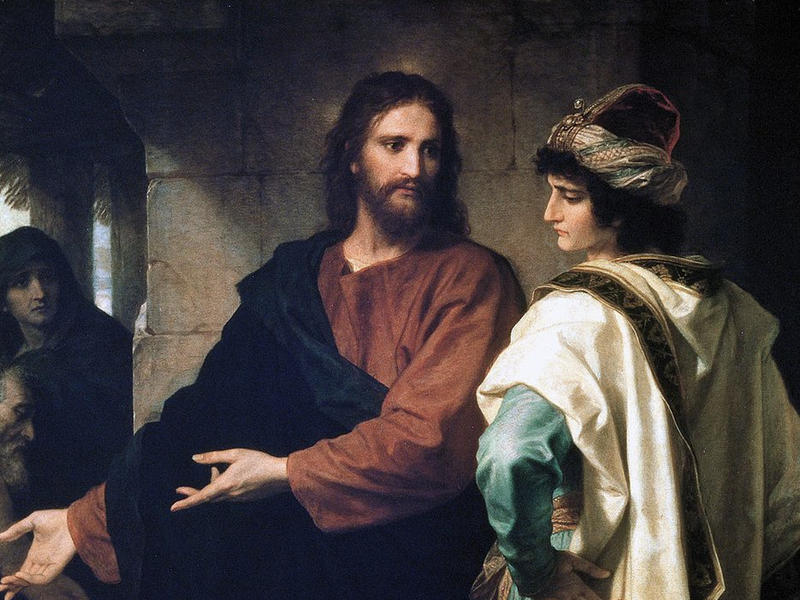
Did Jesus Preach Gospel or Law to the Rich Young Ruler?

When Christ enjoins upon the young man the duty of following him (Mt. 19:23), he does not give a counsel, but a command to all in common because no one can have a hope of salvation unless he follows Christ (2 Pet. 2:21), although from a particular cause it is…

by Mark HorneMay 20, 2002
kelly-sikkema-gpoh17dxqdm-unsplash
New Perspective on Paul

A Short Note on N. T. WRIGHT and His Reformed Critics

This short paper is not an attempt to provide a comprehensive analysis and defense of N. T. Wright, much less the so-called “New Perspective on Paul” as a whole. Indeed, Wright’s theological project has some failings and the New Perspective as a movement must be considered a mixed bag of…

by Rich LuskMay 20, 2002
tanner-mardis-xuxghzhibn4-unsplash-1-2
Biblical Studies

Leviticus 1:3-4, 10

Leviticus 1:3-13, Translation 3 If his Nearbringing is an Ascension from the herd, a perfect male shall he bring him near. To the forecourt of the Tent of Meeting he shall bring him near, for his acceptance before Yahweh. 4 And he shall lean his hand on the head of…

by James B. JordanAugust 5, 2001

Showing page 239 of 309

See all
See all
Philosophy

Mirrors, ancient and modern

In her recent book The Mirror of the Self , Shadi Bartsch argues that ancient notions of introspection and self-examination do not employ the image of the mirror in the way we do in post-Cartesian philosophy. In the words of the TLS reviewer, for the ancients “the mirror was the…

June 27, 2007

Enjoyment in God

Wilken summarizes Augustine’s social vision of perfection this way: “This peace for which the city of God yearns is a ‘perfectly ordered and harmonious fellowship in the enjoyment of God,’ a peace of ‘enjoying one another in God.’ Notice that Augustine’s language is social, not individualistic. He does not say,…

June 26, 2007

Ecclesiology of perfection

When Plato thought about politics, he thought about an ideal city (at least in the Republic ). Not Augustine. Augustine recognized that Plato had portrayed “what kind of city ought there to be.” But Augustine was after something different. He presented an actual human society, a city of God in…

June 26, 2007
Theology

Empty minds

Aquinas wrote: “If the teacher determines the question by appeal to authorities only, the student will be convinced that the thing is so, but will have acquired no knowledge or understanding, and he will go away with an empty mind.”

June 26, 2007

Cyril and the Bible

In his wonderful book, The Spirit of Early Christian Thought , Robert Louis Wilken criticizes the Formula of Chalcedon as “formulaic and abstract,” which described Jesus as “one person,” but “seemed to divide Christ into a divine nature that, for example, healed the sick and raised the dead and a…

June 26, 2007
History

No heavenly good

Alcinous, a pagan philosopher of the second century AD claimed that God is “eternal, ineffable, self-sufficient, without need . . . and perfect in every respect.” The only way to know such a God was to ascend from earthly things to higher realities: “First one contemplates the beauty found in…

June 26, 2007

Showing page 1663 of 2212

Browse by Category

In Medias Res

Your weekly digest for all things Theopolis.

Donate

Theopolis is nearly 100% donor-supported. Consider joining us on our mission.