
Theopolis Logo

Writing

Explore our collection of theological essays, biblical studies, and reflections on faith and culture.

See all
dan-burton-nrw4i8kuyd8-unsplash-2

Tyranny of the Agreeable

Inspired by the “Moscow Mood” Debate In a shocking 1961 study, Yale psychologist Stanley Milgram would don an official-looking white lab coat and tell a volunteer to administer increasing shocks to another “volunteer” in an adjacent room strapped into an “electric chair” just out of sight. The shocks were incrementally…

by John CarpenterJuly 22, 2024
screen-shot-2023-03-21-at-10-37-03-am
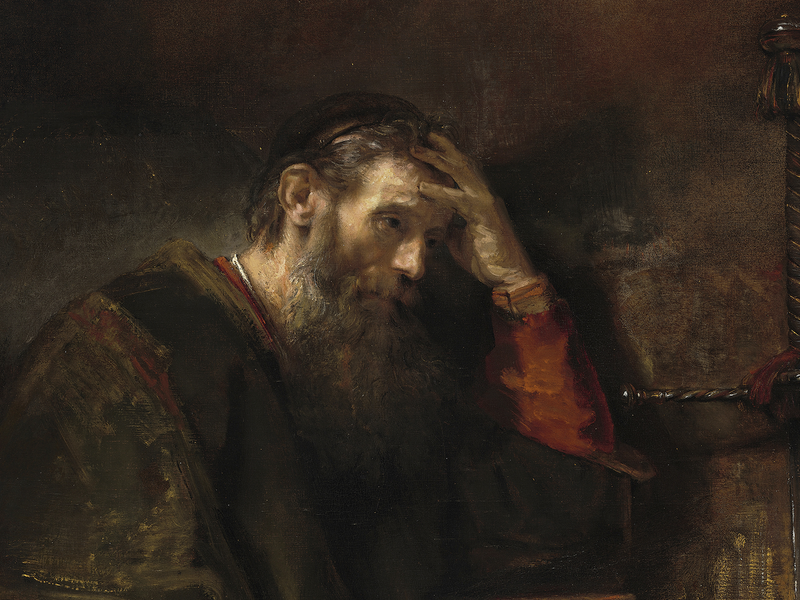
Apostle Paul

Why Doesn’t Paul Quote Jesus?

My title and the substance of the article are borrowed from a section of David Wenham’s excellent book, Paul: Follower of Jesus or Founder of Christianity? I am appropriating ideas from the pages in his book which address the question, “Why Does Paul refer to Jesus’ Life and Ministry so…

by Ralph Allan SmithJuly 9, 2024
screenshot-2024-07-04-at-8-35-35-am
James

The Epistle of James: Shotgun or Sniper

Some of us may be familiar with the notion that the epistle of James is like a New Testament version of Proverbs or other wisdom literature. According to this line of thinking, the epistle of James (together with the other wisdom literature) is basically a collection of timeless sayings without…

by Chris JohnsonJuly 4, 2024
metin-ozer-v4q9cqeashy-unsplash
Virtue

Doing What You Don’t Want to Do

This summer I started walking a long trail that ran north from our home. On my best days, I would walk a total of five miles at a brisk pace. This trail follows the power lines that serve a significant portion of North Dallas and stretches far past the two…

by Mandi GerthJune 25, 2024
screenshot-2024-06-18-at-12-49-58-pm
American Culture

Is Queer Theology Christian?

I am an Australian. I went to the American Academy of Religion mega-fest last year to meet up with some friends, to present a paper at a ‘science and religion’ panel, and to marvel at the sheer scale of how Americans do things. It was quite a ride. Looking at…

by Paul TysonJune 18, 2024
thomas-vitali-owhtrwwtpku-unsplash
Ecclesiology

Consumerism, Oikos, and the Role of Women in the Church (Part 4)

Part 1 Part 2 Part 3 We evangelicals do not often understand the roles of men and women in ministry. Because our consumerist culture has gutted the notion of family as it was historically understood, all Biblical passages about women in church ministry (a familial organism) are almost incomprehensible to…

by John CarpenterJune 11, 2024

Showing page 19 of 309

See all
See all
Philosophy

Rousseau and Voltaire

Rosenstock-Huessy’s discussion of Voltaire and Rousseau depends on his prior discussion of the role of inspired literature in the formation of a nation. They are adherents to the revolutionary creed of literary inspiration, the “cult o f an inspired literature.” He compares the two to Tolstoy and Dostoevsky, for like…

January 25, 2007
History

Paris and French Nationhood

Rosenstock-Huessy deals with a number of interrelated issues in a section of Out of Revolution dealing with Paris and the French notion of nationhood: He talks about the establishment of Paris as the intellectual center of France and of Europe; about the division between Paris and Versailles as background to…

January 25, 2007

Calvin on Baptism again

A couple of thoughts on the Calvin quotations I posted yesterday, inspired by a reader’s response. 1) Calvin appeals to his doctrine of “accommodation” to explain why the sign of baptism is necessary. God does speak in ways we can grasp; if that’s all accommodation is, fine. But it often…

January 25, 2007

Father and Son

Tom Smail’s Like Father, Like Son: The Trinity Imaged in Our Humanity (Eerdmans 2005) has a lot going for it. Written for a general Christian readership, it reflects a thorough familiarity with both tradition and contemporary work on the Trinity, and applies Trinitarian patterns to human life in interesting ways.…

January 25, 2007

Timely words

Stahmer offers this useful summary of Rosenstock-Huessy’s and Rosenzweig’s attack on “objectivity”: “For J. G. Hamann, and for all those who have accepted the sacramental qualities inherent in the frailty and tentativeness of human speech, the ambiguities and relativity of history could not possibly be denied. Both Rosenstock-Huessy and Rosenzweig…

January 24, 2007

Ahead of the Curve

In their capacity as Sprachdenkern - Speech-thinkers, Rosenstock-Huessy and Rosenzweig anticipated a number of developments in philosophy, theology, and hermeneutics. Stahmer writes, “Both Rosenzweig and Rosenstock-Huessy, but most especially the latter, can now be seen to have been hermeneutical pioneers who anticipated, by many years, the work of Martin Heidegger,…

January 24, 2007

Showing page 1729 of 2212

Browse by Category

In Medias Res

Your weekly digest for all things Theopolis.

Donate

Theopolis is nearly 100% donor-supported. Consider joining us on our mission.