Theopolis Logo

Writing

Explore our collection of theological essays, biblical studies, and reflections on faith and culture.

See all
laura-nyhuis-vg_b61t8efs-unsplash
Advent

5 Reasons I Don't Like Advent

First, I love my Christmas songs. This is how I think of it: the season of Advent gets in the way of singing what I want to sing. How can you not listen to Nat King Cole in December? Or Bing Crosby, Harry Connick Jr., and Amy Grant? Even though…

by Caleb SkogenDecember 16, 2021

johnny-cohen-oxoxqlawve0-unsplash
Covenant

Grandparenting and the Transcendent Summons

Introduction Imagine the stereotypical American grandparents. Once you have the outline, start filling in the details. What picture emerges? Maybe something like what Ogden Nash said, “When grandparents enter the door, discipline flies out the window.” Or maybe the oft-repeated assertion that it’s the grandparent’s job description “to spoil the…

by Jason CherryDecember 14, 2021
guillaume-de-germain-z_br8toccpe-unsplash
Deuteronomy

The Audacity of Lament

Hundreds of generations of ancient Israelites grew up as children of Abraham, inheritors of the covenant—the promises of God. These promises were more than nice bumper stickers or framed photos to cover empty space in their homes–these promises were at the heart of their very identity–individually and collectively. Genesis “I…

by Zach MccartneyDecember 9, 2021
fischer-fleet-of-columbus-edit
Hermeneutics

Barren Worlds

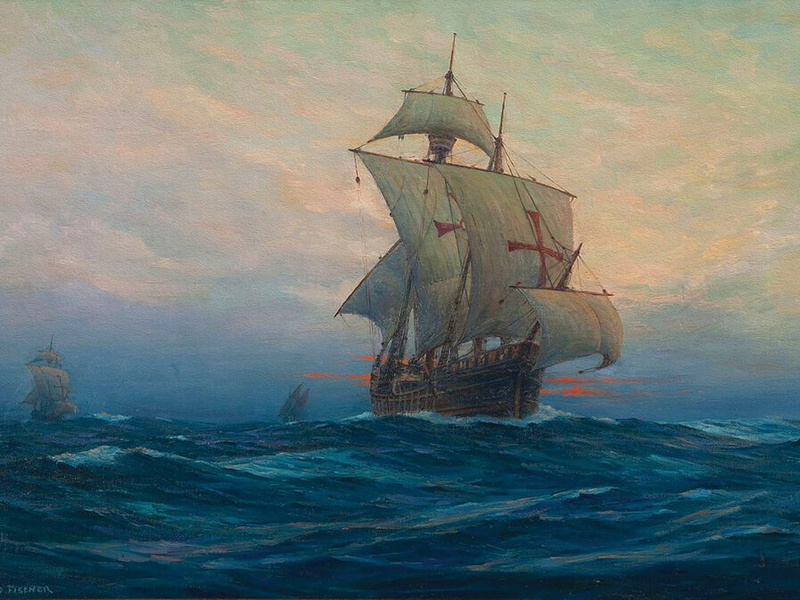
Aliens and Sojourners When the question “Is there life on other planets?” is asked, even the best theologians can only reply, “The Bible doesn’t tell us.” Well, in truth, the Bible does tell us, but only if we are paying attention. …and there was not a man to till the…

by Mike BullDecember 7, 2021
vino-li-j4jjsfjkhpi-unsplash
John

Jesus’ Search for a Wife

John runs a theme throughout his gospel that bubbles under the surface—Jesus is searching for, and finding, a wife. John launches into the narrative proper with a statement of where he’s going. “On the third day there was a wedding” (John 2.1) is about as good an example of flash…

by Tim SuffieldNovember 30, 2021
jackson-david-cicbinoyb7u-unsplash

Touch

I have come to believe that a great many people are almost too weak to repent in any very open way. There must first be some level of healing. In some cases, including biblical ones, there is not even any evidence of faith on the part of the recipients of…

by Richard BledsoeNovember 23, 2021

Showing page 49 of 309

See all
See all
Philosophy

Heidegger in his woods

Latour is tired of being accused of having forgotten Being, and offers this clever brush-off of Heidegger: “If, scorning empiricism, you opt out of the exact sciences, then the human sciences,, then traditional philosophy, then the sciences of language, and you hunker down in your forest - then you will…

November 15, 2006
History

Semi-modernism

Postmoderns, Latour suggests, think they are still modern, but in fact they have greatly oversimplified the modern Constitution. Postmoderns might emphasize the separation of subject and world, and stretch that opposition to a breaking point (Latour vividly describes them as doing the splits to keep subject and world apart); but…

November 15, 2006
History

Modern temporality

In his very good section on modern temporality, Latour argues that modernity assumes that everything in the present, modern moment, is purely modern, novel. Anything that appears that is not up-to-date is a “archaism,” and moderns worry constantly that this or that event or trend might “turn back the clock.”…

November 15, 2006
History

Representation

One of the key moves made since the 17th century, Latour argues, is a distinction between modes of “representation.” In the laboratory Boyle is representing things before selected witnesses through scientific experiments, giving mute nature a voice through the scientist, while in politics Hobbes suggests that the Sovereign speaks for…

November 15, 2006
History

We Have Never Been Modern

Bruno Latour’s We Have Never Been Modern (Harvard 1993) is a rich study. He describes modernity in terms of a dual process of “purification” and “hybridization.” Purification involves the clean construction of a nature (and science) separated off from society and the self, while hybridization involves mixtures of nature and…

November 15, 2006

Tears of things

And/Or: Virgil is aware that the furor of civil war can be curbed only by an opposing, and more intense, furor. That, as Milbank says, is the way of paganism - peace established only by superior violence against violence. But in those tears Virgil expresses the the painful recognition -…

November 13, 2006

Showing page 1763 of 2212

Browse by Category

In Medias Res

Your weekly digest for all things Theopolis.

Donate

Theopolis is nearly 100% donor-supported. Consider joining us on our mission.