Theopolis Logo

Writing

Explore our collection of theological essays, biblical studies, and reflections on faith and culture.

See all
528977ldsdl
Theologia

Reflections on the Importance of Predestination in the Christian Mindset

But I say to you who hear, love your enemies, do good to those who hate you, bless those who curse you, pray for those who mistreat you. Whoever hits you on the cheek, offer him the other also; and whoever takes away your coat, do not withhold your shirt…

by Mark HorneJune 4, 1998

aaron-burden-1ebsmyrau-s-unsplash
Biblical Horizons

The Case Against Western Civilization, Part 5

Part 5: Laying New Foundations in a Dying World As I mentioned above, the history of Israel involved several centuries as a church-without-a-culture, and then several centuries as a culture-without-a-city. To be sure, there was an informal culture around the church of the Patriarchs, but the civilization of free farmers…

by James B. JordanJune 4, 1998
yucar-studios-cfr-v1quekw-unsplash-1
Baptism

Why Do We Baptize?

In the Reformation Tradition we baptize both professing believers and their children. In the case of infants it is now commonly insisted that this is done because the children are already in covenant with God. Baptism is a sign and seal of a previously existing reality. Despite the popularity of…

by Mark HorneJune 3, 1998
aaron-burden-qjdzyt_k8xg-unsplash
Eucharist

This Is What We Are:

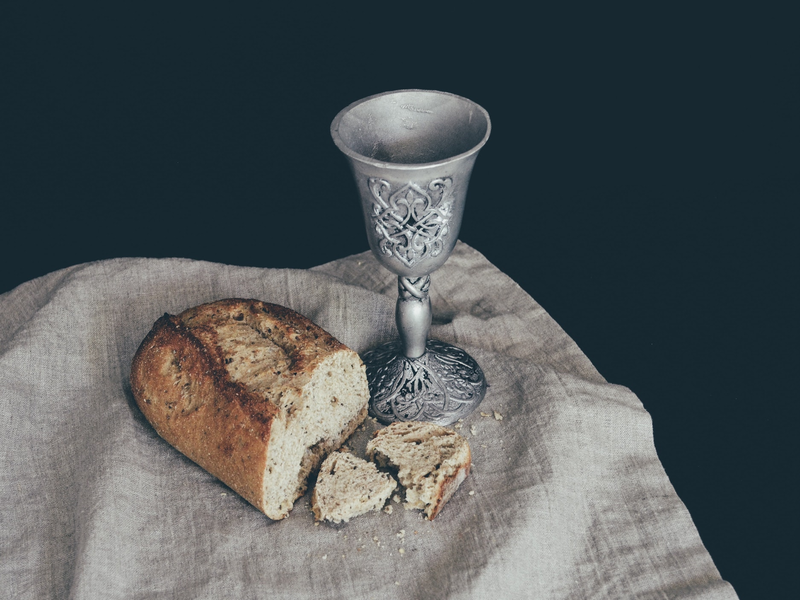
Concerning Sex & the Sacrament of the Lord’s Supper Is not the cup of blessing which we bless a sharing in the blood of Christ? Is not the loaf of bread which we break a sharing in the body of Christ? Since there is one loaf, we who are many…

by Mark HorneJune 3, 1998
debby-hudson-qa74yh6-xlc-unsplash
Baptism

Sacramental Efficacy

Protestant-Catholic debates about the sacraments have usually taken the form of debates about sacramental efficacy. Protestants claim that Catholics believe that sacraments work ex opere operato, virtually a magical view of the sacraments. A priest goes through the motions and says the mumbo-jumbo and — presto! — the sacraments confer…

by Peter LeithartJune 3, 1998
aaron-burden-qjdzyt_k8xg-unsplash
Baptism

Baptism and the Church

In 27.2, the Westminster Confession says that because of the “spiritual relation” between sacraments and the things they represent, “the names and effects of the one are attributed to the other.” Applied to baptism, this means that when the Bible says that we are baptized into Christ (Rom. 6), it…

by Peter LeithartMay 29, 1998

Showing page 249 of 309

See all
See all
History

Bacon’s Induction

Stanley Fish, in a renowned essay on Bacon’s Essays , concludes that the essays are “unfinished with a purposefulness that makes the bestowing of the adjective less a criticism than a compliment.” He insists on the provisionality of knowledge, and “communicates that provisionality [in the Essays ] by letting the…

September 5, 2006
Science

Lamarck Redux?

In a fascinating review of a recent book on evolution (TNR, Sept 4), Oren Harman suggests that reports of the death of Lamarck, proclaimed in every middle school science classroom for well over a century, may be somewhat exaggerated: Lamarckism “is and isn’t” dead. Insofar as Lamarckism meant “direct adaptive…

September 5, 2006

Trinity and Self-Gift

One of Barth’s main contentions that only a Triune God can give Himself. A monadic God might give, but would give something less than Himself. Only if God is both Himself and another, and only if that other is fully God, can God give Himself .

September 5, 2006

Complex reprobation

Bavinck writes: “It is wrong to conceive the decree as if it determined only a person’s end and coerced him or her in that direction regardless of what they did. The decree is as inconceivably rich as reality itself. It is, in fact, the fountainhead of all reality. It encompasses…

September 5, 2006
History

Epistemology of ingratitude

Blumenberg writes ( Legitimacy of the Modern Age ) that with Bacon, Kepler, and particularly Leibniz, the Augustinian suspicion of curiosity is overcome, and knowledge thereafter “justifies itself; it does not owe thanks for itself to God; it no longer has any tinge of illumination or graciously permitted participation but…

September 4, 2006
History

Physics and Metaphysics

Blumenberg says that Bacon drew a distinction between metaphysics and physics in terms of human control: “The former has as its object the unalterable law beyond man’s influence; the latter comprises all knowledge of the operative and material causes that man can transpose in order to influence given states of…

September 4, 2006

Showing page 1799 of 2212

Browse by Category

In Medias Res

Your weekly digest for all things Theopolis.

Donate

Theopolis is nearly 100% donor-supported. Consider joining us on our mission.