Theopolis Logo

Writing

Explore our collection of theological essays, biblical studies, and reflections on faith and culture.

See all
kristina-flour-bcjdbykwquw-unsplash
Culture

On Foul Language

The Stranger: Do you have to use so many cuss words? The Dude: What the f*ck you talking about? - The Big Lebowski There was a man I knew, an elder at his church, who, whenever he was called upon to announce a pregnancy, preferred the euphemism “with child” because…

by Remy WilkinsJanuary 12, 2016

organ-pipes
How to Worship

Pipes Worth Playing

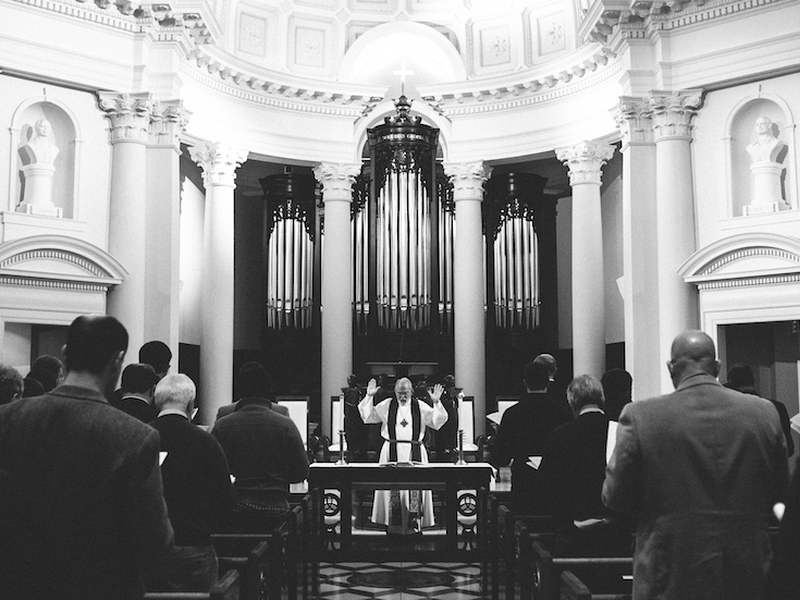
I know what you’re thinking. Organ: funeral, ball game, grand dusty cathedral. Why should modern Christians of such a technological age revisit a thousand year-old instrument? Don’t worry, I will not be trying to punch another hole in my Weird Music Preferences and Opinions card here. The truth is, our…

by Jarrod RicheyJanuary 7, 2016
tree-2
James

Do Things Have Natures?

Do things have natures? As I am posing the question, it is not simply a question of whether there are particular kinds of things in the world that have characteristic features, patterns of behavior, trajectories of growth and development. If that is what the word means, then the answer is…

by Peter LeithartJanuary 5, 2016
jim-leading-worship
Theopolis News

2016 Nevin Lectures with Father John Behr

We are excited to announce our 2016 Nevin Lectures featuring Father John Behr. Fr. John is the Dean of St. Vladimir's Seminary and Professor of Patristics, as well as the author of multiple works. He will be delivering three lectures over the course of two days dealing with "What Protestants…

by Brian MoatsJanuary 4, 2016
times-square
Creation

Time, Curse or Gift?

New Year's Day makes one reflective, at least about the past year, perhaps about life, perhaps, more broadly, about time itself. Many view time as a curse. Some see it as a curse because of missed chances. As one day or year moves on to the next, all we can…

by Peter LeithartDecember 31, 2015
nativity-2
Advent

The Manger

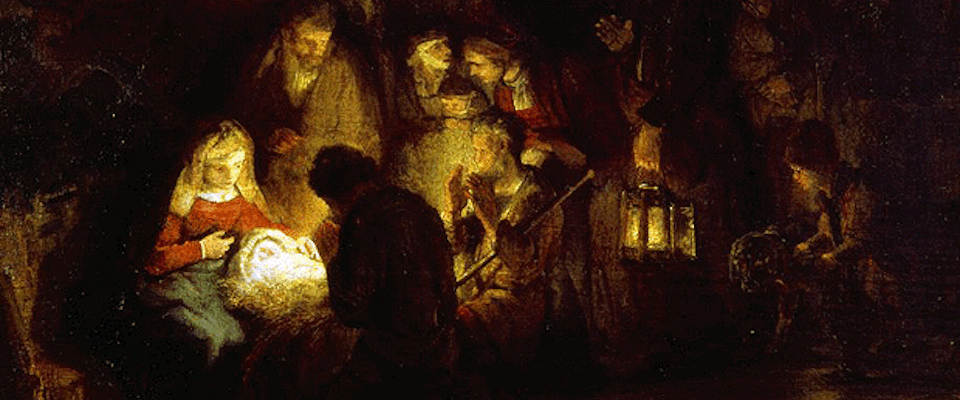
It seems a truism to say that we live in the world: that the world is outside of us. In reality the world is very much inside of us too. In fact the world passes through us as much as we pass through it. We breathe in its air, using…

by Arthur KayDecember 29, 2015

Showing page 138 of 309

See all
See all

Exhortation

The church calendar is essentially a calendar of feast days, preceded by days of preparation for feasting. Advent is a time of preparation for the feast of Christmas, when we celebrate the Father’s gift of His Son; Lent is a time of preparation for the feast of Easter, when we…

February 26, 2006
History

Postmodern mathesis, 2

Kumar argues that postmodernism is characterized by a contempt for the past, and by an embrace of the “depthless present.” The result is an obsession with space: “The plane of the timeless present is the spatial. If things do not get their significance from their place in history, they can…

February 25, 2006
History

Reflexive modernization

Ulrich Beck suggests that the contemporary world is less post-modern than radicalized modernity, a modernity that has become self-conscious and self-reflexive. He writes: “Just as modernization dissolved the structure of feudal society in the nineteenth century and produced the industrial society, modernization today is dissolving industrial society and another modernity…

February 25, 2006

Jehoahaz/Ahaziah

Though not altogether obvious in English, the names Jehoahaz and Ahaziah are variations of the same name (cf. 2 Kings 13). Jeho = iah, both references to Yahweh’s name, and the verb “ahaz” is common to both. “Ahaz” means “to seize, to lay hold,” and the name “Yah lays hold”…

February 25, 2006

Pre-Lent

Many Christians observe the last few Sundays before Lent as “pre-Lenten” Sundays. This might look slightly daft: After all, Lent is itself a period of preparation for Easter, and if we need a time of preparation for the time of preparation, perhaps we also need a pre-pre-Lent to prepare for…

February 25, 2006
History

Post and modernism

Ihab Hassan contrasted modernism and postmodernism by reference to Authority and Anarchy. He suggested, in Kumar’s summary, that postmodernism “involved a tendency toward ‘Indeterminacy,’ a compound of pluralism, eclecticism, randomness and revolt. Indeterminacy also connoted ‘deformation,’ a stress on decreation, difference, discontinuity and ‘detotalization’ which together add up to a…

February 24, 2006

Showing page 1876 of 2212

Browse by Category

In Medias Res

Your weekly digest for all things Theopolis.

Donate

Theopolis is nearly 100% donor-supported. Consider joining us on our mission.